
DIY Mercury Outboard Powerhead Gasket Replacement Guide
Understanding Mercury Outboard Powerhead Gasket Issues
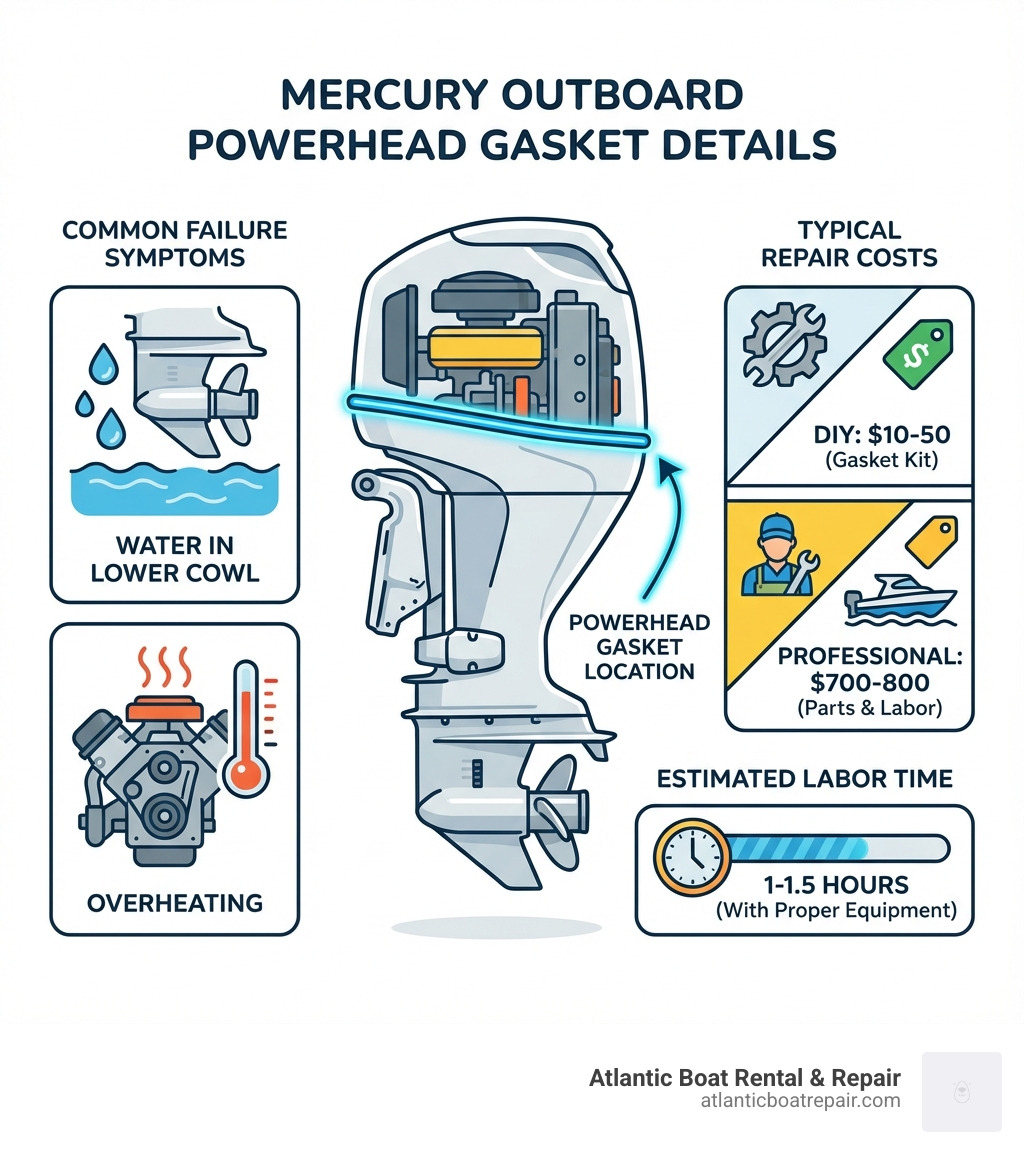
Mercury outboard powerhead gasket replacement is a critical repair that can save your engine from catastrophic damage. If you're experiencing water in your lower cowl, overheating, or milky oil, you may have a blown powerhead gasket.
Quick Answer: Can You Replace a Mercury Powerhead Gasket Yourself?
- Yes, if you have mechanical skills - The job takes 1-1.5 hours with proper tools
- Parts cost: $10-$50 for the gasket kit
- Professional cost: $700-$800 (mostly labor)
- Required: Torque wrench, gasket scraper, socket set, lift or hoist
- Critical: Follow exact torque specifications and cleaning procedures
Many boat owners are quoted $700-$800 for a repair where the gasket itself costs as little as $9.99. This makes DIY replacement tempting, but it depends on your skill and equipment. The powerhead gasket seals the powerhead to the mid-section; when it fails, water leaks can cause overheating, poor performance, and serious engine damage.
The good news is that this repair is manageable for mechanically inclined owners with the right tools. It requires precision, patience, and attention to detail, especially when cleaning surfaces and following torque sequences. The challenge is that factory gaskets can be incredibly stubborn to remove. Additionally, some Mercury outboards use O-rings instead of traditional gaskets, which can confuse the diagnosis.
This guide walks you through the complete replacement process, from diagnosis to final assembly, helping you decide whether to tackle this repair yourself or trust it to professionals like Atlantic Boat Rental & Repair.
Is Your Powerhead Gasket Blown? Symptoms and Diagnosis
Diagnosing a blown powerhead gasket can be tricky, as symptoms often overlap with other engine issues. Knowing what to look for helps narrow down the cause.
One of the most common signs is water in the lower cowl. Puddles or excessive moisture inside the cowling are a red flag, often caused by a failed gasket between the powerhead and exhaust housing. We've seen this many times with boaters from Plymouth to Sandwich, MA, where a small leak can become a big problem.
Other symptoms include:
- Overheating: A compromised gasket can disrupt the cooling system, causing the engine to run too hot.
- Loss of compression: A significant leak can indirectly affect compression or lead to other internal damage.
- Milky oil or water in lubricant: Water mixing with engine oil or gear lube is a clear sign of an internal leak.
- Poor engine performance: This can manifest as reduced power, rough idling, or difficulty starting.
- Exhaust leaks: Visible or audible exhaust leaks from the mid-section can point to a deteriorating gasket.
It's crucial to differentiate these symptoms from other issues. For instance, water in the lower cowl could also indicate a failed exhaust cover or water jacket gasket. The key is understanding your engine's design, as some Mercury models use O-rings instead of flat gaskets.
The consequences of delayed repair are significant. Water intrusion can lead to severe internal engine damage, including corrosion, piston damage, and crankshaft failure. It's about protecting your entire engine, not just losing power.
If you're unsure about your diagnosis, we at Atlantic Boat Rental & Repair are here to help. You can find More info about our diagnostic services on our website.
How to Confirm the Gasket Failure
To confirm a powerhead gasket failure, we recommend these diagnostic steps:
- Compression Test: This reveals overall engine health. Low compression across multiple cylinders could point to a broader issue involving the powerhead seal.
- Leak-Down Test: This test pinpoints where compression is being lost, helping to differentiate between piston ring, valve, or gasket issues.
- Visual Inspection for Water Trails: Remove the cowling and inspect where the powerhead meets the mid-section. Look for water streaks, salt crystals, or corrosion.
- Checking Gear Lubricant for Water: Milky gear lube indicates water intrusion, suggesting a seal failure, though not necessarily the powerhead gasket itself.
- Powerhead vs. Cylinder Head Gasket Distinction: The term "powerhead gasket" can be confusing. Many Mercury outboards use O-rings or a specific base gasket instead of traditional cylinder head gaskets. Understanding your specific engine model is key. Your official service manual, accessible via Mercury Marine Owners Manuals | Mercury Marine, is the best resource.
The Step-by-Step Mercury Outboard Powerhead Gasket Replacement Process
Tackling a Mercury outboard powerhead gasket replacement requires methodical steps and attention to safety. Always disconnect the battery's positive terminal before starting. An engine hoist or lift is crucial, making the job quicker (1-1.5 hours) and safer. Without one, you'll struggle with a heavy powerhead, risking injury or damage. For specific procedures and torque specs, always Consult your official service manual.
Preparing for Your Mercury Outboard Powerhead Gasket Replacement
Gathering the right tools and parts beforehand will save you frustration. Here's what you'll need:
- Essential Tools:
- Torque wrench (critical)
- Gasket scraper (plastic or brass)
- Socket set
- Wrenches
- Pry bars or long screwdrivers
- Engine hoist or lift
- Safety glasses and gloves
- Cleaning solvents (e.g., brake cleaner, acetone) and rags
- Wire brush (for carbon, not mating surfaces)
- Parts Needed:
- Powerhead gasket kit: Specific to your engine model, year, and horsepower.
- O-rings: If your model uses them.
- Gasket adhesive (if recommended): Use sparingly for placement only.
- New bolts: Good practice, especially if the manual requires them.
- Miscellaneous: Zip ties, masking tape, marker for labeling.
To get the correct parts and information, Find your engine's specific manual using its serial number. This confirms the exact gasket type and any special procedures.
Powerhead Removal and Surface Cleaning
This is often the most challenging part.
- Disconnecting Linkages and Hoses: Disconnect all linkages between the powerhead and the mid-section. This includes throttle/shift cables, fuel/oil lines, electrical connectors, and the tell-tale hose. Label everything to simplify reassembly.
- Removing Mounting Bolts: Locate and remove all bolts and nuts securing the powerhead. Be meticulous, as some fasteners can be hidden.
- Breaking the Seal: Patience is key. Factory gaskets can be stubborn. Gently push the powerhead sideways to break the seal. If stuck, use pry bars in designated pry points (check your manual), applying gentle, even pressure. Avoid prying on delicate aluminum edges. A hoist can apply gentle upward tension to help.
- Lifting the Powerhead: Once the seal is broken, use your hoist to carefully lift the powerhead and place it on a sturdy workbench.
- Cleaning Old Gasket Material: This step is critical. Both mating surfaces must be perfectly clean and flat.
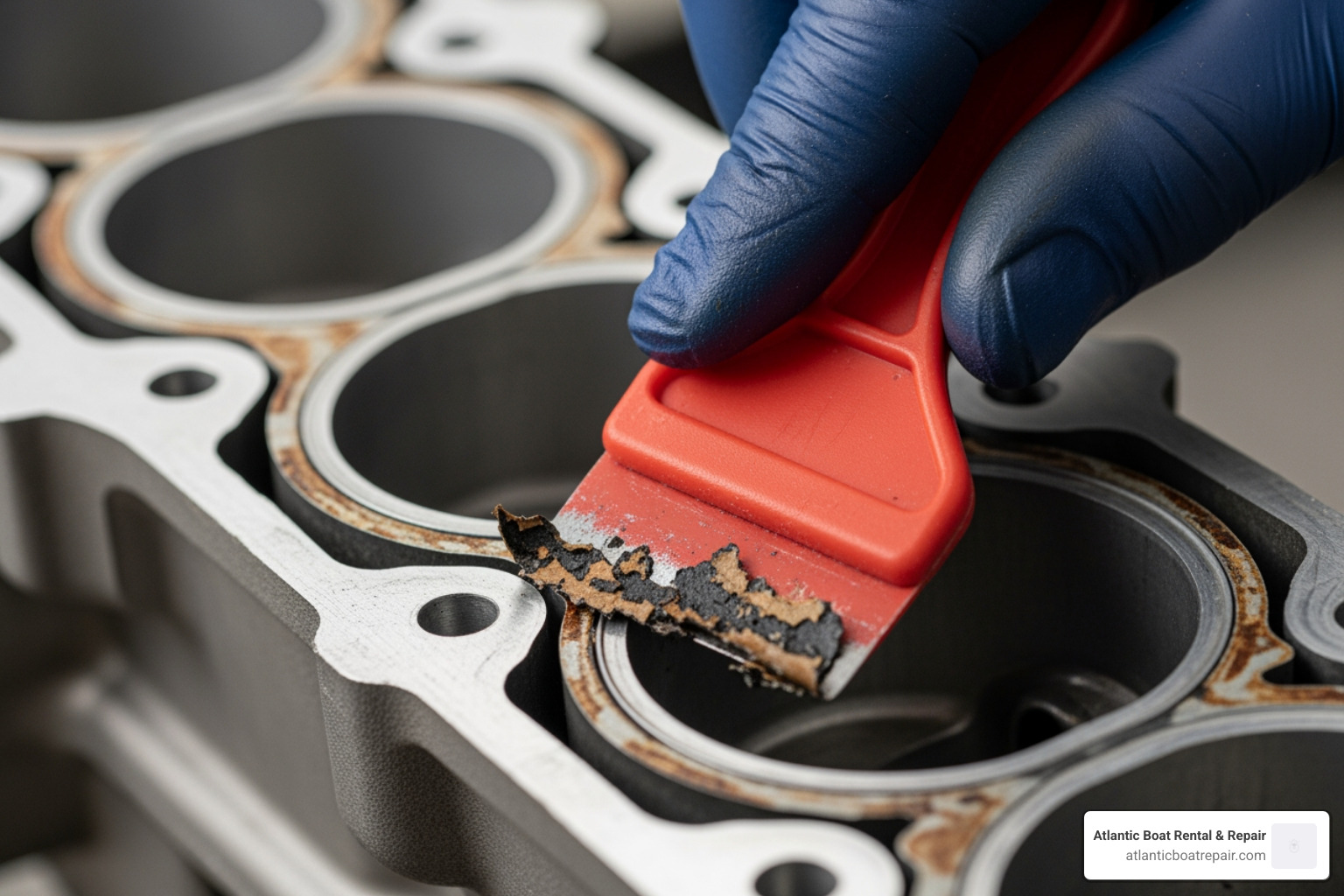
- Use a plastic or brass scraper to remove all old gasket material. Avoid metal scrapers or abrasive pads on aluminum surfaces to prevent scratches that cause leaks.
- For stubborn material, you can use gasket removal chemicals (test first). Clean the surfaces with a solvent like brake cleaner or acetone until no residue remains. Any imperfection will compromise the new Mercury outboard powerhead gasket seal.
Installing the New Mercury Outboard Powerhead Gasket
With pristine mating surfaces, you're ready for the new gasket.
- Gasket Alignment: Place the new gasket on the mid-section's mating surface, ensuring perfect alignment. Most new gaskets should be installed dry. A sealer is generally not recommended unless specified by the manufacturer.
- Lowering the Powerhead: Use the hoist to carefully lower the powerhead onto the mid-section, ensuring the gasket and bolt holes stay aligned.
- Reinstalling Mounting Bolts: Insert all mounting bolts and nuts, and tighten them finger-tight.
- Torque Specifications and Sequence: Your torque wrench and service manual are indispensable here. Torque is critical for preventing leaks and warping. Follow the specified sequence and stages in your manual, tightening bolts in a pattern to the correct values (lb. ft. or N·m). Do not overtighten.
- Reconnecting Linkages and Hoses: Reconnect all lines, connectors, and linkages you disconnected. Double-check that each connection is secure and properly routed.
- Final Checks Before Starting:
- Ensure all tools are clear of the engine.
- Reconnect the battery's positive terminal.
- Check for loose wires or hoses.
- Prime the fuel system if necessary.
- Inspect for fuel or oil leaks before starting.
- Check for water discharge from the tell-tale once running.
After reassembly, perform a brief test run with cooling water, monitoring for leaks or unusual noises.
DIY vs. Professional Repair: Cost and Labor
When facing a Mercury outboard powerhead gasket replacement, the main question is whether to do it yourself or hire a professional. The answer depends on cost, labor, and your mechanical comfort level.
Here's a breakdown comparing the two options:
| Feature | DIY Replacement | Professional Repair |
|---|---|---|
| Part Cost | As low as $9.99 for a gasket, typically $10-50 | $10-50 (same part cost) |
| Labor Time | 1 to 1.5 hours (if a lift is available) | Typically 4-6 hours (includes diagnosis, removal, cleaning, reassembly, testing) |
| Total Cost | $10-$50 (plus tool rental/purchase) | $700-$800 (mostly labor) |
| Skill Level | Moderate to advanced mechanical skills required | Factory-trained technicians, specialized tools, extensive experience |
| Warranty | None | Often includes a warranty on parts and labor |
| Risk | Higher risk of errors, potential for further damage | Lower risk of errors, professional guarantees |
The financial savings of a DIY Mercury outboard powerhead gasket replacement are substantial. With the gasket costing $10-$50 and a professional repair costing $700-$800, most of the expense is labor.
A skilled DIYer with a lift might finish in 1.5 hours, but this doesn't account for complications. A professional quote includes diagnosis, testing, and handling unexpected issues with specialized tools.
When to Call a Professional:
- Lack of experience: If you're not confident with precision work like torque sequences and surface cleaning.
- No specialized tools: If you don't have a torque wrench, engine hoist, or proper gasket scrapers.
- Diagnostic uncertainty: If you're not 100% sure the powerhead gasket is the problem.
- Time constraints: If you need your boat back on the water quickly for cruising our Massachusetts coastline.
At Atlantic Boat Rental & Repair, we offer expert outboard engine services with superior precision and rigorous testing. If you'd like to discuss your repair needs or get a professional assessment, Request a Quote.
Pro Tips and Common Pitfalls to Avoid
Performing a Mercury outboard powerhead gasket replacement is more straightforward if you avoid common pitfalls. Here are some insights from seasoned mechanics:
- Gasket Sealer Usage – Less is More (or None at All): Using gasket sealer on a new gasket is generally not recommended unless specified by the manufacturer. Modern coated gaskets are designed to be installed dry; sealer can cause leaks. A minimal dab of adhesive might be used only to hold the gasket in place during installation, not for sealing.
- Factory Bolt Lock Patches: Factory bolts often have a bonded lock patch that wears off after one or two uses. Consider replacing critical bolts if your service manual recommends it.
- Proper Torque Wrench Use: A torque wrench is a necessity. Use a calibrated wrench and follow the manual's specified sequence and stages to ensure even pressure and prevent warping. Overtightening can damage parts, while undertightening will cause leaks.
- Ensuring All Hidden Bolts Are Removed: Double-check for hidden bolts or studs before trying to remove the powerhead. Forcing it can cause severe damage. Consult your manual's diagrams.
- Cleanliness is Godliness: Perfectly clean mating surfaces are non-negotiable. Any old gasket residue will compromise the seal. Use appropriate scrapers (plastic/brass) and solvents.
- Patience with Stuck Gaskets: Old gaskets can be very difficult to remove. Be patient, use gentle prying with appropriate tools, and don't use excessive force when separating components.
By keeping these tips in mind, you'll significantly increase your chances of a successful and long-lasting Mercury outboard powerhead gasket replacement.
Frequently Asked Questions about Powerhead Gaskets
Here are answers to common questions we hear from boaters in Massachusetts about outboard engine gaskets.
What are the long-term consequences of a blown powerhead gasket?
Ignoring a blown powerhead gasket leads to serious and costly problems from water intrusion. This can cause:
- Engine damage: Water mixing with oil reduces lubrication, causing accelerated wear on bearings, pistons, and the crankshaft.
- Corrosion: Saltwater is highly corrosive and can quickly damage critical internal metal parts.
- Piston damage: Water in the combustion chamber can cause "hydro-lock," potentially bending connecting rods.
- Crankshaft failure: Inadequate lubrication can lead to crankshaft bearing failure, an engine-ending event.
- Exhaust system damage: An internal exhaust leak can deteriorate the exhaust housing.
A small leak can quickly escalate to require a complete engine rebuild or replacement, so timely repairs are crucial.
Should I use gasket sealer on my new Mercury powerhead gasket?
The answer is usually no, unless specified by the manufacturer. Modern gaskets are often coated and designed to be installed dry. Adding sealer can interfere with the seal and even block oil or cooling passages. A few dabs of adhesive may be used for alignment only, not for sealing the joint. When in doubt, install the gasket dry on immaculately clean surfaces.
How do I know it's the powerhead base gasket and not a cylinder head gasket?
Distinguishing between these is key for a correct diagnosis.
- Location of the Leak: A powerhead base gasket leak typically causes external leaks, resulting in water in the lower cowl. A cylinder head gasket leak is internal, leading to symptoms like milky engine oil or compression loss.
- Symptoms Analysis: Water accumulating outside the engine block in the lower cowl strongly points to the powerhead base gasket. Milky oil or internal cooling issues without external leaks suggest a cylinder head gasket (or O-ring) problem.
- Understanding Engine Design: It's vital to know that many Mercury outboards use O-rings for cylinder heads instead of traditional gaskets. Your service manual is the definitive source for your engine's design.
If you're still unsure, our team at Atlantic Boat Rental & Repair has the specialized diagnostic tools to pinpoint the exact source of your leak.
Conclusion
A Mercury outboard powerhead gasket replacement is a significant but achievable repair for the mechanically inclined boat owner. This guide has covered identifying symptoms like water in the lower cowl, the meticulous process of removal and cleaning, and precise reinstallation. The importance of a clean mating surface, correct torque specifications, and proper sealer use cannot be overstated.
While the DIY route can save hundreds on labor, it's crucial to know when to call a professional—especially if you lack the specific tools, experience, or time for a flawless repair.
At Atlantic Boat Rental & Repair, we pride ourselves on our superior precision and rigorous testing for boaters across Plymouth, Kingston, Duxbury, Bourne, and Sandwich, Massachusetts. We also remanufacture and sell "0" time rebuilt outboard engines that meet or exceed manufacturer specifications. Whether you choose the DIY route or opt for professional assistance, we're here to support your boating adventures.
For complex repairs, diagnostics, or the peace of mind that comes with expert service, don't hesitate to Explore our expert outboard engine services.
Comments
Be the first to comment on this article!