
Avoid Spring Surprises: Essential Steps for Boat Engine Winterization
Why Winterizing Your Boat Engine is Non-Negotiable
Boat engine winterization is the process of protecting your engine from freeze damage by draining water or replacing it with antifreeze, changing fluids, and safeguarding internal components before cold weather arrives.
Essential Boat Engine Winterization Steps:
- Stabilize fuel - Add marine fuel stabilizer and fill tank to 95% capacity
- Change engine oil and filter - Remove acidic byproducts and moisture
- Protect the cooling system - Either drain completely or circulate non-toxic antifreeze
- Fog the engine - Spray fogging oil into cylinders to prevent rust
- Change gear lube - Inspect for water contamination (milky appearance)
- Store properly - Keep outdrives/outboards in down position for drainage
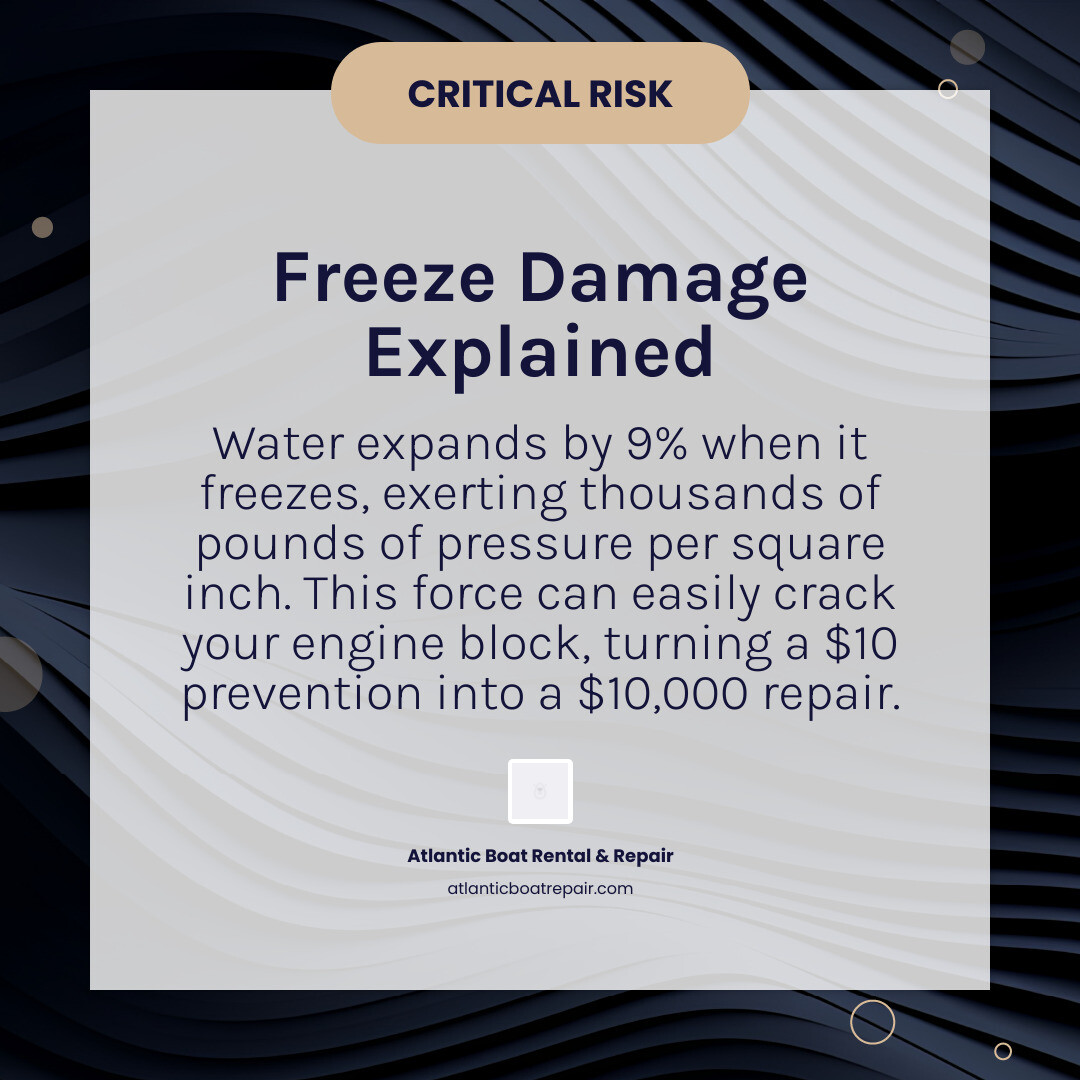
Here's why this matters: a single overnight freeze can expand trapped water in your engine and split a cast-iron block, turning a $10 jug of antifreeze into a $10,000 engine replacement. More than three-quarters of freeze claims involve cracked engine blocks or exhaust manifolds—damage that's entirely preventable.
Water expands by about 9% when it freezes, exerting forces of tens of thousands of pounds per square inch. Even if you live in a mild climate, one unexpected cold snap can destroy your engine. Worse, most boat insurance policies in Canada require winterization as a condition of coverage. Skip this step, and you may face denied claims on top of repair bills.
The good news? Winterizing most engines takes just two to three hours and costs under $200 in supplies—far less than one hour of professional repair labor. Done right, winterization protects your investment, ensures reliable spring startup, and adds years to your engine's lifespan.
I'm Ron Cribbie, owner of Atlantic Boat Repair, and I've spent decades helping boat owners in New England protect their vessels through proper boat engine winterization and maintenance. After seeing too many preventable failures each spring, I know that a few hours of fall preparation saves thousands in repairs and lost boating time.
The Complete Guide to Boat Engine Winterization
Preparing your boat's engine for winter is a critical annual ritual for anyone boating in regions like Plymouth, Kingston, Duxbury, Bourne, or Sandwich, Massachusetts, where freezing temperatures are a certainty. This isn't just about avoiding a cracked block; it's about preserving your engine's longevity, ensuring a smooth spring launch, and protecting your investment. Let's explore the essential steps.
Gathering Your Essential Supplies
Before you begin, gather all the necessary supplies. A quick trip to the marine store now can save you a frantic dash later, or worse, a missed step. Having these items on hand ensures a smooth winterization process:
- Marine Fuel Stabilizer: Essential for preventing stale fuel from gumming up your system.
- Engine Fogging Oil: To protect internal engine components from rust and corrosion.
- Non-Toxic Propylene Glycol Antifreeze: Specifically formulated for marine engines and safe for the environment.
- New Engine Oil and Oil Filter: For a fresh start and to remove corrosive old oil.
- New Gear Lube: To replenish your lower unit and check for water intrusion.
- Basic Hand Tools: Wrenches, screwdrivers, pliers, and a grease gun.
- Flushing Muffs: If you have an outboard or sterndrive, for connecting a water source.
- Bucket: For the antifreeze circulation method or for catching drained fluids.
- Oil-Absorbent Pads: To catch any drips and prevent spills.
- Small Containers: For safely collecting and disposing of hazardous fluids like old oil and antifreeze.
The cost of these supplies is typically under $200, a small price to pay to avoid potentially thousands in repairs. If you're looking for professional assistance with any of these steps, you can find more info about our repair services.
Protecting Your Fuel System for the Long Haul
The fuel system is often the first casualty of improper winterization. The number one cause of clogged fuel injectors and carburetors is stale fuel. If left untreated, fuel can oxidize and form a gum-like substance that wreaks havoc on your engine. This is especially true with modern ethanol-blended fuels (E10), which can absorb moisture over the winter, leading to phase separation—a caustic mixture that settles at the bottom of your tank and can severely damage your engine.
Here’s how to protect it:
- Add Fuel Stabilizer: Pour the recommended amount of marine fuel stabilizer into your tank.
- Fill the Tank: Fill your fuel tank to about 95% full. This minimizes the "lung capacity" for moist air, reducing condensation and ethanol's ability to absorb water.
- Circulate the Stabilizer: Run your engine for at least 10-15 minutes to ensure the stabilized fuel circulates throughout the entire fuel system, including the fuel lines, filters, and carburetors or injectors.
- Change Fuel Filters and Water Separators: Replace your fuel filter(s) and water separator(s) at this time. This ensures any contaminants are removed before storage.
By taking these steps, you’ll prevent varnish, gumming, and phase separation, ensuring your engine fires up reliably next spring.
Changing Engine Oil and Filters
Storing your engine with old oil is like letting a bear hibernate in a dirty diaper – it's just asking for trouble! Old engine oil contains acidic combustion byproducts and moisture, which can lead to corrosion on internal engine components like bearings, pistons, and cylinder walls during long periods of inactivity.
- Warm Up the Engine: Run the engine for a few minutes until it reaches its normal operating temperature. This thins the oil, allowing it to drain more completely and carry away impurities.
- Drain the Old Oil: Use a vacuum pump or drain plug to remove all the old engine oil.
- Replace the Oil Filter: Spin on a new oil filter, ideally one pre-filled with fresh oil to minimize dry running on startup.
- Refill with Fresh Oil: Fill the crankcase with the correct grade and amount of marine-specific engine oil recommended by your manufacturer.
- Circulate Briefly: Run the engine for a few minutes to circulate the fresh oil and check for any leaks around the new filter.
This step is crucial for preventing internal corrosion and ensuring your engine's longevity.
Winterizing Different Engine Types: Outboard vs. Inboard
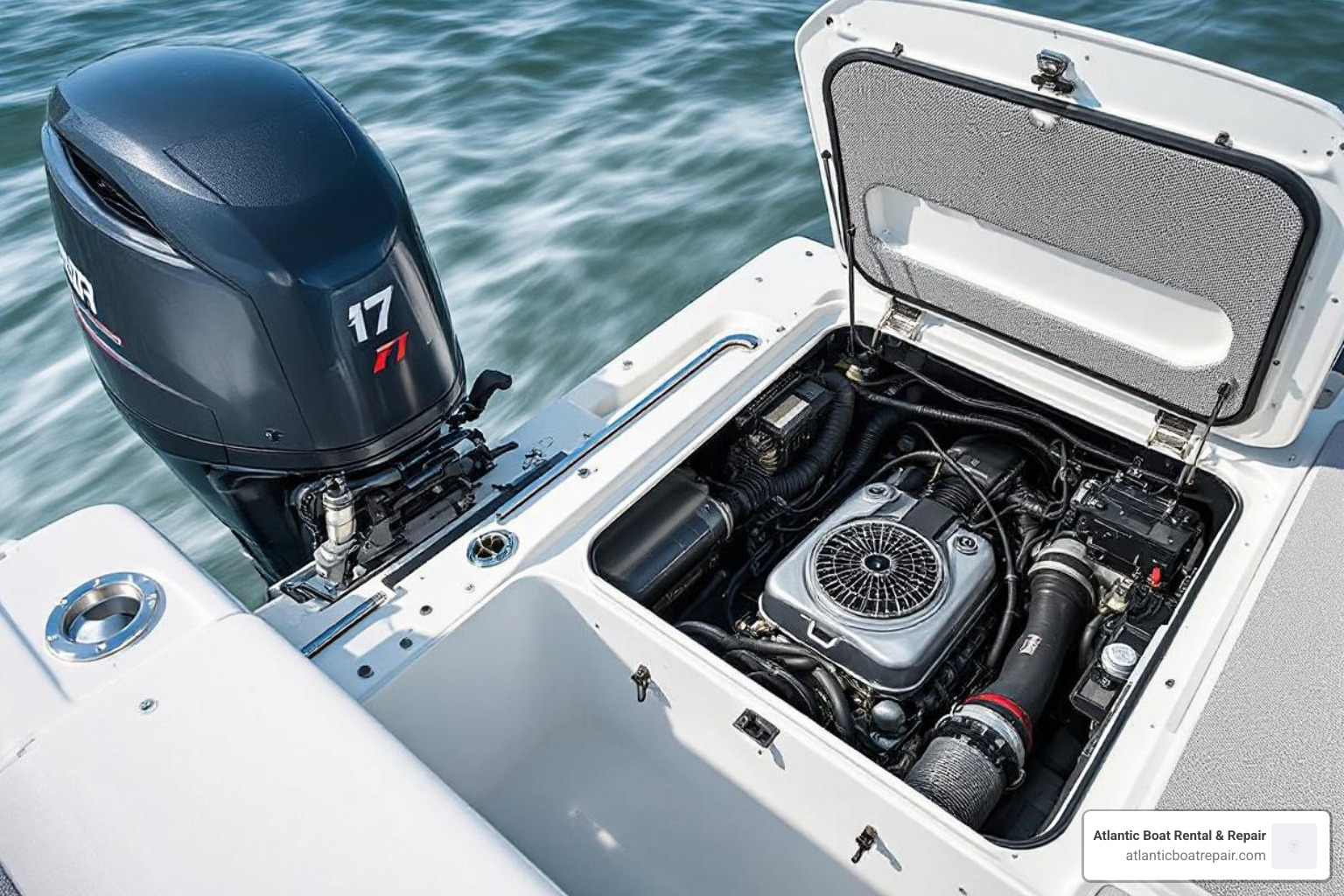
While the goal of boat engine winterization is the same for all engines – preventing freeze damage and corrosion – the methods vary significantly depending on whether you have an outboard or an inboard/sterndrive motor. The key differences lie in their design and cooling systems. Outboard motors are self-contained units mounted outside the boat's transom, making them generally simpler to winterize due to their self-draining nature. Inboard motors, housed inside the hull, often have more complex cooling systems with raw water circulating through the engine block, which requires careful draining or antifreeze circulation to prevent catastrophic damage from trapped water.
Essential Steps for Outboard Boat Engine Winterization
Outboard motors are typically easier to winterize because they are designed to be self-draining when tilted down. However, don't let this simplicity lead to complacency!
- Flush with Fresh Water: Connect flushing muffs to the lower unit and run fresh water through the engine for 10-15 minutes. This clears out any salt, silt, or debris from the cooling passages.
- Change Gear Lube: Drain the old gear lube from the lower unit. Inspect it carefully: if it appears white or creamy, it's a strong indicator of water intrusion, meaning your propeller shaft seals might be compromised and need attention from us. Refill with fresh marine gear lube.
- Check Prop Shaft: Remove the propeller and inspect the prop shaft for any fishing line wrapped around it. Fishing line can cut into propeller shaft seals over time, leading to water in your gearcase. Grease the prop shaft splines before reinstalling the prop.
- Fog the Engine Cylinders: With the engine running (if possible, according to manufacturer's instructions), spray engine fogging oil into the air intake until the engine begins to stumble or white smoke pours out. Alternatively, for a non-running engine, remove the spark plugs and spray fogging oil directly into each cylinder. This coats internal components, protecting them from rust.
- Lubricate and Protect External Parts: Grease all accessible pivot points and seals according to your owner’s manual. Spray the powerhead and rubber components with a corrosion inhibitor.
- Store Engine Upright: Ensure the outboard is tilted fully down (vertical position) to allow any remaining water to drain completely.
- Battery Removal and Storage: Disconnect the battery and remove it from the boat. Store it in a cool, dry place and charge it periodically throughout the winter to maintain its charge.
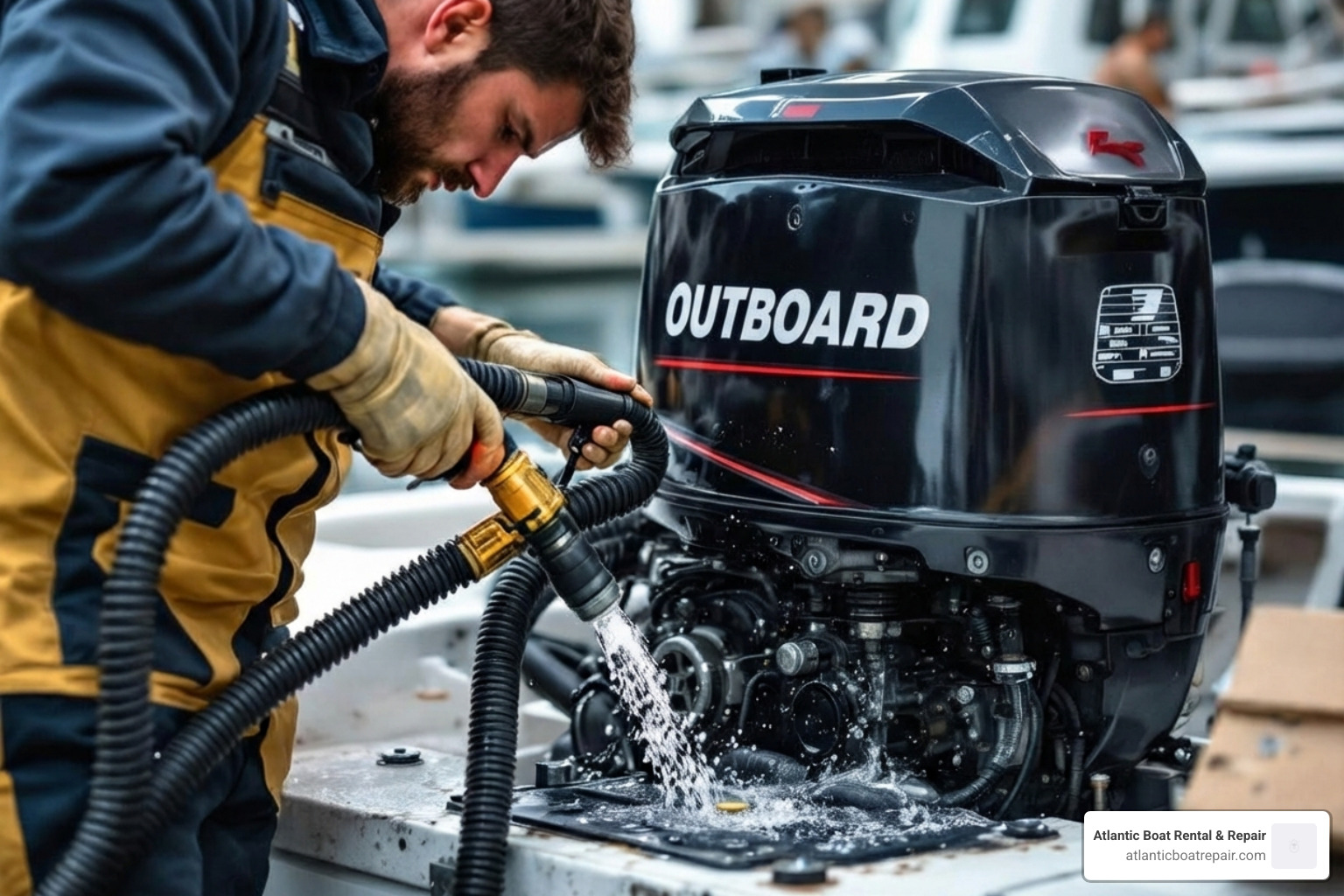
Key Steps for Inboard & Sterndrive Boat Engine Winterization
Winterizing an inboard or sterndrive engine is largely about three things: keeping water from freezing inside the engine, protecting internal parts from corrosion and gunk, and making sure the boat fires up the first time next spring. These engines typically have cooling systems that circulate raw (outside) water through portions of the engine, which must be completely drained or filled with antifreeze.
- Drain the Raw-Water System: This is perhaps the most critical step. Locate all drain plugs and petcocks on the engine block, exhaust manifolds, and any other raw water-cooled components. Open them and allow all water to drain. Be thorough, as even a tablespoon of trapped water can expand and crack expensive parts.
- Circulate Antifreeze: Once drained, or as an alternative to draining, circulate non-toxic propylene glycol antifreeze through the raw-water cooling system.
- Bucket Method: Close the raw water intake seacock. Remove the raw water intake hose from the seacock and insert it into a bucket filled with several gallons of undiluted, non-toxic marine antifreeze. Start the engine and run it at idle until pink antifreeze discharges from the exhaust outlet for at least 30 seconds.
- Thermostat Considerations: The engine's thermostat blocks water flow until the engine heats up. To ensure antifreeze reaches all passages, the thermostat must be open. Some engines may require temporarily removing the thermostat or running the engine to operating temperature before circulating antifreeze.
- Fog Gasoline Engines: Remove the spark plugs. Spray fogging oil directly into each cylinder, then briefly turn the engine over by hand to distribute the oil. Reinstall the spark plugs (replace them if they’re in bad shape). Our expert team can help you identify if your spark plugs need replacing and provide spark plug replacement services.
- Inspect Sterndrive Boots: If you have a sterndrive, inspect the rubber boots for any cracks, tears, or signs of wear. These protect critical components and prevent water intrusion.
- Drain and Refill Outdrive Gear Lube: Drain the old gear lube from the outdrive. Check for water contamination (milky appearance). Refill with fresh marine gear lube. Store the outdrive in the down position to allow any residual water to drain and prevent ice formation.
The High Cost of Cutting Corners: Risks of Improper Winterization
Forgetting or improperly performing boat engine winterization can lead to a host of expensive and frustrating problems come spring. We've seen it all too often in our shop in Plymouth, MA, and the consequences are never pretty.
- Cracked Engine Blocks and Exhaust Manifolds: This is the most common and devastating damage. Water trapped in the engine block or exhaust manifold, even in small amounts, expands when it freezes. This expansion can exert forces of tens of thousands of pounds per square inch, easily splitting cast-iron blocks and manifolds. A single overnight freeze can turn a minor oversight into a $10,000 engine swap, or more.
- Rusted Internal Components: Even if temperatures don't drop low enough to crack components, months of idle time with residual acids and moisture in the crankcase can pit bearings, cylinder walls, and other vital engine parts. This leads to premature wear, reduced performance, and eventually, engine failure.
- Damaged Plumbing and Cooling Systems: Beyond the engine, any water left in freshwater systems, marine heads, or air conditioning units can freeze, causing pipes to burst, pumps to crack, and fixtures to shatter.
- Voided Insurance Coverage: Many boat insurance policies, especially in regions with freezing temperatures, explicitly require proper winterization as a condition of coverage. Failing to winterize your boat may result in a loss of coverage or denial of claims related to damage that could have been prevented. Don't risk it!
- Costly Spring Repairs: Instead of enjoying the first warm days on the water, you could be facing extensive and expensive repairs, delaying your boating season significantly.
- Water in Gear Lube Cracking the Gearcase: If water gets into your gear lube (often indicated by a milky or creamy appearance) and freezes, it can expand and crack the gearcase of your outboard or sterndrive, leading to costly repairs to the lower unit.
The risks of not properly winterizing your engine far outweigh the time and minimal expense of doing it right.
Frequently Asked Questions about Boat Engine Winterization
We often get questions from boat owners in our communities like Duxbury, Bourne, and Sandwich, Massachusetts, about the specifics of winterization. Here are some of the most common ones.
What is the difference between automotive antifreeze and marine antifreeze?
This is a crucial distinction! Never use automotive antifreeze (ethylene glycol) in your boat's raw-water cooling system or freshwater plumbing.
- Automotive Antifreeze (Ethylene Glycol): This is highly toxic and effective at preventing freezing. However, it's designed for closed-cooling systems with heat exchangers, not raw-water systems where the coolant is discharged overboard. It's extremely harmful to marine life and shouldn't enter waterways.
- Marine Antifreeze (Propylene Glycol): This is non-toxic and biodegradable, making it safe for use in raw-water cooling systems and potable (drinking) water systems, as it can be discharged into the environment without severe harm. Marine antifreeze is typically pink in color and is explicitly labeled for marine use with various freeze protection ratings (e.g., -50°F, -100°F).
Always choose the non-toxic, pink propylene-glycol blend marked for marine engines. When flushing out any antifreeze in the spring, remember to properly dispose of hazardous fluids to protect our local waters. You can visit www.earth911.com to learn about local waste disposal options.
Can I just drain the water instead of using antifreeze in my inboard engine?
While draining can remove a significant amount of water, relying solely on it for boat engine winterization is risky, especially in our New England climate.
- Risks of Draining Alone: Even after a thorough draining, small pockets of residual water can remain in low spots of the engine block, manifolds, heat exchangers, or hoses. Even a tablespoon of water left behind can freeze and cause damage.
- Incomplete Drainage: It's incredibly difficult to guarantee that every drop of water has been removed from every nook and cranny of a complex engine cooling system.
- Antifreeze Corrosion Inhibitors: Marine antifreeze not only prevents freezing but also contains corrosion inhibitors that protect internal engine components from rust and corrosion, especially in salt-rich passages. This added layer of protection is not provided by simply draining.
For peace of mind and maximum protection against freeze damage and corrosion, we always recommend circulating non-toxic marine antifreeze through your inboard engine's raw-water cooling system after draining. It's the cheapest insurance a skipper can buy!
How do I protect the engine from corrosion during winter?
Protecting your engine from corrosion during winter storage is paramount for its longevity and reliable performance. Here’s a multi-pronged approach:
- Changing Oil to Remove Acids: As discussed earlier, old engine oil contains acidic combustion byproducts. Changing your engine oil and filter before storage removes these corrosive elements, preventing them from attacking internal engine components over the winter months.
- Fogging Oil's Role: Fogging oil is specifically designed to coat the internal surfaces of your engine's cylinders, pistons, and valves with a protective layer of lubricant. This film prevents "flash rust" that can occur when metal surfaces are exposed to humid air during storage. For gasoline engines, this is a critical step.
- Using Corrosion Inhibitor Spray on External Parts: Don't forget the outside! Lightly mist electrical connections, spark plug wires, fittings, hose clamps, and all exposed metal surfaces (like the powerhead on an outboard) with a marine-grade corrosion inhibitor spray. You can also wipe exposed metal parts with a rag soaked in clean engine oil. This creates a barrier against moisture and humidity, which are major culprits of rust and corrosion.
- Sacrificial Anodes: Check and replace sacrificial anodes (zincs, aluminum, or magnesium) on your outdrive or lower unit. These are designed to corrode instead of your engine's vital metal components, and they should be replaced when 50% or more deteriorated.
By combining these steps, you create a comprehensive shield against the internal and external threats of corrosion during winter storage.
Ensure a Perfect Start Next Season
As we've explored, proper boat engine winterization is more than just a seasonal chore; it's a vital investment in your boat's future. It's about protecting your engine from the brutal New England winter, ensuring a hassle-free spring launch, and ultimately, adding years to your beloved vessel's lifespan. The time and effort you put in now will undoubtedly save you significant time, money, and frustration when the warmer weather returns.
If the DIY process seems overwhelming, or if you simply prefer the peace of mind that comes with professional service, we're here to help. At Atlantic Boat Rental & Repair, we specialize in remanufacturing and selling "0" time rebuilt outboard engines, and our expertise extends to meticulous winterization. We pride ourselves on superior precision, ensuring your engine is protected to twice manufacturer specifications and rigorously tested for new-like performance and reliability. As Scott Klein, president of an award-winning marine service shop, once noted, "When we are winterizing engines, we might see things that are wrong with them that our customers might not catch." Our experienced technicians can spot potential issues that might otherwise go unnoticed, saving you from bigger problems down the line.
Don't let preventable damage spoil your next boating season. Reach out to us for expert boat engine winterization and ensure your engine is ready for adventure. Get a Quote today, or explore our comprehensive Services for all your engine needs in Plymouth, Kingston, Duxbury, Bourne, and Sandwich, Massachusetts. We look forward to helping you enjoy many more seasons on the water!
Comments
Be the first to comment on this article!