
Is Gel Coat Waxing Worth It? The Truth About Protecting Your Boat
Why Your Boat's Gelcoat Needs Protection
Gel coat waxing is the process of applying a protective wax layer over your boat's gelcoat surface to shield it from UV rays, oxidation, and environmental damage. Here's what you need to know:
Quick Answer:
- What it is: Applying marine wax to create a protective barrier over your boat's gelcoat
- Why it matters: Prevents fading, oxidation, and chalky appearance while preserving your boat's value
- How often: Every 3-6 months, or twice per year minimum
- Key benefit: Makes cleaning easier and adds years to your gelcoat's life
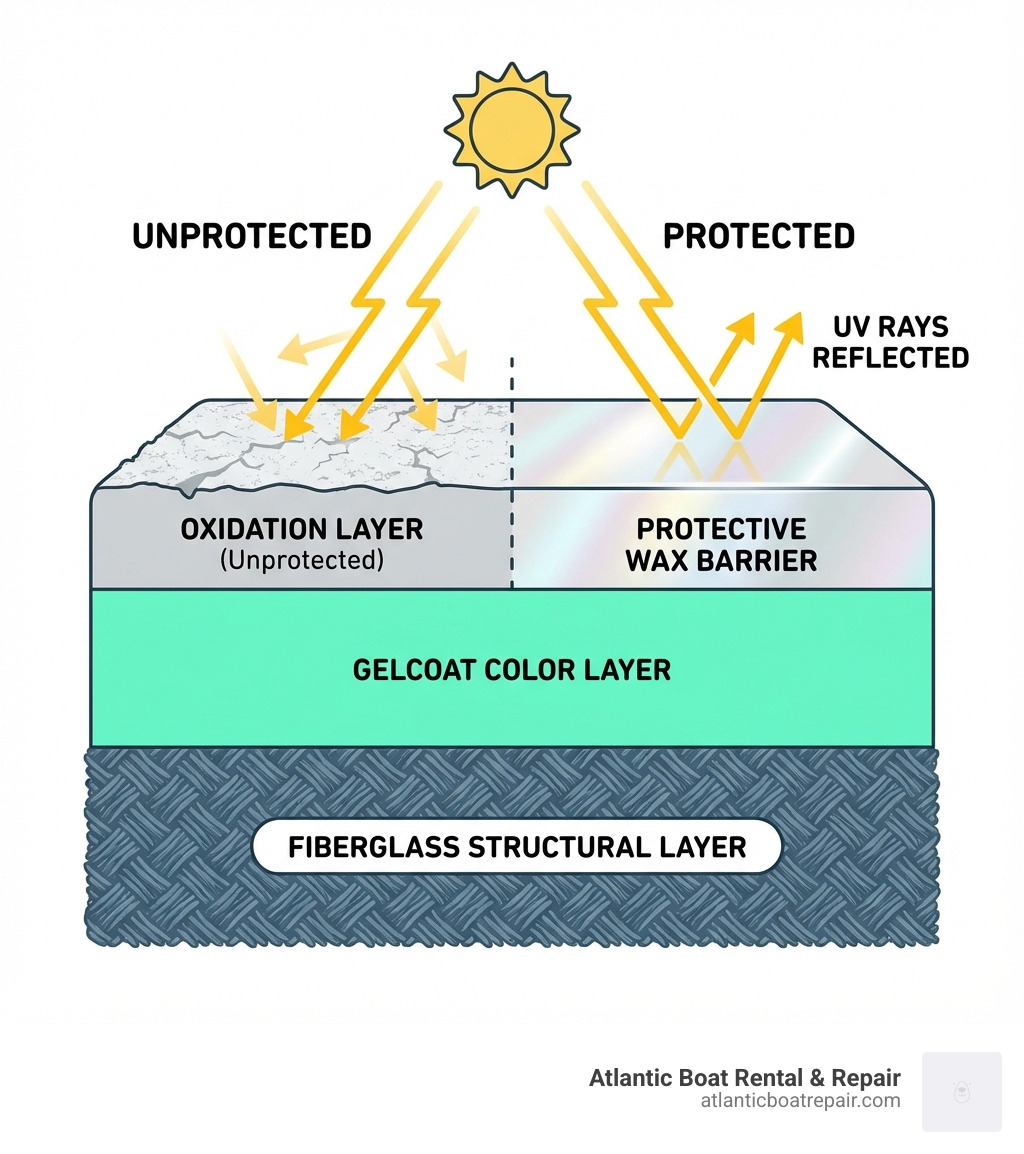
Think of your boat's gelcoat like human skin. Just as skin needs protection from the sun, your boat's gelcoat—the pigmented resin that colors your fiberglass boat—needs regular care to stay healthy.
Here's the problem: Gelcoat is porous and petroleum-based. Without protection, it dries out under sunlight and begins to oxidize. The result? A chalky, dull appearance with faded color and stubborn stains.
The research is clear: gelcoat ages like human skin under sunlight and will dry out without protection unless the oil-based substrate is nurtured. Without sufficient protection, the gelcoat will begin to oxidize, eventually fade in color, and appear chalky and dull.
The good news? Regular waxing creates a protective barrier between your boat's gelcoat and the environment. This makes it harder for dirt and grime to stick to the surface and protects against oxidation and scratches. You'll spend less time cleaning and more time on the water.
Even better, regularly waxing your boat doesn't only ensure that it's pretty to look at for years to come—it also preserves its value.
Preparing the Surface for a Perfect Finish
Before we dive into the satisfying shine of a freshly waxed boat, we need to ensure the canvas is clean and ready. Proper preparation is the cornerstone of effective gel coat waxing. Think of it as preparing for a masterpiece; you wouldn't paint on a dirty, uneven surface, would you?
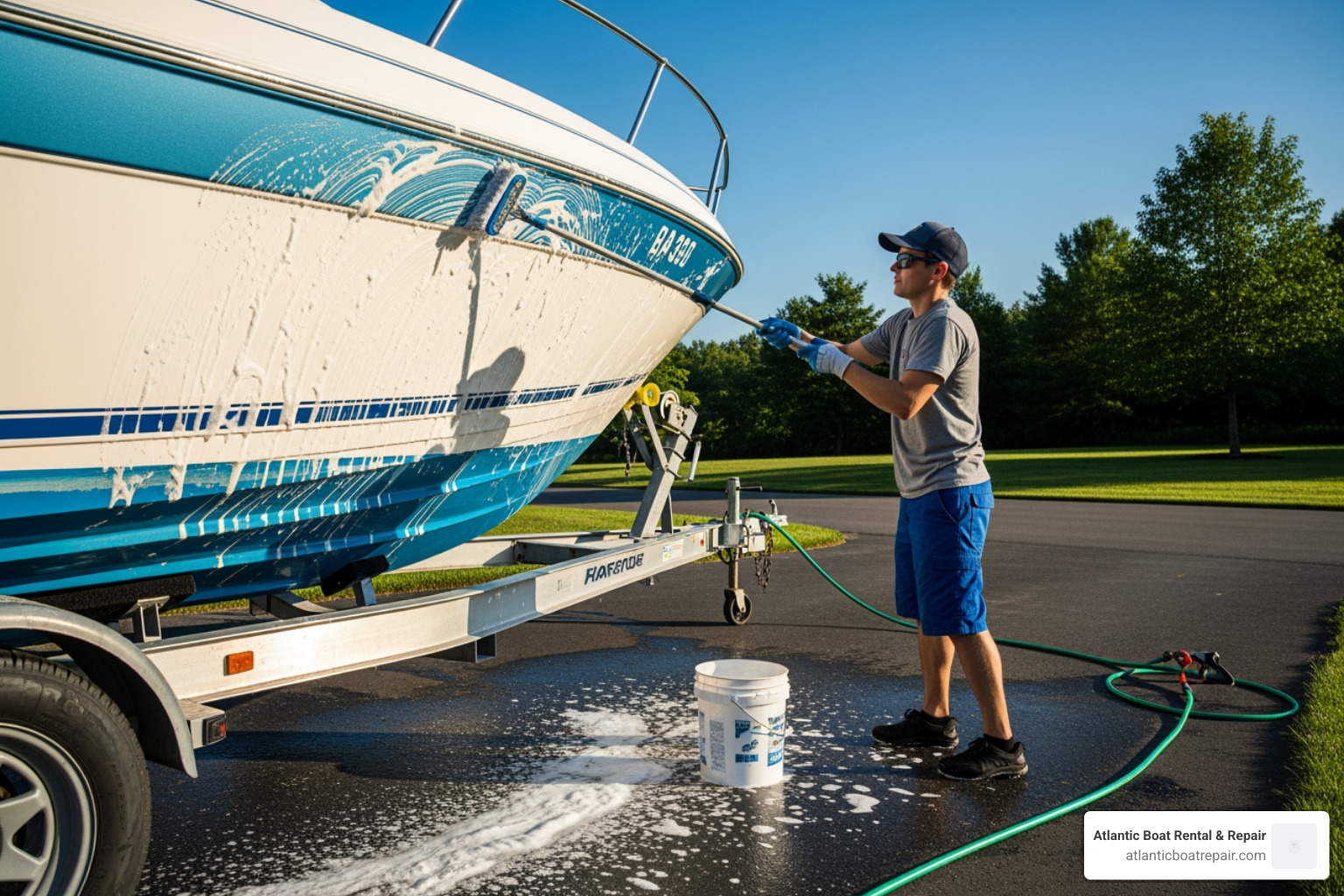
First things first: secure your boat. Whether it's on a trailer or in the water, ensure it's stable and safe to work on. A flat, even surface is ideal. Once secure, the real work begins with a thorough cleaning. We recommend washing the boat from stem to stern to remove salt, grime, and stains that accumulate from our beautiful Massachusetts waters. For the initial deep clean, especially if the gelcoat has seen better days, a robust degreasing agent like Dawn dish detergent can be used to strip away old waxes and contaminants. Afterwards, switch to a boat soap specifically designed not to remove wax for regular cleaning.
As you clean, assess the surface. A simple test helps us understand the gelcoat's current protection level: shower the gelcoat with freshwater. If the water beads up, it still has some protection. If it sheets off, the gelcoat is exposed and needs immediate attention.
Oxidation is a common culprit for dull, chalky gelcoat, making it appear powdery and grey as dirt embeds within it. We treat oxidation like scales on a fish that need to be scraped away. For minor oxidation, a cleaner wax with fine abrasives can work wonders. For stubborn stains like rust marks from metal components or tannins from the ocean, diluted oxalic acid or a marine oxalic acid-based gelcoat cleaner product (such as Y10 or Star Brite Hull Cleaner) can be highly effective. If mildew has settled in, adding a cup of household bleach to your cleaning solution can help eradicate it. Always rinse the cleaned surface thoroughly with boat cleaning detergents and let it dry completely before moving on.
The Role of Compounds and Polishes
When your gelcoat is looking tired, faded, or chalky, simply waxing over it won't achieve the desired results. This is where compounds and polishes come into play, serving as the heavy lifters in our gelcoat restoration process.
Compounding is essentially using an abrasive paste to remove a very thin layer of oxidized or damaged gelcoat. Imagine it as liquid wet sandpaper. It's the most gruelling part of the process, but crucial for removing heavy oxidation, deeper scratches, and restoring the original luster. Compounds come in various abrasiveness levels; we always start with the gentlest possible to avoid removing unnecessary gelcoat.
Polishing, on the other hand, uses finer abrasives to refine the surface after compounding, removing any swirl marks left by the compound and enhancing the gloss. Products like Presta Chroma Ultra Polish are excellent for achieving a high-gloss finish. Cleaner waxes, which often contain fine abrasives, can act as a one-step solution for minor oxidation and light swirl removal.
For best results, especially on anything but the smallest boat, we recommend using a variable speed buffing machine. Machines that both oscillate and rotate are generally safer and easier to operate, reducing the risk of damaging graphics or hardware. They also allow for better control, preventing you from buffing too hard or burning the gelcoat. Keeping the buffing pad damp during compounding is crucial to prevent burning or discoloring the gelcoat. Our experienced marine technicians always advise working in small sections and using a steady, even motion. Never hesitate to ask us for tips, advice, or help to ensure you can keep your boat in the best shape possible.
Essential Supplies and Tools
To achieve that professional, gleaming finish, having the right tools and supplies for your gel coat waxing efforts is just as important as the technique itself. Here's what you'll need in your arsenal:
- Orbital Buffer: A variable speed orbital buffer is invaluable for efficient and effective compounding and polishing. It significantly reduces the physical effort required compared to hand application.
- Buffing Pads: You'll need an assortment, including wool cutting pads for compounding and foam polishing pads for finer finishes. Ensure you have several, as they can get saturated with product.
- Buffing Compounds & Polishes: A range from coarse compounds (like Presta Gelcoat Compound or Starke® marine cutting compounds) for heavy oxidation, to microfine compounds, and finally a glaze finishing compound for ultimate smoothness and swirl removal.
- Boat Wax/Sealant: Choose a high-quality marine wax or synthetic polymer sealant designed for gelcoat.
- Microfiber Towels: Plenty of clean, soft microfiber towels are essential for wiping away residue and buffing to a shine. Terry towels can also be used.
- Sponges: Large, clean, and often wet sponges are perfect for applying cleaner waxes by hand in small areas.
- Buckets: For washing and rinsing.
- Water Source & Hose: Continuous access to fresh water for rinsing and keeping pads damp.
- Dewaxing Solvent: To thoroughly remove old wax before reapplication.
- Boat Soap: A pH-neutral, wax-safe boat soap for regular cleaning.
- Misting Bottle: To keep buffing pads damp during compounding.
- Safety Gear: Gloves and eye protection are crucial, especially when handling cleaning solutions and operating power tools.
Choosing the Right Wax for Your Boat's Gelcoat
Once your boat's surface is impeccably clean and prepped, the next critical step in gel coat waxing is selecting the right protective product. With a variety of options available, understanding their differences will help you achieve the best results for your boat.
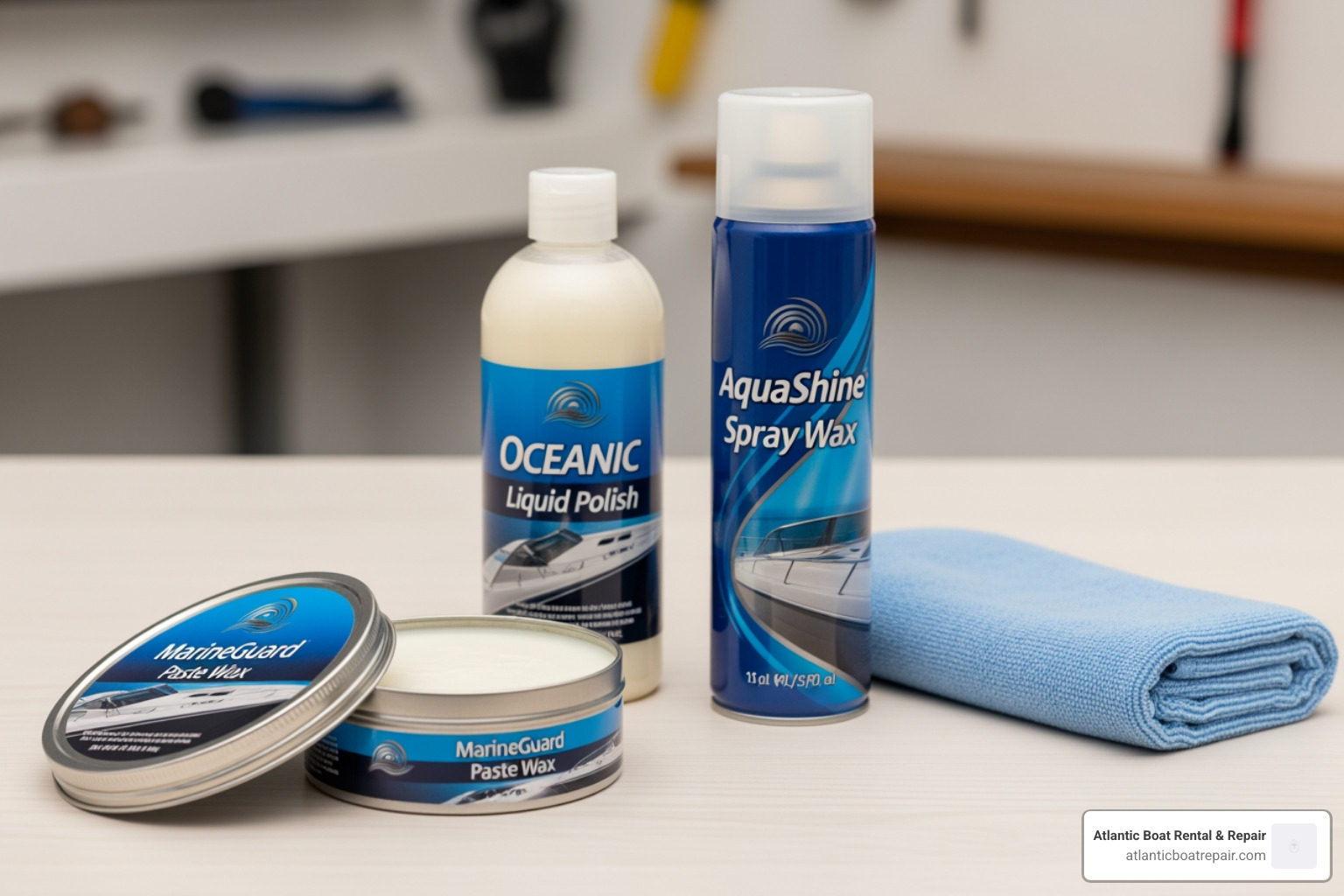
When it comes to marine waxes, we often categorize them by their composition and intended use:
- Carnauba Wax: This is a natural wax known for providing a deep, rich, high-gloss shine. It's excellent for newer or well-maintained boats where the gelcoat is already in good condition. While it delivers a beautiful finish, its durability might be slightly less than synthetic alternatives, and it can require more effort to apply.
- Synthetic Polymer Sealants: These advanced formulations offer superior durability and protection. They chemically bond to the gelcoat, creating a tough, long-lasting barrier against UV rays, saltwater, and contaminants. Products like FINISH FIRST, a synthetic polymer polish, are known for their exceptional weather resistance and ability to repel over 97.88% of harmful UV sunlight. They are suitable for all conditions and offer robust protection.
- Cleaner Wax: As the name suggests, cleaner waxes combine a mild abrasive cleaner with a protective wax. They are ideal for addressing light oxidation, minor stains, and slight imperfections, offering a convenient one-step solution. Starke Revolution Cleaner Wax 128oz is an example of a marine-grade polymer sealant that functions as a polish with swirl-removing capabilities.
- Polishing Wax: This type of wax is designed for well-maintained boats that just need an extra layer of gloss and protection without significant corrective work. It's often finer than a cleaner wax.
- Restorer Wax: For older boats with more significant oxidation or damage, a restorer wax might be needed. These products typically have more aggressive cleaning agents to revitalize the gelcoat before laying down a protective layer.
When considering consistency, liquid waxes are generally the easiest to apply, spreading smoothly and evenly. Paste waxes, while requiring a bit more effort, often provide a longer-lasting finish and a deeper look. Synthetic sealants can come in both liquid and paste forms, offering the benefits of chemical bonding regardless of consistency.
[TABLE] Comparing Boat Wax Types
| Wax Type | Best For | Durability | Application |
|---|---|---|---|
| Carnauba | New or well-maintained boats, high gloss | Good | More effort |
| Synthetic Polymer | Long-lasting UV protection, all conditions | Excellent | Easy to moderate |
| Cleaner Wax | Light oxidation, one-step process | Moderate | Easy |
| Restorer Wax | Heavy oxidation, older boats | Varies | More effort |
Understanding Synthetic Polymer Technology
Modern marine care has been revolutionized by synthetic polymer technology, offering protection that goes far beyond traditional waxes. Unlike conventional waxes that simply dry on the surface, synthetic polymer sealants, like those found in FINISH FIRST, work through a process of chemical bonding and curing.
These high-tech polymers lay down a tough, synthetic film onto the gelcoat. The polymer precursors chemically bond to the surface, creating an exceptionally durable and weather-resistant coating. This isn't just about drying; it's about forming a chemical adhesion that makes the protection much more resilient.
This robust film provides superior protection from air and water-borne contaminants. It's also an exceptional sunblock, repelling over 97.88% of harmful ultra-violet sunlight, retarding oxidation and sun fading. The polymer precursors are engineered with functional groups that contribute to water repellency, bind to the gelcoat, and form a strong network, resulting in a tough, protective barrier. The coherent reflection of light off this cured polymeric film improves the gloss and creates an impressive depth of shine that lasts. This advanced technology ensures your boat's gelcoat is not just shiny, but truly protected. You can explore more about these advanced polishes for yacht care.
The Ultimate Guide to Gel Coat Waxing: A Step-by-Step Process
With your boat prepped and the right wax chosen, it's time for the satisfying process of applying that protective layer. Gel coat waxing is a methodical task, best approached in stages to ensure thorough coverage and a flawless finish.
We recommend working in small sections, typically two-foot squares, to maintain control and ensure even application. While some products can be applied by machine, many waxes are best applied by hand, especially around fittings and hardware.
Step 1: Compounding and Polishing (If Necessary)
If your gelcoat required compounding to remove oxidation or imperfections, this is where you'd execute that process. Apply your chosen compound to a clean buffing pad in a criss-cross fashion. Using an orbital buffer set to a low speed, work the compound into the gelcoat in sections of less than a square meter. Move the buffer back and forth, horizontally and vertically, ensuring even coverage. Remember to keep the buffing pad damp to prevent the compound from drying out and potentially burning the gelcoat.
Once you've worked the compound into the section, wipe away any residue with a clean microfiber towel. You should see a noticeable improvement in the gelcoat's smoothness and clarity. If necessary, follow with a finer polish to remove any remaining swirl marks and further improve the shine. For comprehensive gelcoat restorations in our local Plymouth, MA area, we recommend consulting professionals who specialize in these services.
Step 2: Applying the First Coat of Wax
Now, for the actual gel coat waxing. Apply a thin, even coat of your chosen marine wax or sealant to a clean applicator pad or microfiber towel. Working in those small, manageable sections, apply the wax to the gelcoat using gentle, overlapping circular motions. The goal is to create a uniform, thin layer, avoiding thick applications which can be harder to buff off.
Allow the wax to dry to a haze. The time this takes can vary depending on the product, temperature, and humidity, but typically it's between 5-10 minutes. The importance of the haze test for your gel coat waxing process cannot be overstated: if you buff too soon, the wax won't have fully bonded; too late, and it might be difficult to remove. The wax should look cloudy or dull, not wet.
Step 3: Buffing to a High-Gloss Shine
Once the wax has properly hazed over, it's time to reveal that brilliant shine. Using a fresh, clean microfiber towel or a clean buffer bonnet, gently buff off the dried wax. Work in small sections, using light pressure and a circular motion. As you buff, you'll see the gelcoat transform from hazy to a deep, reflective gloss. Flip your towel frequently to a clean side to avoid re-depositing wax residue.
This step is where the magic happens, and proper technique ensures a flawless gel coat waxing finish. Take your time, ensure all haze is removed, and step back to admire your handiwork.
Maintaining the Shine and Avoiding Common Mistakes
Achieving a gleaming gelcoat is rewarding, but maintaining that brilliance requires ongoing care and avoiding common pitfalls. Regular maintenance is key to protecting your investment and enjoying a beautiful boat for years to come.
We generally recommend a full wax application every 3 to 6 months, or at least twice a year, depending on your boat's usage and exposure to the elements. Boats stored uncovered, especially in our harsh New England sun, may benefit from more frequent applications. A quick water beading test (as mentioned earlier) can tell you if it's time for another coat.
Between full waxing sessions, simple practices can significantly extend the life of your finish. Always rinse your boat thoroughly with fresh water after every use, even if you've only been in freshwater. This removes salt, dirt, and other contaminants before they have a chance to bond with the gelcoat. When washing, use a pH-neutral boat soap that specifically states it will not remove wax. For vulnerable areas that see more wear or sun exposure, quick spot treatments with a spray wax can offer a boost of protection.
However, even with the best intentions, mistakes can happen. Here are some common errors to avoid during gel coat waxing:
- Waxing in direct sunlight: Applying wax to a hot surface in direct sunlight can cause it to dry too quickly, making it difficult to spread evenly and buff off, often leading to streaks and uneven finish. Always work in the shade or on a cool day.
- Applying too much product: When it comes to waxes and polishes, remember: less is more. A thin, even coat is far more effective than a thick, globby one, which wastes product and makes buffing a nightmare.
- Using dirty applicators or towels: Introducing dirt or grit from an unclean applicator or towel can scratch your freshly polished gelcoat. Always use clean, dedicated applicators and fresh microfiber towels for each step. Dropping a sponge or pad on the ground means it's time for a new one or a thorough wash.
- Buffing too hard: Excessive pressure with a buffer, especially a rotary one, can generate too much heat, potentially burning or damaging the gelcoat. It can also create unsightly swirl marks. Use power buffers gently and allow the product and pad to do the work.
By following these best practices and avoiding common mistakes, you'll keep your gelcoat looking its best and protect it from the harsh marine environment.
Alternatives to Traditional Waxing
While traditional gel coat waxing remains a popular and effective method for protecting your boat, advancements in marine surface technology offer compelling alternatives for long-term protection. These options can provide extended durability and often require less frequent reapplication, though they typically involve a higher initial investment or professional application.
- Ceramic Coatings: These are relatively new to the marine market but offer exceptional, long-lasting protection. Ceramic coatings form a semi-permanent bond with the gelcoat, creating an incredibly hard, hydrophobic barrier that repels water, dirt, and UV rays. They provide superior scratch resistance and gloss retention compared to waxes. While some DIY kits exist, professional application is often recommended to ensure proper surface preparation and even coating, maximizing their lifespan and benefits.
- Polymer Sealants: As we discussed with synthetic polymer technology, these are advanced chemical formulations that bond to the gelcoat. They offer significantly longer protection than natural waxes and often include strong UV inhibitors. Many high-quality marine polishes, like those from Swissvax, fall into this category, providing excellent gloss and durability.
These alternatives are designed for long-term protection, reducing the frequency of maintenance. While they might require a more meticulous application process, the improved durability and ease of cleaning often make them a worthwhile investment for boat owners looking for superior protection. For those considering a comprehensive gelcoat restoration and protection strategy, we can discuss these advanced options further.
Frequently Asked Questions About Boat Waxing
We often hear similar questions from boat owners in Plymouth, Kingston, Duxbury, Bourne, and Sandwich, Massachusetts, eager to protect their vessels. Let's tackle some of the most common inquiries about gel coat waxing.
Can I use car wax on my boat's gelcoat?
While it might seem convenient to grab that leftover car wax, we strongly advise against using car wax on your boat's gelcoat. Here’s why marine-specific products are superior:
- Gelcoat vs. Clear Coat: Your boat's gelcoat is significantly thicker and more porous than the clear coat on a car. It's designed to withstand much harsher elements. Car waxes are formulated for automotive paint finishes, which have different chemical compositions and protective needs.
- UV Inhibitors: Marine waxes and sealants are specifically engineered with robust UV inhibitors to combat the intense sun exposure boats endure, especially on the water. This is crucial for preventing fading, chalking, and oxidation. Car waxes simply don't offer the same level of UV protection needed for the marine environment.
- Saltwater Resistance: Our boats in Massachusetts waters are constantly exposed to saltwater, which is highly corrosive. Marine-specific formulas are designed to resist the damaging effects of salt, chemicals, and pollutants found in marine environments, providing a more durable barrier.
- Durability: Marine waxes are built to last longer under extreme conditions, offering a more resilient protective layer against water, grime, and the elements than their automotive counterparts.
In short, for optimal protection and longevity of your boat's finish, always opt for marine-specific waxes and sealants.
What is the difference between gelcoat with wax and without wax?
This question often arises in the context of gelcoat repairs rather than routine maintenance waxing. It refers to the composition of the gelcoat resin itself, not the protective wax we apply afterward.
- Gelcoat with Wax (Sanding Gelcoat): This type of gelcoat has a small amount of paraffin wax additive mixed into the resin. During the curing process, this wax rises to the surface, creating a barrier that seals the gelcoat from the air. This allows it to fully cure to a hard, tack-free finish that can be sanded and polished. It's primarily used for the final layer of a gelcoat repair, ensuring a smooth, ready-to-finish surface. In fact, about 95% of gelcoat repairs are done with wax additive.
- Gelcoat without Wax (Laminating Gelcoat): This gelcoat contains no wax additive. When it cures, the surface remains slightly tacky, or "green." This tackiness is crucial for chemical bonding when applying subsequent layers of fiberglass, resin, or more gelcoat. It's typically used in molds for manufacturing new boats or for intermediate layers in a repair where more material will be applied on top. If used as a final layer, it requires an external air barrier (like PVA spray, mylar, or wax paper) to cure properly and become tack-free. PVA (Polyvinyl Alcohol) creates a barrier from the air, allowing gel coat to cure by forming a skin that encapsulates it.
So, while we apply a protective wax over the gelcoat for maintenance, the "wax" in "gelcoat with wax" refers to an additive within the gelcoat resin for proper curing during repairs.
How often should I wax my boat?
The frequency of gel coat waxing can vary, but a good rule of thumb is to wax your boat at least twice a year. However, several factors can influence this:
- Usage: A boat that's used frequently will naturally experience more wear and tear, necessitating more frequent waxing.
- Sun Exposure: Boats stored outdoors or in direct sunlight, especially during the peak summer months in Massachusetts, will need more frequent UV protection. Gelcoat ages like human skin under sunlight, so consistent protection is vital.
- Salt vs. Freshwater: Saltwater is more aggressive on gelcoat than freshwater. If your boat is primarily in saltwater, consider waxing every 3-4 months. Freshwater boats might stretch to 6 months.
- Storage: A boat stored in a covered slip, dry storage, or with a quality boat cover will retain its wax finish longer than one left exposed to the elements.
A full wax application every 3 to 6 months is generally recommended to maintain the gelcoat in excellent shape. To quickly check if your boat needs waxing, perform the water beading test: if water beads up, your protection is still holding strong. If it sheets off, it’s definitely time to get that wax on!
Protect Your Investment with Professional Care
As we've explored, gel coat waxing is far more than just a cosmetic treatment; it's a vital part of your boat's preventative maintenance, offering a robust shield against the harsh marine environment. From preserving the vibrant color and preventing oxidation to making cleaning a breeze, the benefits are clear. A well-maintained gelcoat significantly preserves your boat's value, protecting your investment for years to come. The satisfaction of seeing your hull gleam, reflecting the beautiful waters of Plymouth Bay or Cape Cod, is truly best.
While we've provided a comprehensive guide, we understand that gelcoat restoration and protection can be a time-consuming and labor-intensive process. For expert advice or professional services, it's always best to consult specialists. At Atlantic Boat Rental & Repair, we pride ourselves on delivering superior care for your vessel, ensuring it looks its best and performs reliably.
Contact us for professional gel coat services custom to the unique needs of boat owners across Plymouth, Kingston, Duxbury, Bourne, and Sandwich, Massachusetts. Learn more about our Services, Contact us directly, or read about About Us to see how our precision and rigorous testing standards extend to every aspect of boat care.
Comments
Be the first to comment on this article!