
The Ultimate Guide to Replacing Boat Trailer Wheel Bearings Like a Pro
Why Boat Trailer Wheel Bearing Replacement Protects Your Investment and Safety
Boat trailer wheel bearing replacement is essential maintenance that prevents catastrophic wheel failure, protecting your investment and keeping you safe on the road.
Quick Answer: How to Replace Boat Trailer Wheel Bearings
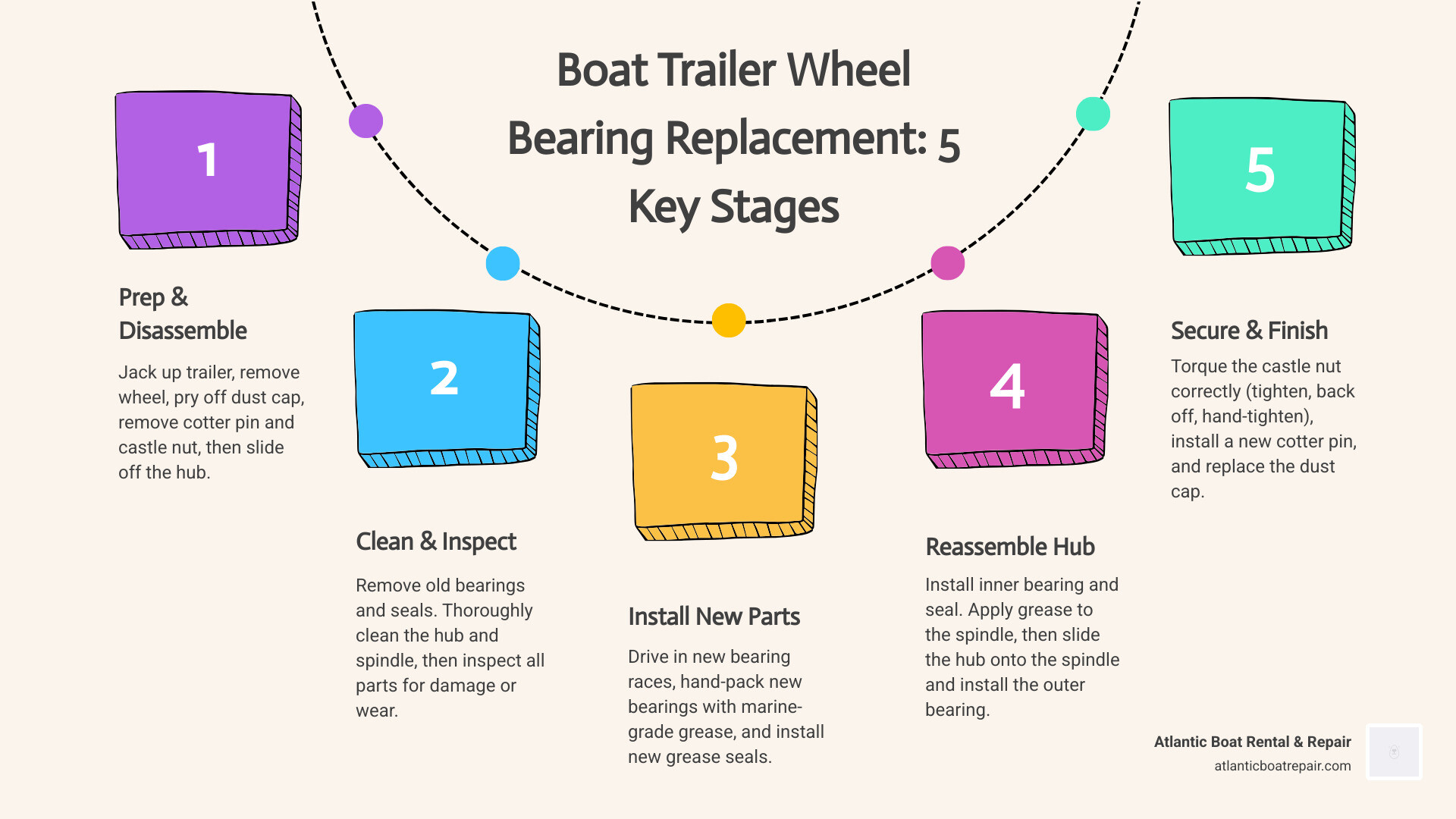
- Remove - Jack up trailer, remove wheel, pry off dust cap, remove cotter pin and castle nut, slide off hub
- Clean - Remove old bearings and seals, clean hub with brake cleaner, inspect all parts for damage
- Replace - Install new bearing races, pack new bearings with marine grease, install new seals
- Reassemble - Install inner bearing and seal, slide hub on greased spindle, install outer bearing
- Secure - Torque castle nut properly, install new cotter pin, replace dust cap
A blown trailer bearing can ruin a day on the water, turning it into a long, exhausting roadside repair. While many manufacturers recommend repacking wheel bearings every year or every 20,000 miles, this critical maintenance is often overlooked.
The good news is that with the right tools and guidance, this is a straightforward task that takes about an hour per wheel. This guide will walk you through the complete process, whether for preventative maintenance or in response to warning signs like grinding noises.
I'm Ron Cribbie, owner of Atlantic Boat Repair. Over decades of marine service, my team has performed countless boat trailer wheel bearing replacements. We know that proper bearing maintenance prevents expensive breakdowns and keeps boaters safely on the water.
Before You Begin: Signs, Tools, and Parts
Before diving into boat trailer wheel bearing replacement, it's crucial to know the warning signs, gather the right tools, and get the correct parts to make the process smooth.
Recognizing the Warning Signs of Bearing Failure
Your boat trailer's wheel bearings are under constant stress, especially with saltwater submersion and heavy loads. Ignoring the signs of failure can lead to serious trouble. Here are key indicators that your bearings need attention:
- Wobbling Wheels: Excessive play when you rock the wheel at the 12 and 6 o'clock positions is a strong sign of worn bearings. This can cause uneven tire wear and instability.
- Grinding or Growling Noises: A grinding or growling sound from the wheel while towing is the most obvious sign of failure, indicating metal-on-metal contact from lack of lubrication or severe wear.
- Excessive Hub Heat: After towing, carefully touch the hub. If one is significantly hotter than others, it suggests excessive friction from a failing bearing.
- Uneven Tire Wear: Worn bearings can cause irregular tire wear because the wheel isn't tracking straight.
- Visible Grease Leakage: Grease leaking from the dust cap or rear seal means the seal has failed. This allows water in and grease out, accelerating wear.
- Wheel Won't Spin Freely: When jacked up, the wheel should spin freely. If it's stiff, grinds, or resists, the bearings are likely damaged or seized.
Addressing these symptoms proactively will save you from a costly roadside breakdown.
Essential Tools and Materials
Having the right equipment on hand makes all the difference. Here's what you'll need:
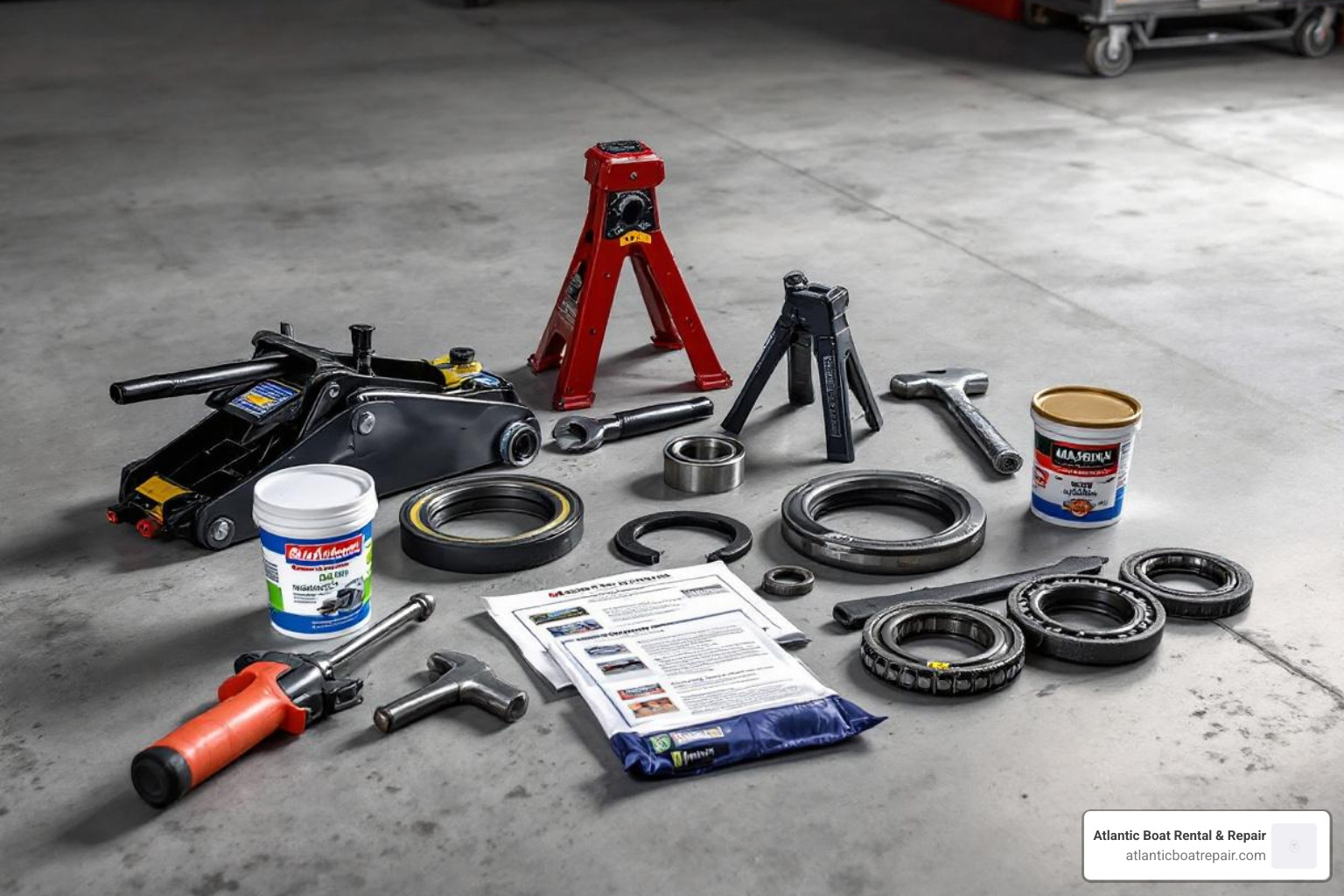
Tools:
- Jack: Suitable for your trailer's weight.
- Jack Stands: Essential for safety.
- Lug Wrench: To remove trailer wheels.
- Hammer: For removing dust caps and seating races.
- Pliers (needle-nose): For removing cotter pins.
- Screwdriver (flat-head): For prying off dust caps and seals.
- Brass Drift Punch (or wood dowel): To drive out old races without damaging the hub.
- Brake Cleaner: To clean old grease and grime.
- Torque Wrench: Critical for properly tightening the castle nut and lug nuts.
- Bearing Packer (optional): Makes packing bearings with grease easier.
- Lint-free Towels/Shop Rags: For cleaning.
Materials:
- New Bearing Kit: Includes inner and outer bearings, races (cups), and a grease seal.
- Marine-Grade Grease: Specifically designed to resist water washout.
- New Cotter Pins: Never reuse old ones.
- Kerosene (optional): For cleaning very greasy parts.
Gathering Parts for Your Boat Trailer Wheel Bearing Replacement
Choosing the correct replacement parts is critical.
- Bearing Kits: These include inner and outer bearings and their corresponding races (cups). Always replace races when you replace bearings, as old races are worn to match old bearings and will cause premature failure of new ones.
- Part Identification Numbers: The easiest way to get the right parts is to find the numbers stamped on your old bearings (e.g., L44649 and L68149 are common sizes). If unreadable, you'll need to measure the bearing's inner diameter (I.D.) with a micrometer.
- Axle Rating: Your trailer's axle pound rating (e.g., 3,500#), often found on a tag on the trailer tongue, can help identify the correct bearing kit.
- Grease Seals: Like bearings, seals have identification numbers. If needed, measure the inside diameter (I.D.) and outside diameter (O.D.). Always use new grease seals.
- Marine-Grade Grease: This is non-negotiable. It's highly water-resistant and offers superior corrosion protection, vital for hubs submerged in water. Since you are doing a full replacement, you will clean out all old grease. We recommend a high-quality, water-resistant grease specifically designed for marine trailer bearings. You can find parts at suppliers like easternmarine.com.
Investing in quality, marine-grade parts for your boat trailer wheel bearing replacement ensures longevity and safety, keeping you on the water, not on the shoulder of Route 3.
Your Step-by-Step Guide to Boat Trailer Wheel Bearing Replacement
Now that we've covered the basics, let's get our hands dirty with the actual boat trailer wheel bearing replacement process.
Disassembly: Removing the Hub and Old Bearings
Safety first! Always ensure your trailer is securely supported.
- Prepare the Trailer: Loosen the lug nuts on the wheel while it's still on the ground.
- Jack Up and Secure: Jack the trailer up by the frame (not the axle) until the wheel is off the ground. Immediately place jack stands securely under the frame and lower the trailer onto them. Block the opposite wheel for safety.
- Remove the Wheel: Finish unscrewing the lug nuts and remove the tire and wheel.
- Pry Off the Dust Cap: Use a flat-head screwdriver and hammer to carefully pry off the dust cap or Bearing Buddy.
- Remove Cotter Pin and Castle Nut: Straighten and pull out the cotter pin with pliers. Then, remove the castle nut and any washers.
- Slide the Hub Off: Pull the hub assembly straight off the spindle, catching the outer bearing as it comes loose. If stuck, rock it gently or tap the back with a rubber mallet. If it's frozen, seek professional help to avoid spindle damage.
- Remove Outer Bearing: The outer bearing should now be free.
- Knock Out Inner Bearing and Seal: Place the hub face down on two blocks of wood. Use a brass drift punch or wooden dowel to tap out the inner bearing and grease seal from the back, working in a circular pattern.
Cleaning and Inspection: The Most Critical Step
This stage is paramount for revealing hidden damage.
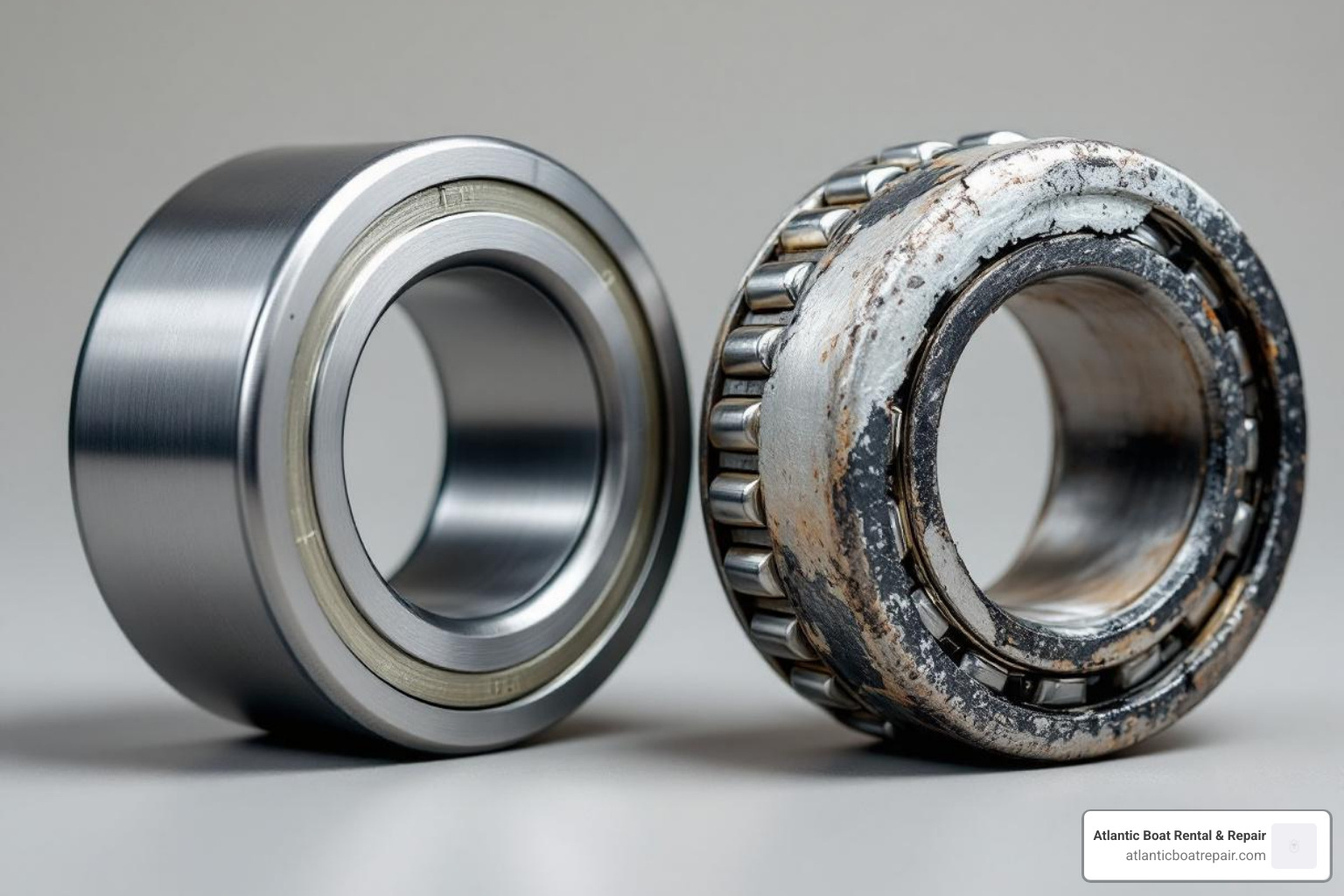
- Clean Components: Use brake cleaner and lint-free rags to remove all old grease from the inside of the hub and the spindle. Ensure no debris remains.
- Inspect Spindle for Scoring: Examine the spindle for nicks, grooves, or discoloration where the bearings and seal sit. Run a fingernail over the surface; if it catches, the spindle is damaged and will destroy new bearings. Significant damage requires professional repair.
- Inspect Bearing Races: Look at the inner surfaces of the races (metal rings in the hub). Any pitting, scoring, or discoloration means they must be replaced. We always recommend replacing races with new bearings.
- Inspect Bearings and Seals: Examine the old bearings for pitting, chips, or discoloration. Since you've disassembled everything, it's best practice to replace them along with the grease seals.
Installing New Races and Packing Bearings
With everything clean, it's time to install the new components.
- Driving Out Old Races: If not already removed, use a brass drift punch and hammer to tap the old races out from the opposite side of the hub.
- Seating New Races: Place the new races into the hub. Use a race driver tool, a large socket, or the old race to tap them in squarely with a hammer. Tap evenly until you hear a solid sound, indicating the race is fully seated against the shoulder. Ensure it's flush.
- Packing Bearings with Marine Grease: Place a glob of marine grease in your palm. Press the wide side of the bearing into the grease, forcing it through the rollers until it oozes out the narrow side. Rotate and repeat until the bearing is completely filled. A bearing packer tool can make this faster.
- Coating Hub Interior: Apply a generous coat of marine grease to the inside of the hub between the races. This creates a grease reservoir and helps displace water.
The Reassembly Process After a Boat Trailer Wheel Bearing Replacement
Reassembling correctly ensures your new bearings last.
- Install Inner Bearing and Seal: Place the newly packed inner bearing into its race. Position the new grease seal over it and gently tap it into the hub with a seal driver or block of wood until it's flush.
- Grease the Spindle: Apply a thin, even coat of marine grease to the entire spindle.
- Slide Hub Onto Spindle: Carefully slide the hub assembly onto the greased spindle.
- Install Outer Bearing: Insert the newly packed outer bearing into its race, followed by the large spindle washer.
- Torquing the Castle Nut: This is a critical step. Hand-thread the castle nut until finger-tight. While rotating the hub, use a wrench to tighten the nut firmly (around 50 ft-lbs) to seat the bearings, then back it off completely. Re-tighten the nut until it's snug (hand-tight), then advance it just enough to align a slot with the cotter pin hole. The hub should spin freely with minimal end play (less than 1/16th of an inch).
- Install New Cotter Pin: Insert a new cotter pin through the castle nut and spindle hole. Bend the ends to secure it. Never reuse an old pin.
- Reinstall Dust Cap: Tap the dust cap or Bearing Buddy back into place. If using Bearing Buddies, add grease until the indicator moves out slightly.
- Reinstall Wheel: Mount the wheel and hand-tighten the lug nuts. Lower the trailer off the jack stands, then use a torque wrench to tighten the lug nuts in a star pattern to the manufacturer's specification.
Congratulations, you've successfully completed a boat trailer wheel bearing replacement!
Maintenance, Best Practices, and Professional Help
Performing a boat trailer wheel bearing replacement is a significant step, but ongoing maintenance is key to maximizing their lifespan and ensuring safe travels.
Best Practices for Longevity
To keep your bearings rolling smoothly:
- Annual Inspection: Inspect and repack wheel bearings annually or every 12,000 miles. For saltwater use, an annual check is mandatory.
- Use Bearing Protectors: Devices like Bearing Buddies help keep water out by maintaining slight pressure in the hub. Don't overfill them, as this can blow out your seals.
- Post-Installation Torque Checks: After replacement, re-torque your lug nuts at 10, 25, and 50-mile intervals to ensure they remain snug.
- Rinse After Saltwater Use: Thoroughly rinse your trailer hubs with fresh water after each saltwater launch to prevent corrosion.
For more detailed information on maintaining your trailer or if you prefer a professional touch, we offer expert repair services right here in Massachusetts. More info about our expert repair services.
When to Call a Professional
While this is a manageable DIY task for many, some situations warrant calling in the experts at Atlantic Boat Repair:
- Damaged or Scored Spindle: A damaged spindle will destroy new bearings and requires professional repair, as it may involve axle replacement.
- Hub Damage: If new races won't seat properly or the hub is cracked, the entire hub assembly may need replacement.
- Frozen Bearings on Spindle: If a bearing is seized on the spindle, let a professional remove it to avoid ruining the spindle.
- Lack of Tools or Confidence: If you lack the right tools (like a torque wrench) or confidence, professional installation is the safest choice to prevent dangerous failures.
At Atlantic Boat Repair, we serve the boating communities of Plymouth, Kingston, Duxbury, Bourne, and Sandwich, Massachusetts, with the tools and experience to handle any trailer bearing issue. Request a Quote for professional service.
Frequently Asked Questions about Boat Trailer Bearings
Here are answers to some common questions we receive from customers.
When should I replace the whole hub assembly instead of just the bearings?
Replacing the entire hub assembly can be a better option in several cases:
- Cost and Time: If a pre-assembled hub (with new bearings, races, seals, and studs) costs only slightly more than the individual parts, it's a great value that saves significant labor time.
- Severe Damage: If the bearing races are severely pitted or the hub itself is cracked or warped, replacing the entire hub is the only safe option.
- Roadside Spares: Many boaters carry a complete, pre-assembled spare hub for a fast and clean repair in case of a roadside failure.
What are the consequences of failing to replace my trailer bearings?
Ignoring worn bearings is a recipe for disaster:
- Catastrophic Wheel Failure: The worst-case scenario is the wheel seizing or detaching completely while towing, which can cause a loss of control and severe accidents.
- Spindle and Axle Damage: Heat from a failing bearing can damage the spindle and axle, turning a cheap fix into a costly axle replacement.
- Being Stranded: A seized bearing will leave you stranded, ruining a day on the water and leading to a difficult roadside repair.
- Expensive Repairs: The cost to repair damage from a failed bearing far outweighs the cost of routine boat trailer wheel bearing replacement.
How often should I grease my boat trailer bearings?
Grease bearings at least annually or every 12,000 miles. For trailers frequently used in saltwater, inspect and grease them more often. A quick top-off after every few saltwater launches is a good practice.
Regular greasing protects bearings from moisture and corrosion. For a detailed guide, you can refer to this helpful resource: How to Grease Boat Trailer Bearings | Step-by-Step Guide.
Conclusion
Mastering boat trailer wheel bearing replacement is a vital skill for any boat owner. By understanding the warning signs and following our guide, you can confidently perform this essential maintenance. This saves money, prevents frustrating roadside breakdowns, and, most importantly, ensures your safety and the safety of your precious cargo on every journey to the water.
While DIY maintenance is rewarding, some jobs require professional expertise. For complex repairs, spindle damage, or if you prefer the peace of mind that comes with expert marine service, our team at Atlantic Boat Repair is always here to help. We pride ourselves on superior precision and rigorous testing, ensuring your trailer and boat perform like new.
Explore Our Marine Services today to learn more about how we can keep you on the water, from Plymouth to Sandwich and beyond.
Comments
Be the first to comment on this article!