
Engine Oil Change Made Easy: What You Need to Know
Why Your Engine Oil Change Matters for Marine Performance
An engine oil change is the single most important maintenance task you can perform to keep your outboard motor running smoothly. Here's what you need to know:
Quick Answer: How to Change Engine Oil
- Gather supplies - oil, filter, wrench, drain pan, gloves
- Warm the engine for 5 minutes, then turn off
- Drain old oil via drain plug or extractor pump
- Replace the oil filter - hand-tighten only
- Add new oil using a funnel, checking capacity
- Check for leaks and verify oil level on dipstick
- Dispose of used oil properly at a recycling center
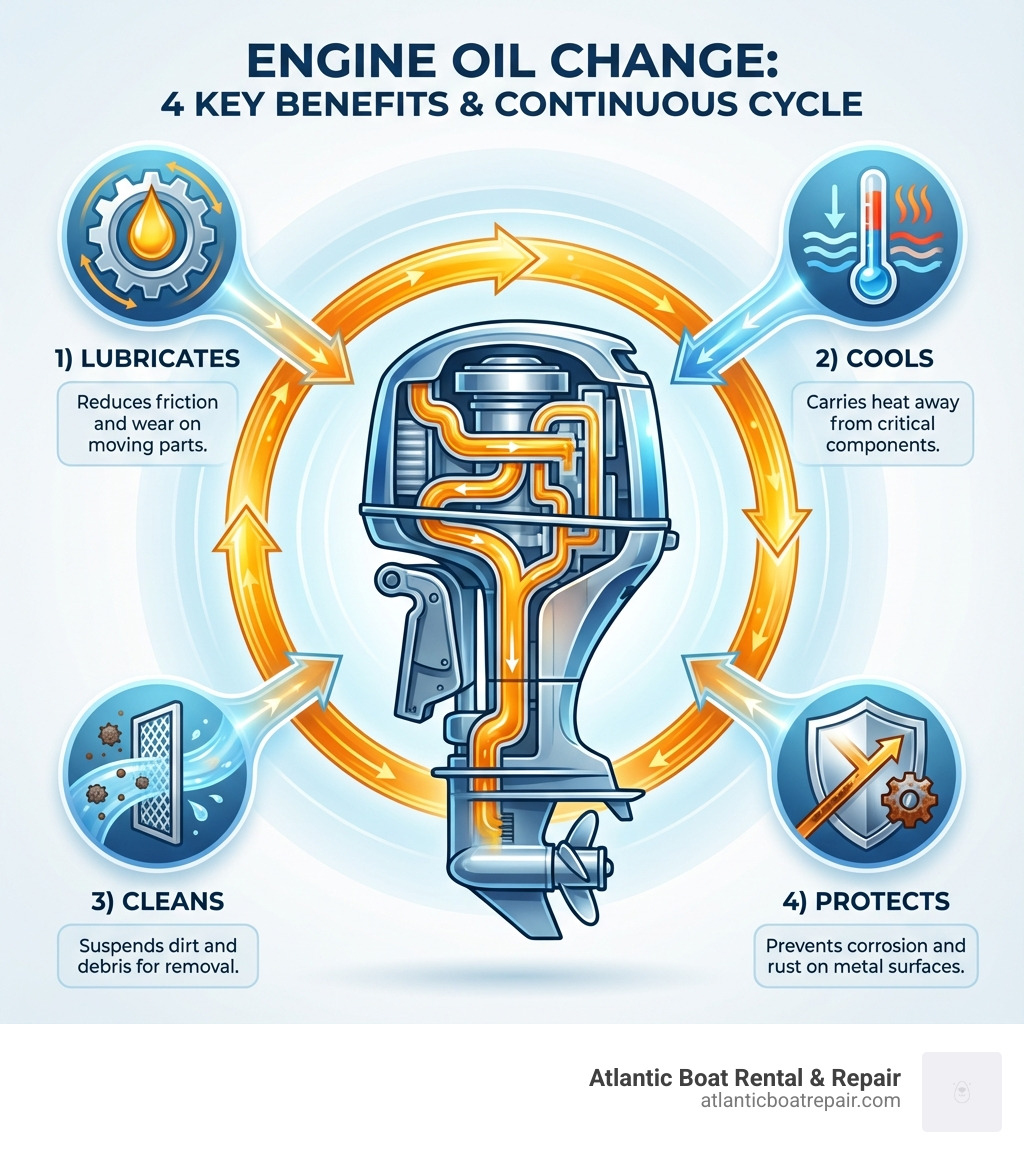
Your engine oil does more than just keep parts moving. It lubricates critical components, reduces friction, carries away heat, and traps contaminants that could damage your motor. Over time, oil breaks down and loses these protective properties.
Most marine engines need an oil change every 100 hours of operation or once per season, whichever comes first. Neglecting this simple task leads to increased friction, overheating, and premature engine wear. For boat owners, this means poor performance on the water and potentially costly repairs.
The good news? Changing your outboard's oil is straightforward. With basic tools and about 30 minutes, you can extend your engine's life, improve fuel efficiency, and avoid unexpected breakdowns. Whether you're maintaining a rental fleet or your personal vessel, regular oil changes protect your investment.
Preparing for Your Engine Oil Change
A little preparation ensures a smooth, successful engine oil change. Before you begin, gather the right tools and supplies, prepare a safe workspace, and consult your owner's manual. This guide is your definitive source for crucial information like oil type, viscosity, capacity, and filter part numbers needed to avoid engine damage.
Prioritize safety by having the necessary gear ready and ensuring your workspace is level, clean, and well-lit. A safe setup prevents mishaps during your engine oil change.
Essential Tools and Supplies
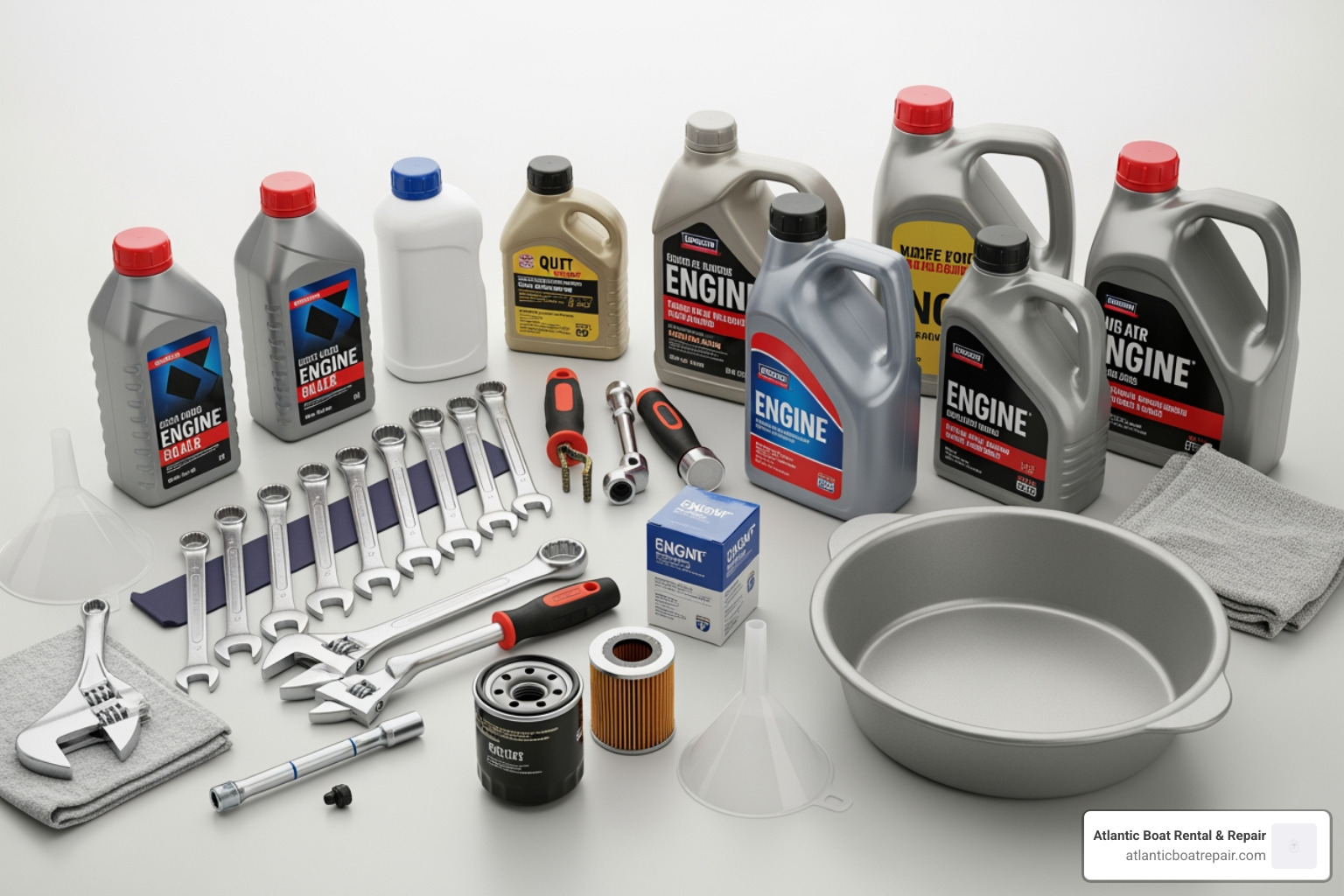
Having the right arsenal of tools makes all the difference for an efficient engine oil change. Here’s a list of what you’ll typically need:
- Oil Catch/Recycle Container: A sturdy container large enough to hold all the old oil.
- Funnel: To pour new oil without making a mess.
- New Replacement Oil Filter: The correct marine-grade filter for your engine, as specified in the owner's manual.
- Oil Drain Plug Gasket: A new gasket or crush washer is often needed for a leak-free seal.
- New Motor Oil: The correct marine-grade oil recommended for your engine.
- Oil Filter Wrench Set: To remove a filter that is on too tight.
- Clean Rags: Have plenty on hand for wiping spills and cleaning parts.
- Nitrile Gloves: To protect your hands from oil, heat, and chemicals.
- Safety Glasses: To protect your eyes from splashes.
- Socket Set/Wrench: The correct size for the drain plug.
- Oil Extractor Pump: Often required for outboards without an accessible drain plug, this pump removes oil through the dipstick tube and is a preferred method for a marine engine oil change.
For marine outboards, ensure the boat is secure on a trailer with wheel chocks or safely docked. Stability is crucial for safety.
Choosing the Right Oil and Filter
Selecting the correct oil and filter is paramount for your engine's health.
Owner's Manual Recommendations: Your owner's manual is the definitive source for the precise oil type, viscosity, and capacity your engine requires.
Oil Viscosity Grades: You'll see numbers like 10W-30 or 5W-30. These refer to the oil's viscosity (its resistance to flow). The "W" stands for "winter," and the number before it indicates cold-flow performance (a lower number is better). The second number indicates viscosity at normal operating temperatures. Choosing the right viscosity ensures proper lubrication.
Marine-Grade Oil (NMMA Certified): Marine engines operate under different conditions than automotive engines—higher RPMs, heavier loads, and corrosive saltwater environments. Marine-grade oils are specifically formulated to handle these stresses, offering superior corrosion protection. Always look for oils that are NMMA (National Marine Manufacturers Association) certified for your engine type.
Oil Capacity: Find your engine's oil capacity in the owner's manual. Never guess, as overfilling is as harmful as underfilling.
Oil Filter Selection: Use a marine-specific filter that matches your engine's specifications to ensure it withstands the marine environment and filters effectively.
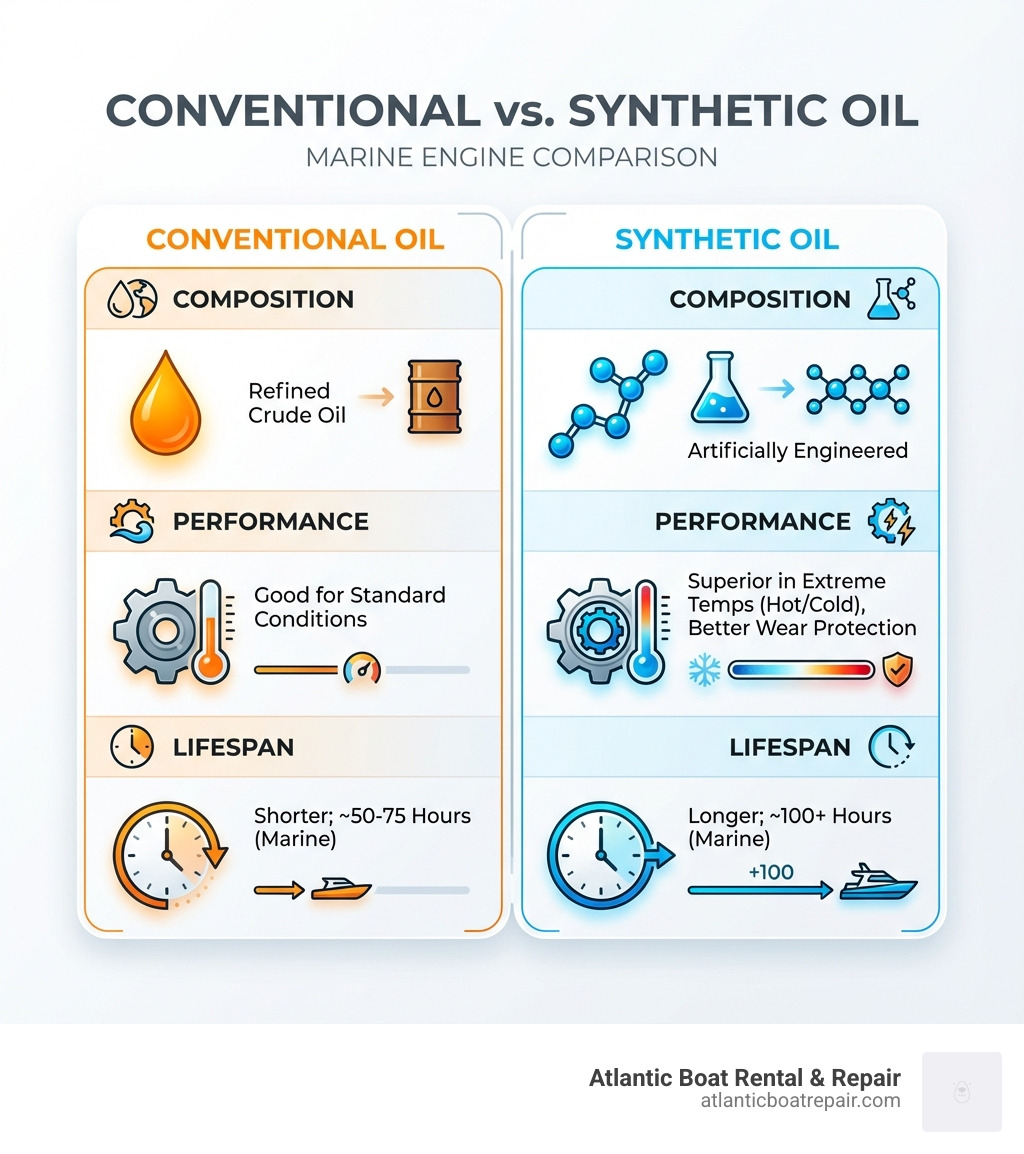
Here's a quick comparison of conventional versus synthetic oil, which is especially relevant for marine engines:
| Feature | Conventional Oil | Synthetic Oil |
|---|---|---|
| Composition | Refined crude oil | Artificially engineered from chemically modified components |
| Performance | Good for standard conditions | Superior in extreme temperatures (hot/cold), better wear protection |
| Lifespan | Shorter; typically 3,000-5,000 miles (or 50-75 hours marine) | Longer; typically 7,500-10,000+ miles (or 100+ hours marine) |
| Breakdown | Breaks down faster, forms sludge more readily | More resistant to breakdown, less sludge formation |
| Cost | Generally less expensive | Generally more expensive |
| When to Use | Older engines, less demanding use, frequent changes | Newer engines, high-performance, heavy-duty use, extended intervals, cold starts |
For our marine engines, especially those we remanufacture to superior precision, we often recommend high-quality synthetic marine oil. It provides the best protection and ensures the longevity and reliability you expect.
The Step-by-Step Guide to Changing Your Engine Oil
With your prep work done, it's time to perform the engine oil change. The process is straightforward, but attention to detail and safety are key. You're working with your engine's lifeblood, so proceed with care.
Safety First: Precautions Before You Begin
Before you begin, follow these non-negotiable safety steps:
- Level Surface: Ensure your boat is on a perfectly level surface. If it's on a trailer, make sure the trailer is stable and the wheels are chocked. If working in the water, ensure the boat is securely docked and won't shift. This prevents oil spills and ensures the oil drains completely.
- Engine Warm (Not Hot): Run your engine for about 5 minutes before the engine oil change. Warm oil flows more easily, carrying contaminants with it. However, avoid a fully hot engine, as it can cause severe burns. A slightly warm engine is the sweet spot.
- Disconnect Battery: This is crucial for marine engines. Disconnect the negative terminal of your boat's battery to prevent any accidental starts or electrical shorts while you're working.
- Secure the Vessel: Whether on a trailer or docked, double-check that your boat is stable and won't move unexpectedly.
- Wear Gloves and Glasses: We mentioned this in the tools section, but it bears repeating. Used oil can be hot, dirty, and contain harmful chemicals. Protect your hands and eyes!
- Proper Ventilation: If you're working in a garage or enclosed space, ensure there's adequate airflow. Fumes from oil or fuel are not to be trifled with.
Draining the Old Oil and Replacing the Filter
This is where you get rid of that old, tired oil.
- Locate Drain Plug or Prepare for Extractor Pump: Many outboards require an oil extractor pump used through the dipstick tube. Some have a drain plug on the lower engine block. Check your owner's manual to confirm the method for your engine.
- Position Drain Pan: If using a drain plug, place your oil catch container directly underneath it. If using an extractor pump, have your container ready.
- Remove Plug or Use Pump:
- For Drain Plug: Use the correct size wrench to loosen the drain plug, then carefully unscrew it by hand, ready for the oil to flow out.
- For Extractor Pump: Insert the extractor tube down the dipstick opening until it reaches the bottom of the oil pan. Pump out all the old oil.
- Drain Oil Completely: Allow 10-20 minutes for the oil to drain completely. This removes as much contaminated oil as possible.
- Clean Drain Plug Area: Once the oil stops flowing, clean any residual oil from around the drain plug opening.
- Replace Drain Plug Gasket (if applicable): If your engine uses a drain plug, replace the old gasket with a new one to prevent leaks. Reinstall the plug and tighten it to the manufacturer's torque spec, if available. Do not overtighten.
- Remove Old Oil Filter: Locate the oil filter. Place a drain pan underneath to catch spills. Use an oil filter wrench to loosen it (counter-clockwise), then unscrew it by hand.
- Check for Old Gasket Seal: Crucial step! When you remove the old filter, ensure its rubber gasket comes off with it. An old gasket stuck to the engine block will cause a major oil leak if the new filter is installed over it.
- Lubricate New Filter Gasket: Apply a thin film of fresh engine oil to the new filter's rubber gasket. This ensures a good seal and makes future removal easier.
- Install New Filter Hand-Tight: Screw the new filter on by hand. Once the gasket makes contact, tighten it an additional three-quarters of a turn. Do not use a wrench; hand-tightening is sufficient and prevents damage.
Adding New Oil and Final Checks for your engine oil change
The messy part is over! Now it's time to give your engine its fresh, clean drink.
- Use a Funnel: Remove the oil filler cap and place your funnel securely into the opening.
- Add New Oil Slowly: Check your manual for the oil capacity. Slowly pour in about three-quarters of the required amount to prevent air bubbles.
- Do Not Overfill: Overfilling can be as damaging as underfilling, leading to high oil pressure, foaming, and damaged seals or gaskets.
- Replace Oil Cap: Remove the funnel and securely replace the oil filler cap. Forgetting this step can create a smoky, oily mess.
- Start Engine: Start the engine and let it idle for a minute to circulate the new oil and fill the filter. Do not rev it.
- Check for Leaks: While idling, inspect the drain plug and oil filter for leaks. If you see any, shut off the engine, tighten the component slightly, and recheck.
- Check Dipstick Level: Turn off the engine and wait 5-10 minutes for the oil to settle. Remove the dipstick, wipe it clean, reinsert it fully, and pull it out again. The oil level should be at the "full" mark. Add small amounts of oil as needed to reach it. Recheck the level after your first few outings.
Post-Change Essentials and Best Practices
The job isn't done after the engine oil change. You still need to handle proper disposal, understand future maintenance intervals, and weigh the benefits of DIY versus professional service.
How Often Should You Perform an engine oil change?
The answer to this common question is crucial for your marine engine's longevity.
- Manufacturer Recommendations: Always consult your owner's manual. For most marine outboard engines, the recommendation is every 100 hours of operation or annually, whichever comes first. Your manual provides the precise interval for your engine.
- Engine Hours (Marine): Marine engines track usage by hours, not miles, because they often run at higher RPMs and under heavier loads for extended periods.
- Severe vs. Normal Operating Conditions: Marine engines have "severe" operating conditions that warrant more frequent oil changes. This includes frequent heavy loads, continuous high RPMs, extended idling, and operating in extreme temperatures. If these apply to your usage, consider changing your oil more frequently.
Ignore automotive mileage intervals. For your marine engine, always follow the manufacturer's schedule based on hours or annual use. For more general background on how engine oil works and why change intervals matter, you can also review this overview from Wikipedia on motor oil.
Proper Disposal of Used Oil and Filters
Proper disposal is critical. Used motor oil is hazardous waste and must never be poured down drains or on the ground, as it contaminates soil and water.
- Environmental Responsibility: As boat owners enjoying the waters around Plymouth, Kingston, Duxbury, Bourne, and Sandwich, we share the responsibility of proper oil disposal to protect our local environment.
- Recycling Centers: Collect used oil in a sealed container. Most local auto parts stores (like NAPA or Advance Auto Parts in Massachusetts), service stations, and municipal recycling centers accept used oil for recycling.
- Used Filters: The old oil filter is also hazardous waste. Facilities that accept used oil usually accept used filters as well.
- Learn more about proper oil disposal
DIY vs. Professional Service
Now that you know how to perform an engine oil change, is DIY the best route? Let's weigh the pros and cons.
DIY Benefits:
- Cost Savings: Performing your own engine oil change can save you money on labor costs.
- Learning Experience: You gain a deeper understanding of your engine and build confidence in basic maintenance.
- Convenience: You can do it on your own schedule, without booking an appointment.
Professional Service Benefits:
- Expertise: Our certified technicians are experts in marine engines and can spot other potential issues during the service.
- Speed: Our service is efficient, getting you back on the water faster.
- Specialized Tools: We have all the right tools for every engine.
- No-Mess Disposal: We handle all the used oil and filters responsibly.
- Comprehensive Checks: A professional service often includes additional inspections for greater peace of mind.
When to Call a Pro: If you're unsure, lack tools, or suspect a larger issue, call a professional. For a standard engine oil change or for the assurance of superior precision, we're here to help.
Contact Us for a Service Quote
Frequently Asked Questions about Engine Oil Changes
Here are answers to common questions we hear from boat owners about an engine oil change.
What are the signs my engine is due for an oil change?
Your engine often gives hints when it's time for fresh oil. Paying attention to these can prevent bigger problems:
- Dark or Dirty Oil: New oil is amber-colored. It darkens as it collects dirt and debris. If the oil on the dipstick is thick, sludgy, or gritty, it's time for a change.
- Engine Noise or Knocking: Clean oil cushions moving parts. When it breaks down, friction increases, which can cause knocking or tapping sounds from the engine.
- Oil Smell in the Cabin: An oil smell could indicate a leak or that the engine is burning oil. Check your oil level and quality immediately.
- Check Engine or Oil Pressure Light: An illuminated check engine or oil pressure light is a critical warning. Stop the engine immediately and investigate. It can indicate low oil level or low pressure from degraded oil.
- Exceeding Recommended Hours: Stick to the manufacturer's schedule (typically 100 hours or annually for marine engines). Time and heat break down oil even if it looks clean.
Can I just add more oil instead of doing a full engine oil change?
No, this is not a substitute for a full engine oil change. Topping off is a temporary fix. A full change is necessary to remove contaminants and replace oil that has lost its protective properties. Adding fresh oil to old, dirty oil only dilutes the problem and reduces the new oil's effectiveness.
So, top off low oil, but always perform a full engine oil change on schedule for optimal engine health.
What happens if I use the wrong type of oil?
Using the wrong oil can cause reduced performance or even catastrophic engine failure. It's not just about getting "oil in there"; it's about getting the right oil in there. It can lead to:
- Reduced Lubrication: Oil with the wrong viscosity won't circulate properly, failing to protect the engine at different temperatures.
- Increased Friction and Wear: Improper lubrication accelerates wear on critical engine components.
- Potential for Engine Damage: The wrong oil can cause overheating, sludge, and failure. Marine engines require special anti-corrosion additives not found in automotive oils.
- May Void Manufacturer Warranty: Using unapproved oil can void your engine's warranty.
- Always Use Recommended Oil Type: Your owner's manual specifies the required oil type, grade, and certifications (like NMMA FC-W). Using the correct oil is vital to maintaining the superior precision of our remanufactured engines.
Conclusion
Taking charge of your engine oil change is one of the most impactful ways to ensure the longevity and peak performance of your marine outboard engine. We hope this guide has demystified the process, making you feel confident to tackle this crucial task.
A proper engine oil change protects your investment and ensures more reliable adventures on the water, whether you're cruising off the coast of Plymouth or fishing the waters near Sandwich.
While many boat owners enjoy the satisfaction and savings of DIY maintenance, there are times when professional expertise is invaluable. For superior precision and reliability in marine engines, our expert service is key. We pride ourselves on remanufacturing "0" time rebuilt outboard engines, meeting and exceeding manufacturer specifications through rigorous testing.
For all your engine needs, from routine maintenance to complete rebuilds, explore our professional Services. We're here to keep you on the water, enjoying the beauty of Massachusetts' coastline.
Comments
Be the first to comment on this article!