
Shield Your Ship: Essential Tips for Fiberglass Hull Defense
Why Fiberglass Hull Protection Matters for Every Boat Owner
Fiberglass hull protection is essential for preventing oxidation, UV damage, and costly repairs while maintaining your boat's performance and resale value. The key protection methods include:
- Regular gelcoat maintenance - Clean, polish, and wax every 3-4 months to prevent oxidation
- Epoxy barrier coats - Apply to new or stripped hulls to prevent water absorption and blistering
- Anti-fouling paint - Use in saltwater to prevent marine growth and fuel consumption increases
- Physical barriers - Install keel guards or protective strips for rocky or shallow waters
- Prompt damage repair - Fix chips and scratches immediately to prevent water intrusion
Your fiberglass boat's hull faces constant assault from the elements. Sunlight, saltwater, impacts from debris, and simple neglect can turn a gleaming vessel into a dull, porous surface vulnerable to serious damage. According to industry data, gelcoat can last up to two decades with proper maintenance, but without protection, oxidation sets in quickly—causing fading, chalkiness, and exposure of the underlying fiberglass to water damage.
The good news? Protecting your hull doesn't require expert-level skills or a massive budget. Whether you're dealing with a boat that's seen better days or you want to keep a new purchase in pristine condition, understanding the layers of protection—from gelcoat care to advanced coatings—can save you thousands in repairs and maintain your boat's value.
A simple test reveals your hull's condition: spray it with fresh water. If water beads up, you have adequate protection. If it sheets off in a continuous film, your gelcoat is crying out for help. That vulnerable surface is now absorbing moisture, accelerating deterioration, and setting the stage for expensive repairs down the road.
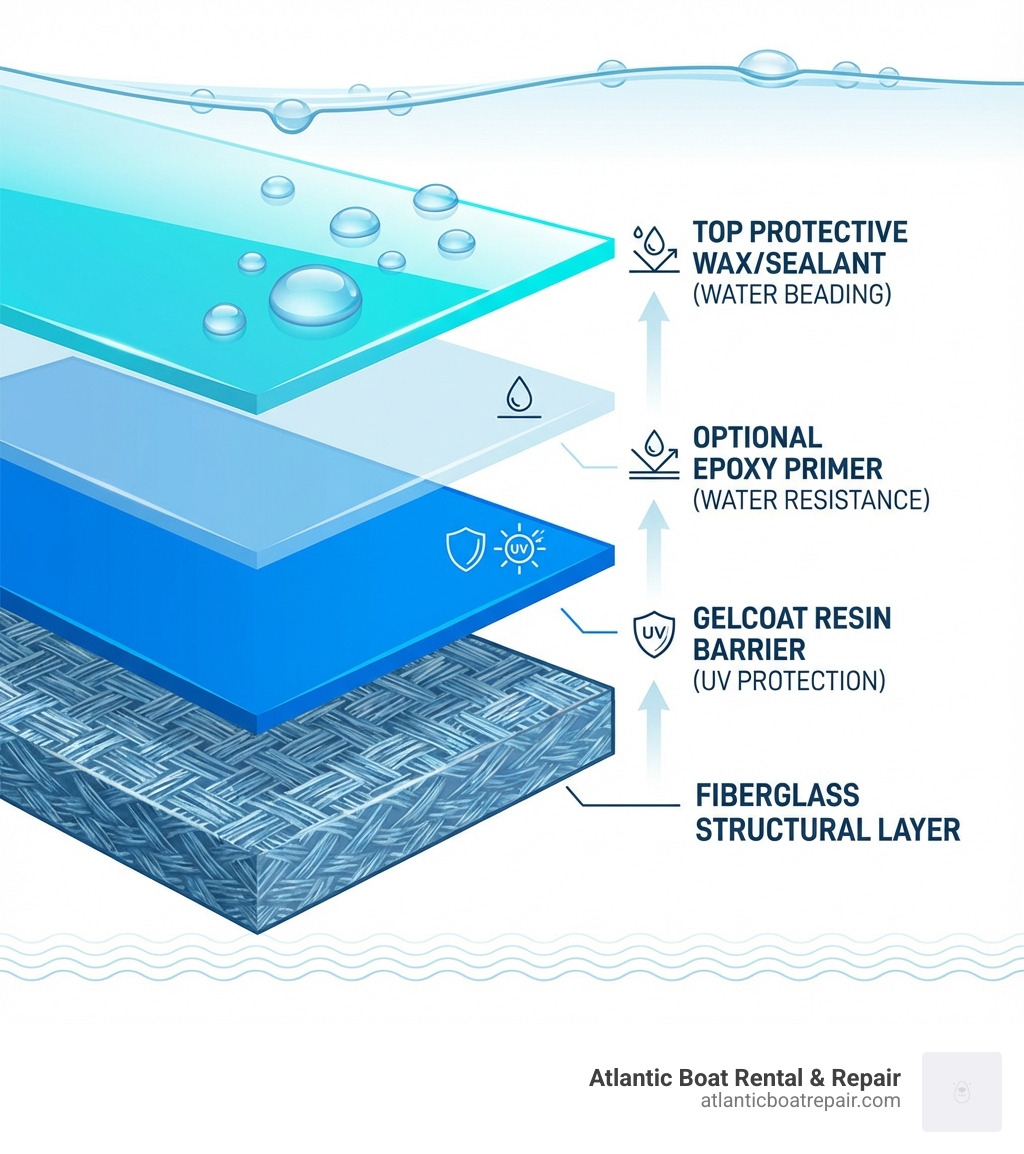
Understanding Your Hull's First Line of Defense: The Gelcoat

When we talk about Fiberglass hull protection, the first thing that often comes to mind is the gleaming, colorful outer layer of your boat: the gelcoat. This isn't just for looks; it's the primary protective barrier for the fiberglass beneath. However, it's also the most exposed part of your hull, constantly battling the elements. Without proper care, gelcoat can suffer from oxidation, UV damage, chalking, and fading, which not only diminishes your boat's appearance but also compromises its structural integrity over time.
The Role of Gelcoat in Hull Protection
Gelcoat is essentially a pigmented polyester or epoxy resin that is applied to the outer surface of fiberglass to give it a smooth, shiny finish. While the underlying fiberglass provides the boat's strength, the gelcoat is the aesthetic and protective workhorse. Its primary functions include:
- UV Resistance: Gelcoat is designed to be UV-resistant, helping to shield the underlying fiberglass from the sun's harsh rays, which can otherwise degrade the resin and fibers.
- Water Barrier: It acts as a crucial barrier against water intrusion into the porous fiberglass laminate. This prevents issues like osmotic blistering, where water gets trapped in the laminate and causes unsightly and damaging bubbles.
- Shine and Finish: Gelcoat provides the glossy, colorful finish that makes your boat look fantastic. It's what you primarily see and admire.
- Durability: While it can crack in stressed areas because it has no real strength of its own, gelcoat is generally quite durable. With diligent care, your gelcoat can last up to two decades, preserving your boat's appearance and protecting its core.
However, gelcoat is porous, and just like human skin exposed to sunlight without protection, it ages. This aging process, particularly oxidation, causes it to become dull, chalky, and faded, especially noticeable on darker colors. Oxidation can cause gelcoat to fade, become dull, and expose the hull to damage.
Best Practices for Gelcoat Maintenance
Maintaining your gelcoat is one of the most effective forms of Fiberglass hull protection. It’s a bit like taking care of your own skin – regular cleaning and protection go a long way.
- Regular Cleaning: This is your first line of defense. Use only fiberglass cleaners specifically designed for boats. Household cleaners often contain harsh chemicals that can strip waxes, accelerate oxidation, and damage the gelcoat. We recommend frequent rinsing with fresh water, especially after saltwater use, and a good wash with a marine-specific soap. Steam cleaning can also be an effective, gentle alternative to chemical cleaners.
- Polishing vs. Waxing: These terms are often used interchangeably, but they serve different purposes.
- Polishing is an abrasive process that uses compounds to smooth the gelcoat surface, removing minor imperfections like dust, dirt, light scratches, and, most importantly, oxidation. It prepares the surface for protection and helps restore the gelcoat's original luster. The gloss from polishing helps reflect UV rays, reducing damage.
- Waxing involves applying a protective layer over the polished gelcoat. This layer shields the gelcoat from UV rays, salt, and contaminants, enhancing its shine and making cleaning easier. For minor oxidation or light scratches, a cleaner/wax product with a fine abrasive can be a great starting point. For heavily oxidized gelcoat, you might need a more aggressive rubbing compound first, followed by a polish, and then a protective wax or sealant.
- Polymer Sealants: While traditional carnauba waxes offer a beautiful shine, modern polymer sealants often provide longer-lasting protection. Using a fiberglass sealer can last up to 10 times longer than wax, offering all-season protection by penetrating microscopic pits and crevices in the gelcoat to prevent future oxidation. These sealers provide a much harder surface than wax, reducing the need for frequent reapplication.
- Contaminant Removal: Stains happen. For ground-in stains on non-slip gelcoat, specialized liquid cleansers can work wonders. Rust stains and waterline discoloration (often called a "mustache") can be tackled with chemical cleaners, but always wear protective gear and test in an inconspicuous area first to avoid damaging other surfaces. Gel rust-stain removers are often more user-friendly than their liquid counterparts.
- Protection When Not in Use: When your boat is resting in Plymouth, Kingston, or any of our beautiful Massachusetts harbors, protect it! Covering your boat with a quality boat cover or storing it in a boathouse shields it from relentless UV rays, rain, and airborne dirt. This simple step significantly extends the life of your gelcoat and reduces maintenance needs.
For a deeper dive into making your gelcoat gleam, we often refer to resources like A Captain's Guide to Gleaming Gelcoat. Following these practices ensures your boat's first line of defense remains strong and vibrant.
Applying Advanced Fiberglass Hull Protection
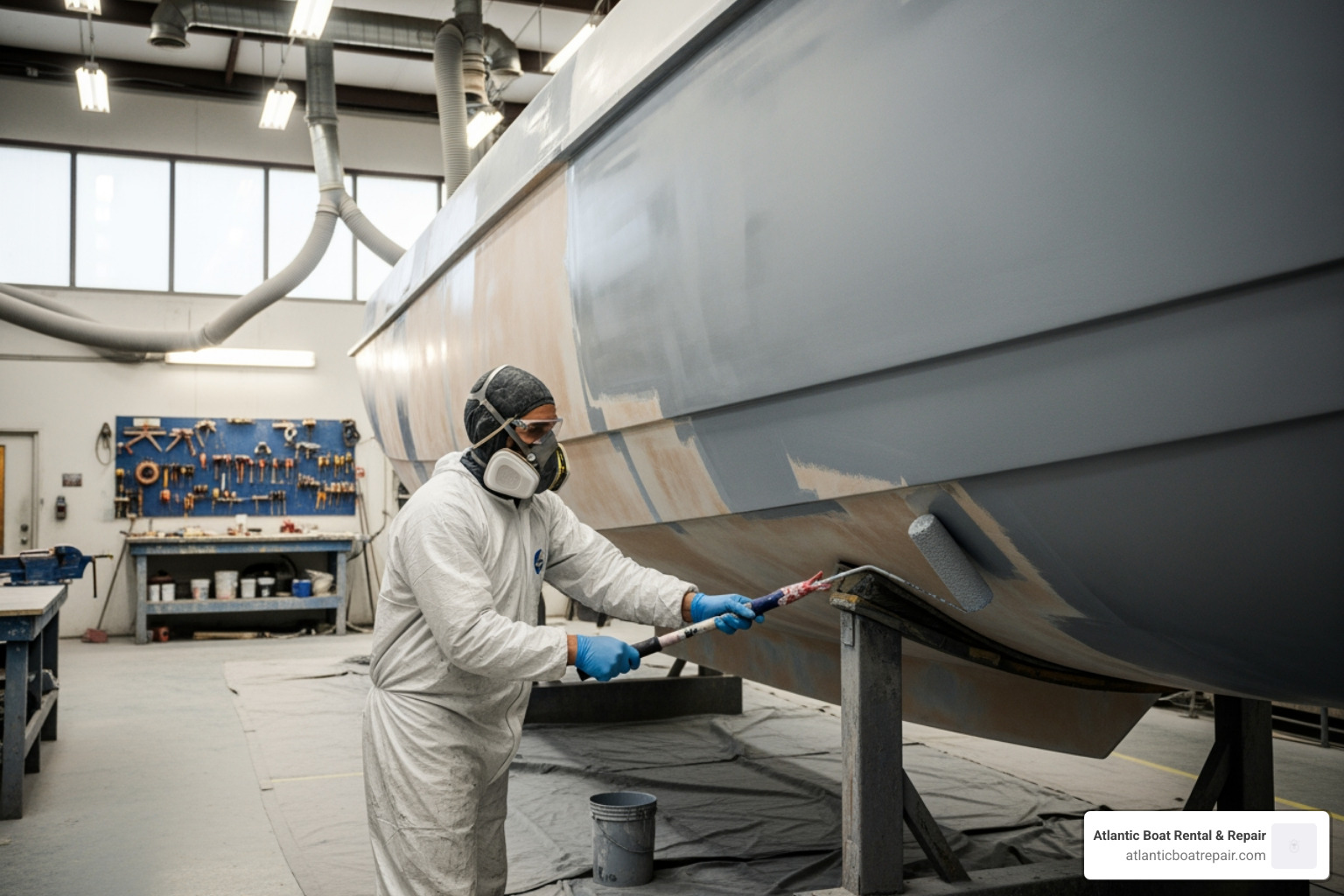
Beyond routine gelcoat maintenance, there are advanced measures we can take for comprehensive Fiberglass hull protection. These methods provide additional layers of defense against water absorption, marine growth, and physical impact, ensuring your vessel remains robust and efficient, whether you're navigating the open waters off Duxbury or the shallower rivers of Bourne.
Protective Coatings: Epoxy Primers and Anti-Fouling Paint
These coatings are critical for boats that spend significant time in the water, offering specialized protection against some of the most persistent threats.
- Epoxy Barrier Coats: For new boats, or those that have been stripped down, an epoxy barrier coat is highly recommended. These primers create a robust, impermeable layer that significantly reduces water absorption into the fiberglass laminate. This prevention is key to avoiding osmotic blistering, a common issue where water penetrates the gelcoat and causes bubbles in the fiberglass structure. Products like InterProtect 2000E, for example, have been an industry choice for protection and repair since 1986, favored for its ability to create a barrier against water permeation using 'Micro-Plates' technology. This technology creates an overlapping barrier, similar to shingles on a roof, to prevent water migration. Applying an epoxy-based primer can protect the hull and extend the boat’s service life, reducing maintenance needs. A full InterProtect system can even increase the re-sale value of boats, making it a wise investment. We recommend using a solvent-free epoxy to achieve a sufficiently thick coat for optimal protection. You can learn more about specific epoxy barrier systems at What is InterProtect® 2000E?.
- Anti-Fouling Paint: If your boat spends extended periods in coastal waters around Massachusetts, anti-fouling paint is indispensable. Its primary purpose is to prevent marine biofouling – the growth of barnacles, algae, and other organisms on the hull. This growth is not just unsightly; it significantly increases drag, leading to higher fuel consumption and reduced speed. Anti-fouling paint typically contains biocides that deter marine life from attaching to the hull. Never dry-sand old anti-fouling paint, as the paint dust is toxic. Always follow manufacturer guidelines for safe application and removal, and remember to collect all paint waste. Boats kept on trailers or solely in freshwater lakes typically do not require anti-fouling treatment, as biofouling is less of a concern. However, for our coastal boaters, it’s a non-negotiable part of Fiberglass hull protection.
Physical Barriers: Keel Guards and Protective Strips
Sometimes, the best defense is a physical shield. For boats that frequently encounter shallow water, rocky bottoms, or beaching, physical barriers offer direct impact and abrasion protection.
- Keel Guards: These are tough, durable strips that adhere to the keel of your boat, protecting it from abrasions and impacts. They are particularly popular for boats that are often beached or steerd in shallow, obstacle-rich waters.
- Pros of Keel Guards:
- Excellent protection against minor impacts and abrasions from rocks, sand, and concrete ramps.
- Preserves the gelcoat on the most vulnerable part of the hull.
- Can increase resale value by keeping the keel in pristine condition.
- Relatively easy to install for the DIY enthusiast.
- Cons of Keel Guards:
- Can sometimes affect boat performance or handling slightly, though often negligible.
- Improper installation can lead to water intrusion or detachment.
- May not protect against severe impacts.
- Requires careful selection to ensure compatibility with your hull shape. For options and reviews, you can explore products like those found on Amazon.com.
- Pros of Keel Guards:
- DIY Reinforcement and Protective Strips: For those who enjoy a hands-on approach, there are other methods. Some boat owners consider epoxying a sacrificial GRP (Glass Reinforced Plastic) strip to the hull for abrasion resistance. High-density rubber sheeting (1/8" to 1/4" thick) has also been used on some FRP boats for wear protection. Another interesting idea from boat owners is using durable paint protection tapes, similar to those used for helicopter blades or rocker panels on vehicles. These tapes are designed to withstand significant abrasion. However, it's crucial to consider the bonding properties of any material you choose; for instance, aluminum plates may not bond well due to rapid oxidation.
Choosing Protection for Your Boating Environment
The best Fiberglass hull protection strategy depends heavily on where and how you use your boat.
- Rocky Rivers vs. Open Water: If you're navigating rocky rivers or shallow areas, like some of the waterways around Sandwich or Bourne, physical abrasion is your biggest concern. Keel guards and reinforced bottom sections become paramount. For open water sailing off Plymouth or Duxbury, where rocks are less of an issue but UV exposure and marine growth are constant, gelcoat maintenance and anti-fouling paint take precedence.
- Saltwater vs. Freshwater: Saltwater environments accelerate corrosion and marine growth, making anti-fouling paint and robust gelcoat protection more critical. Freshwater environments, while less aggressive, still require UV protection and can develop algae, though usually less problematic than saltwater biofouling.
- Trailer Boats: If your boat is primarily trailered, anti-fouling paint might be unnecessary. Instead, focus on thorough cleaning after each use, drying the hull completely to prevent mildew, and maintaining the gelcoat with waxes or sealants to protect it during storage and transport.
Understanding your typical boating conditions allows us to tailor the most effective and efficient protection plan for your vessel.
Repair and Reinforcement Strategies
Even with the best Fiberglass hull protection measures, minor damage can occur. From an accidental bump against a dock in Kingston to a stray piece of debris in Duxbury Bay, chips and scratches are almost inevitable. Addressing these promptly is crucial to prevent them from escalating into bigger, more costly problems.
How to Effectively Repair Minor Hull Damage
Minor gelcoat damage, if left unchecked, can lead to water intrusion, which can then cause blistering or delamination of the underlying fiberglass. Fortunately, many minor repairs are well within the capabilities of a diligent boat owner.
- Identifying Minor Damage: Look for chips, hairline cracks, and shallow gouges that primarily affect the gelcoat layer without penetrating deeply into the fiberglass. A good indicator is if the damage is only cosmetic and doesn't flex when pressed.
- Cleaning the Area: Before any repair, the area must be carefully clean. Use a good degreaser and acetone to remove all wax, oil, and contaminants. Sand lightly around the damaged area to create a good bonding surface, then clean again.
- Filling Chips and Scratches: For small chips and scratches, a marine-grade gelcoat repair kit is your best friend. These kits typically come with gelcoat paste, a hardener, and often tints to match your boat's color. Mix the gelcoat with the hardener according to the manufacturer's instructions, then carefully apply it to the damaged area using a small plastic spreader or spatula. Overfill slightly, as gelcoat shrinks as it cures.
- Sanding and Polishing: Once the gelcoat has fully cured (this can take several hours to a day, depending on temperature and product), you'll need to sand it flush with the surrounding hull. Start with fine-grit wet/dry sandpaper (e.g., 400-grit), progressively moving to finer grits (e.g., 600, 800, 1000, 1500, and even 2000-grit) to achieve a smooth finish. Keep the area wet while sanding. Finish by polishing the repaired area with a rubbing compound, then a fine polish, and finally a wax or sealant to restore the shine and blend it seamlessly with the rest of the hull.
- Preventing Further Issues: The key here is timeliness. Repairing damage as soon as it's noticed prevents water from seeping into the laminate, halting the progression of more serious issues like osmotic blistering.
When to Seek Professional Fiberglass Hull Protection and Repair
While minor repairs are DIY-friendly, some damage requires the expertise of seasoned professionals. Knowing when to call in the cavalry is a crucial part of responsible boat ownership and Fiberglass hull protection.
- Structural Damage: Any crack that extends through the fiberglass laminate, or any damage that causes the hull to flex excessively, indicates a potential structural issue. This requires professional assessment and repair to ensure the boat's safety and integrity.
- Extensive Osmotic Blistering: While a few small blisters might be manageable, widespread or deep osmotic blistering across the hull signals significant water absorption. This often necessitates a complete barrier coat system application or even a peel-and-rebuild, a job best left to experts.
- Delamination: If layers of fiberglass are separating, this is a serious structural problem that demands immediate professional attention.
- Deep Gouges: Gouges that penetrate deeply into the fiberglass, especially those that expose the core material in cored hulls, require careful repair to prevent water saturation and subsequent damage.
- Complex Color Matching: Achieving a perfect color match for older or custom gelcoats can be incredibly challenging. Professionals have the experience and tools to blend colors seamlessly.
For expert evaluation and repair of any significant damage, or for comprehensive Fiberglass hull protection services, we encourage you to review our boat repair services. Our team at Atlantic Boat Rental & Repair has the precision and expertise to handle everything from intricate gelcoat repairs to extensive structural work, ensuring your vessel is safe and sound for the waters of Massachusetts.
The Long-Term Benefits of Hull Protection
Investing time and resources into Fiberglass hull protection isn't just about keeping your boat looking good; it's a strategic decision that yields significant long-term benefits. Think of it as a robust insurance policy for your marine investment.
- Increased Resale Value: A well-maintained hull, free from oxidation, extensive blistering, or significant damage, is a major selling point. As we've seen, a full InterProtect system can increase the re-sale value of boats. Buyers are willing to pay more for a boat that shows pride of ownership and has been demonstrably cared for. Your efforts in maintaining that gleaming gelcoat and protecting the hull will literally pay off.
- Extended Boat Lifespan: By preventing water intrusion, UV degradation, and physical damage, you are directly extending the functional life of your vessel. An epoxy-based primer, for instance, can protect the hull and extend the boat’s service life, reducing maintenance needs down the line. A protected hull resists the elements, keeping the fiberglass laminate strong and sound for many more years of enjoyment on the water.
- Improved Performance: A smooth, clean hull reduces drag. This translates directly to better performance, allowing your boat to cut through the water more efficiently. Conversely, a fouled or rough hull can act like a brake, hindering speed and agility.
- Fuel Efficiency: Less drag means your engine doesn't have to work as hard. Anti-fouling paint, for example, can prevent marine biofouling, which significantly increases fuel consumption. By maintaining a clean, slick bottom, you'll burn less fuel, saving you money at the pump and reducing your environmental footprint as you cruise along the Massachusetts coast.
- Reduced Maintenance Costs: While there's an initial investment in protection, it pales in comparison to the cost of major repairs. Preventing osmotic blistering, delamination, or widespread gelcoat failure through proactive protection saves you from expensive haul-outs, sanding, epoxy applications, and extensive fiberglass repair. An ounce of prevention truly is worth a pound of cure (and a lot of dollars saved!).
- Peace of Mind: Perhaps most importantly, knowing your hull is well-protected gives you immense peace of mind. You can enjoy your time on the water without constantly worrying about the integrity of your boat, confident that your vessel is prepared for whatever the beautiful, and sometimes challenging, waters of New England throw its way.
Frequently Asked Questions about Fiberglass Hull Protection
What is the difference between polishing and waxing a fiberglass hull?
Polishing is an abrasive process that smooths the gelcoat surface, removes oxidation, and restores shine. It involves using compounds with varying levels of grit to physically remove a microscopic layer of oxidized or damaged gelcoat, revealing the fresh, vibrant layer beneath. Waxing is a non-abrasive process that applies a protective layer over the polished surface to shield it from UV rays and contaminants, enhancing gloss and promoting water beading. Think of polishing as exfoliating and waxing as moisturizing and sunscreen for your boat's skin.
How often should I apply a protective coating to my boat?
The frequency depends on the product and usage. A quality marine wax may need reapplication every 3-4 months, especially for boats stored in direct sunlight or frequently used in saltwater. More durable polymer or ceramic sealants can last a full season or longer, with some even offering protection for a year or more. Anti-fouling paint requires reapplication based on manufacturer guidelines, typically every 1-2 years, depending on the type of paint and the severity of biofouling in your local waters. Always check the specific product instructions and monitor your hull's condition.
Can I use a spray-on truck bed liner for hull protection?
While tough, truck bed liners are generally not recommended for boat hulls. While some boat owners have experimented with them for "rock-proofing," many experts and experienced boaters advise against it. The primary concerns are that they can add significant weight and create hydrodynamic drag, negatively impacting performance and fuel efficiency. They may also trap moisture, making future repairs more difficult, and the texture can make cleaning a nightmare. For serious impact protection, specialized marine products or DIY methods like sacrificial GRP strips or industrial-grade protective tapes are usually more appropriate and effective.
Conclusion
The journey of Fiberglass hull protection is an ongoing one, but with the right strategies, it doesn't have to be a chore. We've explored the critical role of gelcoat as your boat's first line of defense, the power of advanced coatings like epoxy primers and anti-fouling paints, and the practical benefits of physical barriers such as keel guards. We've also highlighted the importance of timely minor repairs and knowing when to call in the professionals.
By committing to regular maintenance—from diligent gelcoat care to smart applications of protective coatings—you're not just preserving your boat's appearance; you're safeguarding its structural integrity, enhancing its performance, and significantly extending its life on the water. These efforts translate into substantial long-term value, from increased resale value to reduced maintenance costs and, most importantly, the peace of mind that comes with a well-cared-for vessel.
For professional fiberglass repair and maintenance, trust the experts at Atlantic Boat Rental & Repair. Our commitment to superior precision and rigorous testing ensures your boat receives the highest quality care. Ensure your vessel is always ready for the water by exploring our comprehensive boat services.
Comments
Be the first to comment on this article!