
The Essential Fuel Filter Change: What, When, and Why
Why Your Outboard Engine's Health Depends on This Simple Maintenance Task
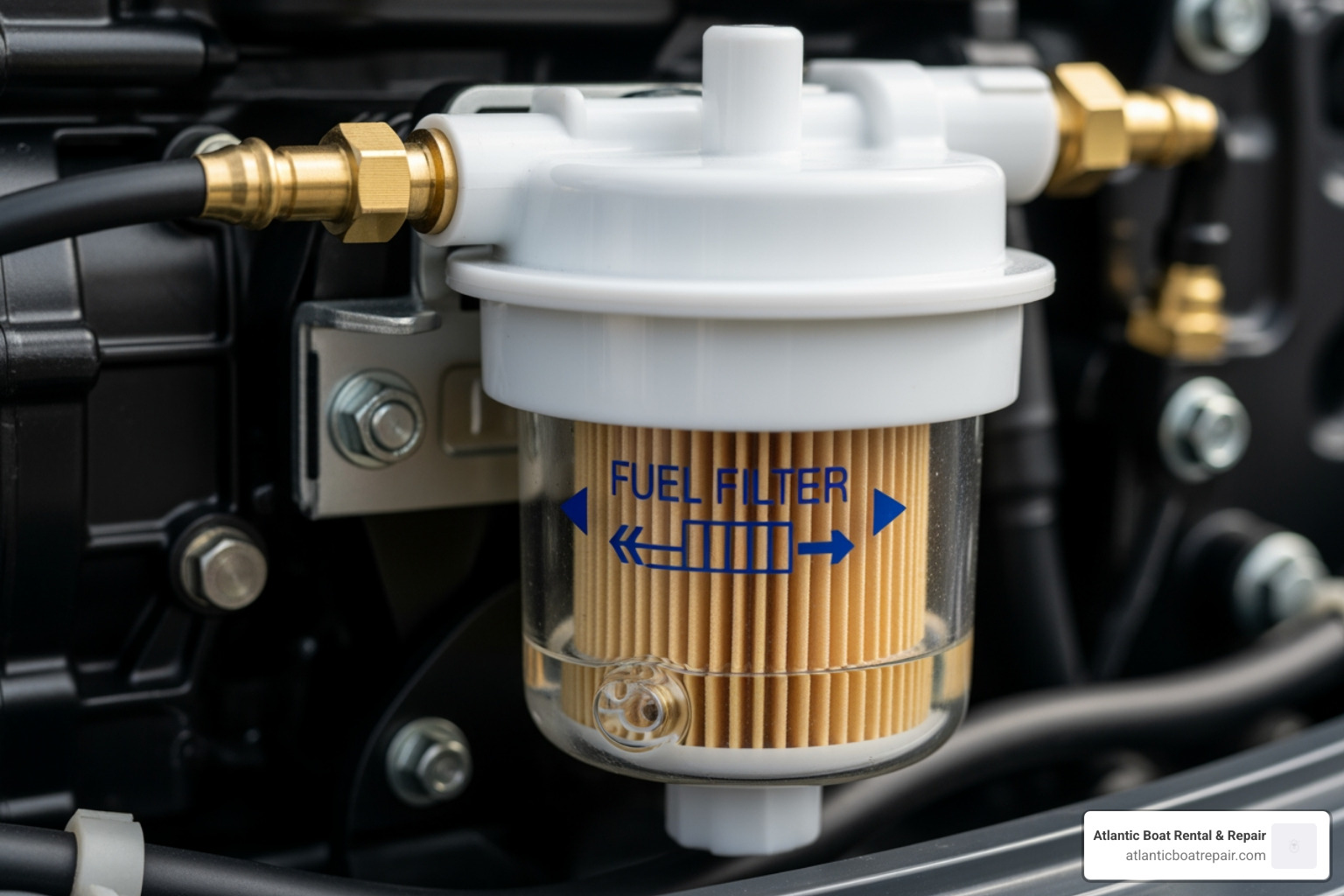
A fuel filter change is one of the simplest yet most critical maintenance tasks for your outboard engine. This small, inexpensive part is the primary defense between your engine and a day stranded on the water.
Quick Answer: How to Change Your Fuel Filter
- Locate the fuel filter (under the engine cowling or along the fuel line).
- Prepare a catch pan and wear safety gear (gloves and glasses).
- Remove the old filter using a filter wrench.
- Install the new filter, ensuring the flow arrow points toward the engine.
- Prime the fuel system using the primer bulb.
- Start the engine and check for leaks.
Time Required: 30 minutes | Cost: $20-$100 for parts (DIY) or $70-$150+ (professional)
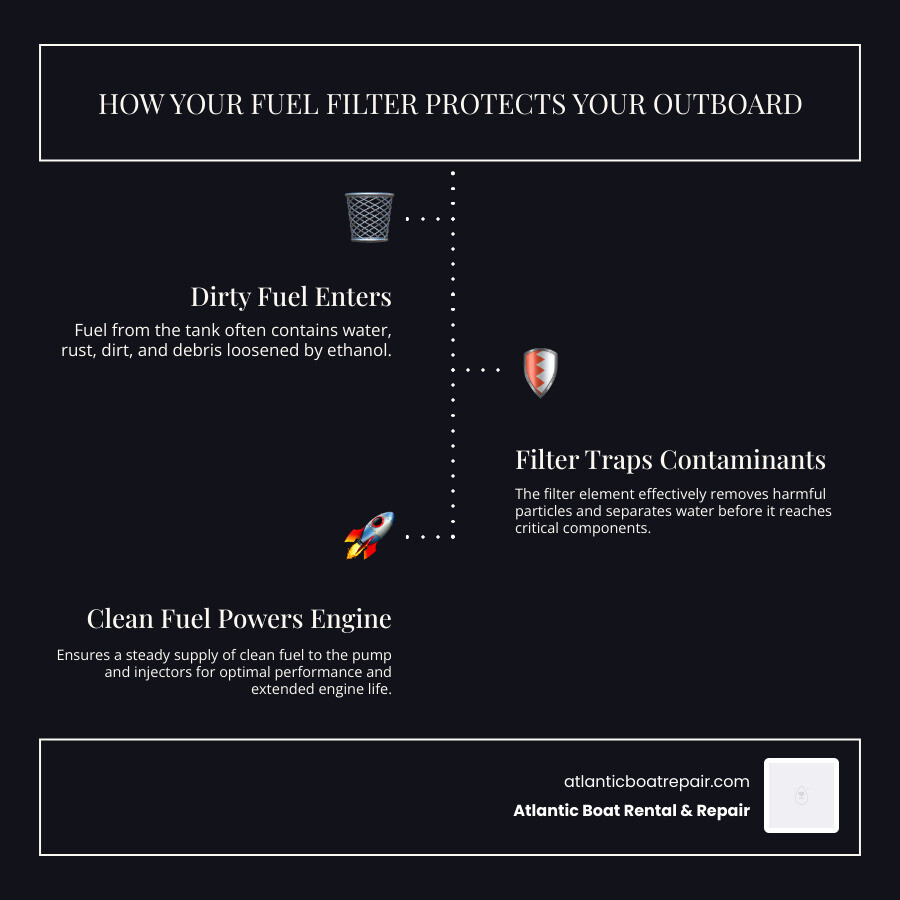
The harsh marine environment means water, rust, and debris from ethanol-blended fuels constantly threaten your engine. Your fuel filter is designed to catch these contaminants before they can damage sensitive components like your fuel pump and injectors. Without a clean filter, your engine will sputter, stall, and eventually fail—often at the worst possible moment.
Fortunately, changing your fuel filter is straightforward, affordable, and takes about half an hour. This simple task protects your investment and keeps you on the water instead of waiting for a tow.
What is a Marine Fuel Filter and Why is it Critical?
Think of your outboard's fuel filter as a bouncer for its fuel system. It's a crucial component that stops unwanted contaminants from reaching your engine's delicate internal parts. In the challenging marine environment, fuel faces unique threats. Unlike cars, boat fuel often sits for long periods, allowing for water contamination and degradation.
Water in fuel is a primary enemy, leading to corrosion and poor combustion. A fuel-water separator is designed specifically to capture this water. Another major issue comes from the effects of ethanol-blended fuels. Ethanol is a solvent that can loosen rust and debris from inside your tank and fuel lines. It also absorbs water, which can lead to "phase separation"—a corrosive mixture of water and ethanol that sinks to the bottom of the tank, waiting to be ingested by your engine.
Your fuel filter traps all these contaminants, providing essential fuel pump and injector protection. A clogged filter puts immense stress on the fuel pump, leading to premature failure and a big repair bill. We've seen this issue frequently in Plymouth and Duxbury. Furthermore, it protects the fine-tuned fuel injectors, which can be easily clogged by microscopic particles, leading to poor performance and costly repairs. A clean filter is vital for optimal engine performance and engine longevity, ensuring your outboard runs smoothly for years of cruising in Bourne or fishing off Sandwich.
Types of Marine Fuel Filters
Understanding the different types of filters can help you maintain your vessel:
- Spin-on Canister Filters: Common and easy to replace, these resemble oil filters and screw onto a base. Many fuel-water separators use this design.
- Inline Fuel Filters: Smaller, often transparent filters placed directly in the fuel line. The entire cartridge is typically replaced.
- Fuel-Water Separators: The most critical type for marine use. They are designed to filter particles and separate water from fuel, often featuring a clear bowl for visual inspection. They are usually mounted on the boat, before the engine.
- Engine-Mounted Filters: A smaller, secondary filter located under the engine cowling, providing a final stage of filtration before fuel reaches the injectors.
For help with your specific engine's filter setup, you can Learn more about our engine repair and maintenance services.
The Importance of a Clean Fuel Filter
A clean fuel filter is not just about avoiding a breakdown; it's about optimizing your engine's health and performance. Here's why it's so important:
- Prevents Engine Stalling and Ensures Smooth Acceleration: A clogged filter restricts fuel flow, starving your engine. This leads to sputtering, hesitation when you hit the throttle, and potentially dangerous stalls in critical situations.
- Avoids Costly Fuel System Repairs: A dirty filter forces your fuel pump to work harder, leading to premature failure. It also allows contaminants to reach and damage sensitive fuel injectors. A small investment in a regular fuel filter change can save thousands in future repairs.
- Maintains Fuel Efficiency: An engine struggling for fuel works harder and burns more gasoline. A clean filter ensures optimal fuel delivery and efficiency.
- Prevents Major Engine Damage: A severely clogged filter can cause the engine to run lean (too much air, not enough fuel). This condition creates high engine temperatures that can lead to catastrophic internal damage, including piston and valve failure.
Signs You Need a Fuel Filter Change and How Often to Do It
Your outboard engine will give you clear signals when its fuel filter is clogged. Recognizing these signs can save you from a breakdown and costly repairs.
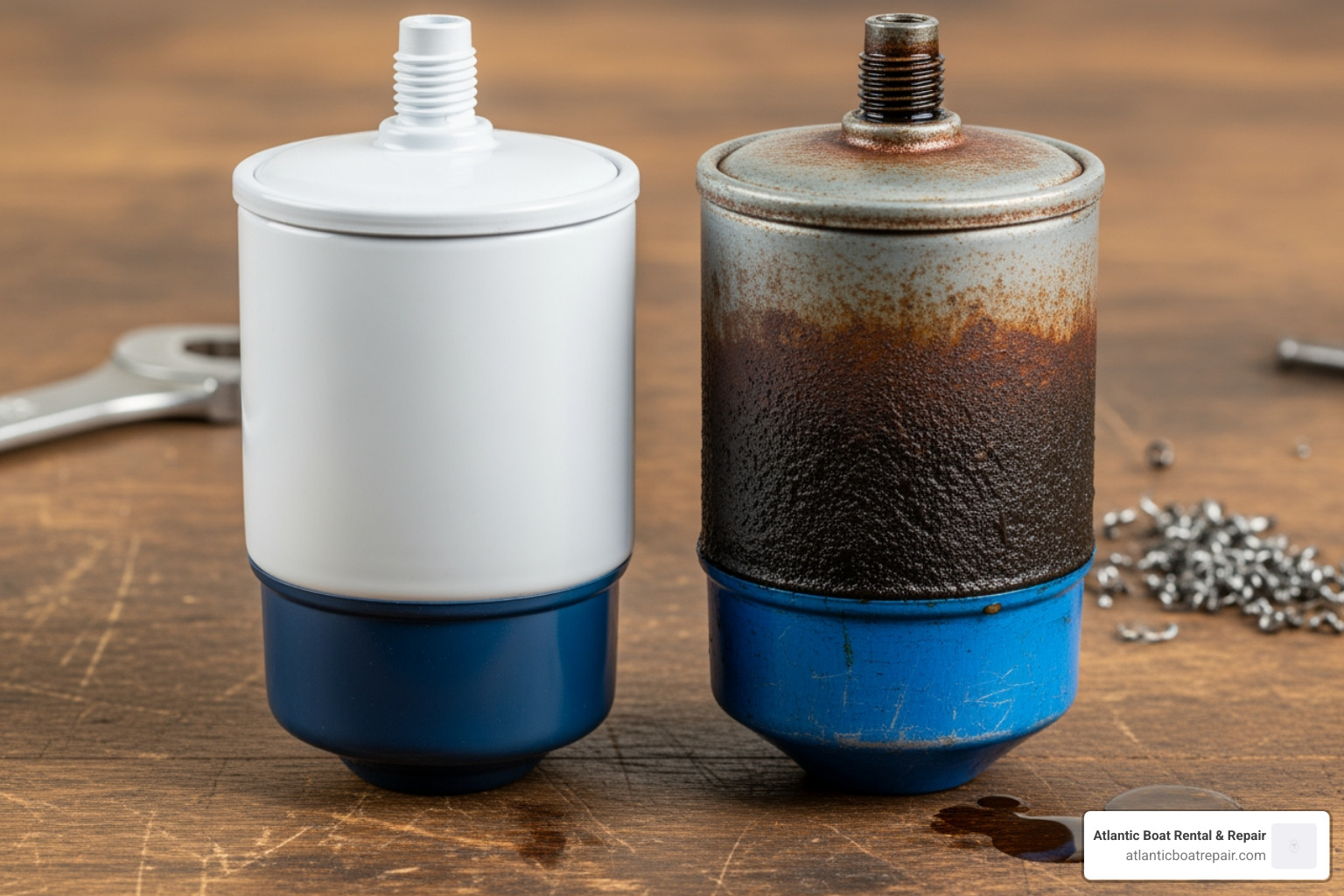
Common symptoms we see from boaters in the Plymouth area include:
- Engine Sputtering: The engine momentarily loses power, especially under load.
- Difficulty Starting: The engine cranks longer than usual before firing up because of restricted fuel flow.
- Rough Idle: The engine shakes or sounds uneven at idle.
- Loss of Power at High RPMs: The engine feels starved for fuel and can't reach top speed.
- Engine Stalling: The engine dies unexpectedly, especially at low speeds.
- Check Engine Light: On some engines, a severe fuel pressure drop can trigger a warning light.
Recommended Fuel Filter Change Intervals
While car schedules vary, marine engines require more frequent changes due to the harsh environment. Always consult your manufacturer recommendations in the owner's manual for the most accurate interval.
A good general rule for marine engines is every 100 hours of operation or annually, whichever comes first. An annual change is wise even with low hours, as fuel can degrade during storage. We recommend this to our customers in Kingston and Duxbury as part of their annual service.
For high-use boats or those running ethanol-blended fuels, you should consider changing the filter even more frequently. If you're unsure, our team can help. For comprehensive guidance, explore our Fuel Filter Replacement guidance from our experts.
What Happens if You Don't Change Your Fuel Filter?
Neglecting your fuel filter can lead to a cascade of serious and costly problems. The immediate result is fuel starvation, causing the sputtering, stalling, and power loss we've discussed. Over time, this neglect leads to:
- Premature Fuel Pump Failure: The pump works overtime to push fuel through the clog, leading to burnout and an expensive replacement.
- Clogged or Damaged Fuel Injectors: Contaminants that bypass the saturated filter can ruin precise fuel injectors, a costly and complex repair.
- Internal Engine Damage: Running lean (too little fuel) due to a clog can cause the engine to overheat, potentially leading to catastrophic failure of pistons or valves.
- Being Stranded on the Water: A failed fuel system can leave you powerless and in need of an expensive tow.
A proactive fuel filter change is the best way to prevent these issues.
The DIY Outboard Fuel Filter Change: A Step-by-Step Guide
Tackling a fuel filter change yourself is a manageable task for many DIY enthusiasts and a great way to save money. However, if you're not comfortable working with fuel, calling a professional is always the safest choice.
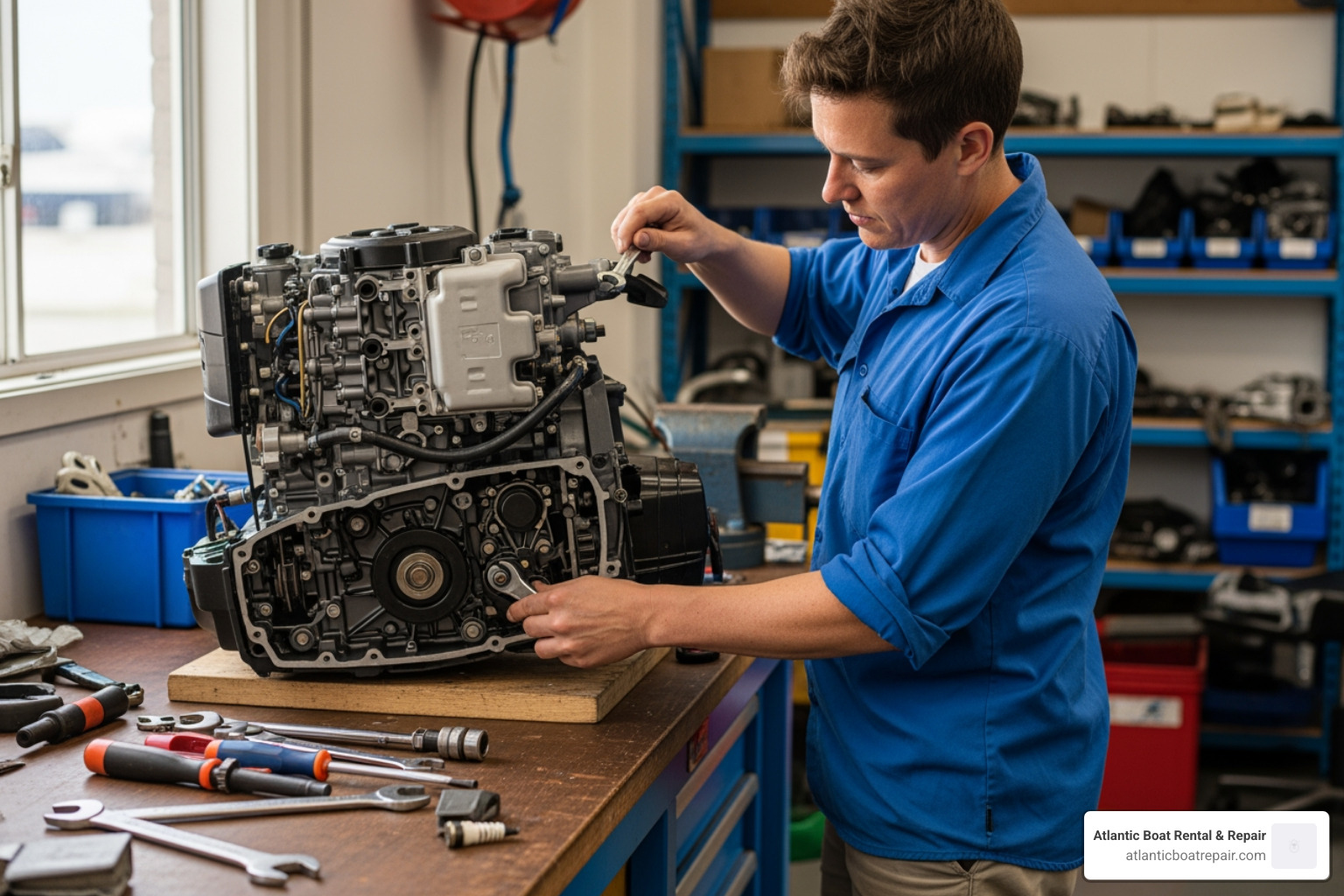
Safety First: Always work in a well-ventilated area away from sparks or flames. Have a fire extinguisher nearby. Wear safety glasses and gloves. Be prepared to clean up any fuel spills immediately. Most DIYers can complete this job in about 30 minutes.
Tools and Supplies for Your Fuel Filter Change
Gather these items before you begin:
- New fuel filter and gaskets: Ensure you have the correct part for your engine model.
- Filter wrench: A cup-style or strap wrench for spin-on filters.
- Socket/wrench set: For clamps or mounting brackets.
- Rags or shop towels: For cleaning up spills.
- Catch pan for fuel spillage: To place under the filter during removal.
- Safety glasses and gloves: Essential personal protective equipment.
- Fire extinguisher: A critical safety precaution.
The Replacement Process
Follow this step-by-step guide for your fuel filter change. Always refer to your owner's manual for model-specific details.
Step 1: Locate the filter(s) Remove the engine cowling to find the engine-mounted filter. If you have a primary fuel-water separator, it will be located on the boat's transom or in a bilge compartment.
Step 2: Prepare for fuel spillage Place your catch pan directly under the filter and have rags ready. Some fuel will leak out.
Step 3: Remove the old filter Carefully disconnect the fuel lines from the filter. These may be held by hose clamps, quick-connect fittings, or threaded fittings. Be gentle with plastic parts. Once the lines are off, unmount the filter from its bracket and remove it, being mindful of fuel spillage.
Step 4: Install the new filter (lubricate gasket, note flow direction arrow) Lightly lubricate the new filter's rubber gasket with clean fuel or oil to ensure a good seal. Crucially, note the flow direction arrow on the filter and make sure it points towards the engine. Install the new filter and securely reconnect the fuel lines.
Step 5: Prime the fuel system using the primer bulb Squeeze the primer bulb in the fuel line repeatedly until it feels firm. This fills the new filter with fuel and purges air from the system.
Step 6: Start the engine and check for leaks Start the engine and let it idle. Carefully inspect the new filter and its connections for any sign of a fuel leak. If you find a leak, shut the engine off immediately and tighten the connections. Once you are certain there are no leaks, replace the engine cowling.
Congratulations! You've just performed a critical fuel filter change to protect your engine's health and reliability.
Cost, Professional Help, and Fuel System Maintenance
You can perform a fuel filter change yourself or have a professional handle it. Understanding the costs and options can help you make the best decision for your boat.
The DIY cost is very affordable. The filter part itself is typically $20-$100. With a few basic tools, it's an economical job.
For professional replacement, the cost is higher due to labor, generally ranging from $70 to $150+. For marine engines with complex or hard-to-access filters, the price may be slightly higher, but it's a worthwhile investment for the protection it provides.
When should you call a pro? If you have hard-to-access filters or simply don't feel comfortable working with fuel, it's best to bring your boat to us. Our expert technicians will do the job correctly and safely. If you'd like an estimate for your outboard, you can Request a Quote from our team.
Tips for Maintaining Your Marine Fuel System
Beyond the regular fuel filter change, adopt these best practices to keep your entire fuel system healthy, especially for boaters in the Plymouth and Cape Cod areas:
- Use high-quality, fresh fuel: Purchase fuel from high-turnover marinas to avoid stale gasoline.
- Use a fuel stabilizer: Always add a marine-grade stabilizer if your boat will sit for more than a few weeks, especially for winter storage. This prevents fuel degradation.
- Avoid running the tank empty: This can stir up sediment and water from the bottom of the tank. Refuel before your tank gets too low.
- Regularly check for water in the fuel separator bowl: Before each outing, visually inspect the clear bowl on your fuel-water separator. If you see water, drain it immediately. This is a simple, powerful way to protect your engine.
By combining these tips with a routine fuel filter change, you'll significantly extend the life of your outboard. If you have questions, Contact Us anytime.
Frequently Asked Questions about Marine Fuel Filters
Here are answers to some of the most common questions we receive about marine fuel filters.
Can I clean and reuse a marine fuel filter?
No. Most marine fuel filters (spin-on canisters, inline cartridges) are disposable. Their internal media traps contaminants but cannot be cleaned without being damaged. Attempting to reuse a filter risks engine damage. Always replace the filter element as recommended by the manufacturer.
What's the difference between a primary and secondary fuel filter on a boat?
Many boats use a two-filter system for maximum protection:
- Primary Filter (Fuel-Water Separator): This is a large filter mounted on the boat, before the engine. Its main job is to remove larger debris and separate water from the fuel. It often has a clear bowl for inspecting and draining water.
- Secondary Filter (Engine-Mounted Filter): This is a finer filter located on the outboard engine itself. It provides a final cleaning of the fuel just before it reaches the sensitive fuel injectors.
How does ethanol in fuel affect my boat's fuel filter?
Ethanol-blended fuels (like E10) accelerate the need for a fuel filter change. Here's why:
- It's a Solvent: Ethanol can loosen old deposits of rust particles and sludge from your tank and fuel lines, sending this debris directly to your filter and clogging it quickly.
- It Absorbs Water: Ethanol is hydrophilic, meaning it attracts water. This can lead to "phase separation," where a corrosive water-ethanol mixture sinks to the bottom of your tank. This puts extra strain on your fuel-water separator.
Because of these issues, boats running on ethanol-blended fuel require more frequent filter inspections and changes to protect the engine.
Conclusion
As we've explored, a regular fuel filter change is a simple, affordable task that is absolutely crucial for your outboard engine's health and, by extension, your safety and enjoyment on the water. This small component acts as the unsung hero of your fuel system, tirelessly protecting delicate and expensive parts like your fuel pump and injectors from water, dirt, rust, and the corrosive effects of ethanol-blended fuels.
Proactive maintenance, like adhering to recommended fuel filter change intervals, is the best defense against costly repairs and inconvenient breakdowns. Don't wait for your engine to sputter or stall before addressing this vital component. A little attention now can save you a lot of headache and expense down the line.
Here at Atlantic Boat Rental & Repair, we emphasize precision and reliability in all our engine work, from routine maintenance to complex rebuilds. We understand the unique demands of marine engines and the importance of a properly functioning fuel system. For expert help with your outboard engine's fuel system and other maintenance needs, whether you're in Plymouth, Kingston, Duxbury, Bourne, or Sandwich, explore our expert Services. We're here to ensure your time on the water is smooth sailing.
Comments
Be the first to comment on this article!