
Keep Your Motor Humming: DIY Fuel System Cleaning & Tune-Up Tips
Why Fuel System Cleaning Keeps Your Outboard Running Right
Fuel system cleaning is the process of removing carbon deposits, varnish, and contaminants from your engine's fuel components — including injectors, intake valves, fuel lines, and the fuel tank — to restore proper fuel flow and combustion efficiency.
Here's a quick breakdown of what you need to know:
| Topic | Quick Answer |
|---|---|
| What it does | Removes carbon, varnish, and debris from fuel components |
| Key components cleaned | Injectors, intake valves, fuel lines, fuel pump, tank |
| How often | Every 60,000–90,000 miles on road engines; seasonally for outboards |
| DIY options | Fuel tank additives, throttle body spray, vacuum line induction |
| Professional service cost | $50–$80 for basic; up to several hundred for full service |
| Warning signs | Rough idle, hard starting, hesitation, poor fuel economy |
Most boat owners don't think about their fuel system until something goes wrong. But by then, you're already dealing with a hard-starting engine, a rough idle at headway speed, or a motor that surges and stumbles when you need it most.
The fuel system is straightforward in concept — move fuel from the tank to the combustion chamber, mix it with air, and burn it cleanly. But over time, ethanol blends, humidity, heat cycles, and the natural byproducts of combustion all leave behind deposits that slowly choke performance. Left alone, those deposits don't fix themselves.
This guide walks you through how to identify the problem, what you can handle yourself at the dock, and when it's time to bring your engine in for a proper professional cleaning.
I'm Ron Cribbie, owner of Atlantic Boat Repair in New England, and after decades of hands-on marine service work, fuel system cleaning is one of the most common — and most overlooked — maintenance items we see on boats coming in for seasonal tune-ups. Getting ahead of it is almost always cheaper and easier than dealing with the fallout when a dirty system finally lets go.
Understanding Your Outboard's Fuel Components
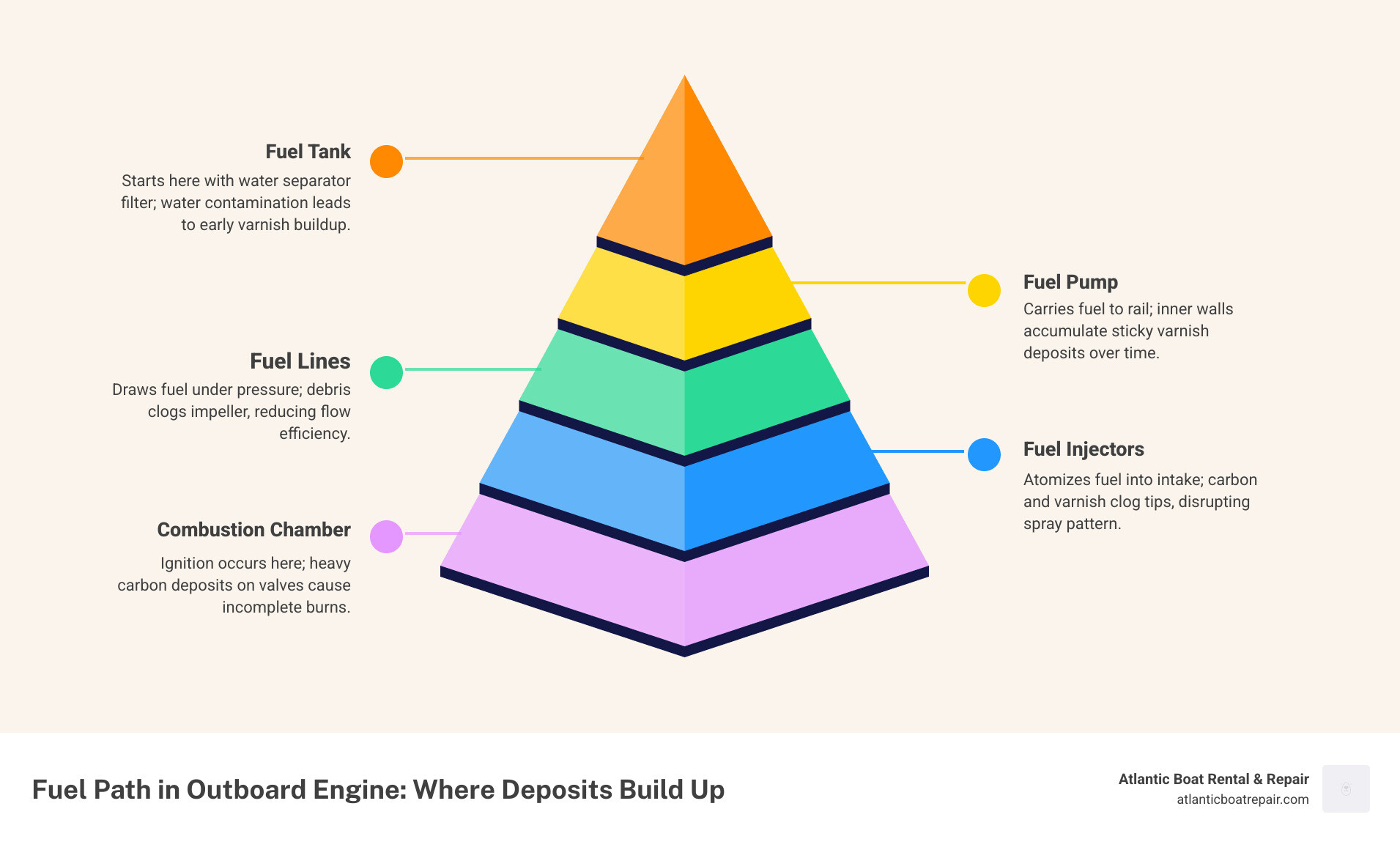
To keep your motor running at its peak, you need to understand the "circulatory system" of your boat. Every component from the fill cap to the spark plug plays a role in delivering the energy your engine needs to push through a South Shore chop.
The Major Players
- Fuel Tank: The reservoir where it all starts. In older boats, these can accumulate sediment or even rust scale.
- Fuel Pump: This is the heart of the system. It draws fuel from the tank and pushes it toward the engine. In many modern fuel-injected outboards, the pump relies on the fuel itself for cooling and lubrication.
- Fuel Lines: These are the "arteries." Over time, they can degrade internally, especially if they aren't rated for modern ethanol fuels.
- Fuel Injectors: These precision nozzles spray a fine mist of fuel into the combustion chamber. If they get clogged, that mist becomes a weak stream, leading to poor combustion.
- Carburetors: Found on older outboards, these mix air and fuel mechanically. They are notorious for "gumming up" if left sitting with old fuel.
- Intake Valves: These allow the air-fuel mixture into the cylinders. Carbon often builds up here, acting like a sponge that soaks up fuel and disrupts airflow.
For a deeper dive into how these fluids interact, you can read more about Cleaning the Fuel System.

The Impact of Ethanol and Varnish
In our neck of the woods—around Plymouth and Kingston—humidity is a constant factor. When you combine that moisture with the E10 ethanol gasoline found at most pumps, you get a recipe for "phase separation." This is where the water and ethanol sink to the bottom of your tank, leaving a corrosive, low-octane mess.
As fuel sits, it begins to oxidize and degrade, forming a sticky substance known as varnish or gum. These deposits can clog the tiny orifices in your injectors and coat your intake valves. Furthermore, impurities like asphaltenes can settle out of the fuel, creating a sludge that chokes your filters and fuel pump.
Recognizing Symptoms of a Dirty System
A dirty fuel system rarely fails all at once. Instead, it gives you "red flags" that many boaters mistake for just an aging engine. If you notice a sudden drop in your miles per gallon or your engine feels "sluggish" when you're trying to get on plane, it's a sign that your fuel system cleaning is overdue.
Common signs include:
- Rough Idling: The boat shudders or vibrates more than usual when you're sitting at the dock or waiting for a bridge.
- Engine Hesitation: You push the throttle forward, and there’s a distinct "lag" before the engine responds.
- Loss of Power: You can't reach the same top-end RPMs you did last season.
- Poor Fuel Economy: You're visiting the fuel dock more often for the same amount of time on the water.
Performance Red Flags on the Water
On the water, these issues can become safety concerns. A "lean misfire"—caused by too much air and not enough fuel—can cause the engine to pop or sneeze. You might experience stalling at headway speeds, which is the last thing you want when navigating a crowded channel in Duxbury or Bourne.
Hard starting is another classic symptom. If you have to prime the bulb repeatedly or crank the engine for a long time before it catches, the system is likely struggling with restricted flow or dirty injectors. Check out Fuel System Cleaning 101 | Tires Plus for more on how these symptoms manifest.
The Importance of a Professional Fuel System Cleaning
While a bottle of additive can help with light maintenance, it isn't a magic wand for a heavily fouled system. Professional fuel system cleaning involves using specialized equipment to run high-strength detergents directly through the fuel rail and injectors, bypassing the gas tank entirely.
This process is especially critical for Gasoline Direct Injection (GDI) engines. In these motors, the fuel is sprayed directly into the combustion chamber. Because the fuel never touches the back of the intake valves, they don't get the "washing" effect found in older port-injection engines. This leads to rapid carbon buildup that can only be removed through mechanical or professional chemical cleaning.
When Additives Aren't Enough
If your injectors are severely restricted, "on-vehicle" cleaning might not cut it. At Atlantic Boat Repair, we've seen cases where the only solution is to remove the injectors for ultrasonic cleaning and flow testing. This allows us to inspect the spray pattern and ensure every cylinder is getting the exact same amount of fuel.
Precision is everything. We remanufacture engines to twice the manufacturer's specs because we know that even a 5% difference in fuel delivery between cylinders can lead to a lean condition that eventually melts a piston. You can learn more about our marine repair services and how we handle these high-precision tasks.
How Often Should You Schedule a Fuel System Cleaning?
For road vehicles, experts often suggest a service every 60,000 to 90,000 miles. However, marine environments are much harsher. We generally recommend:
- Every 100 Hours: A basic check of the fuel system and filter replacement.
- Seasonally: Adding a stabilizer and cleaner during your winterization or spring commissioning.
- Every 300 Hours or 3 Years: A more intensive professional cleaning, especially for GDI engines.
Following these intervals helps prevent the "domino effect" where a dirty filter strains the fuel pump, which eventually leads to a total system failure. For more details on professional procedures, see Cleaning the Fuel System: What It Involves and Other Related FAQs.
DIY Maintenance and Preventive Care
You don't always need a mechanic for the basic stuff. Preventive care is the best way to avoid a "tow of shame" back to the ramp.
Step-by-Step DIY Fuel System Cleaning
If you want to try a DIY approach for minor performance issues, follow these steps:
- Fuel Tank Additives: Choose a high-quality cleaner containing PEA (polyetheramine). This chemical is strong enough to survive the combustion process and clean the injectors and combustion chamber.
- Throttle Body Spray: With the engine off (and flame arrestor removed), you can use a dedicated intake cleaner to remove the "butterfly" valve's gunk.
- Vacuum Line Induction: Some products allow you to "sip" the cleaner through a vacuum line while the engine is running. Warning: Be extremely careful here to avoid "hydro-locking" the engine. If you aren't 100% sure, leave this to us.
Always wear eye protection and work in a well-ventilated area—preferably with the boat in the water or on a flush kit.
Maintaining the Fuel Water Separator
Around the South Shore and Cape Cod, your fuel water separator is your first line of defense. We recommend using 10-micron filters to catch the smallest particles before they reach your engine.
- Inspect the Bowl: If your separator has a clear collection bowl, check it every time you head out. If you see a distinct line of water at the bottom, drain it immediately.
- Replacement: Don't wait for it to clog. Replace the filter element every 50 to 100 hours of operation.
For more tips on choosing the right products, check out The Secrets of Gasoline Fuel Treatments.
Frequently Asked Questions about Fuel Maintenance
Is fuel system cleaning necessary if I use high-quality gas?
Yes. While "Top Tier" gasoline contains higher levels of detergents that help prevent new deposits, it cannot completely stop the natural byproduct of combustion: carbon. Over hundreds of hours, carbon will still build up on your pistons and valves. Think of it like brushing your teeth—even if you eat healthy, you still need a professional cleaning now and then.
Can I clean my own fuel injectors?
You can use on-vehicle kits that use pressurized canisters of solvent, but these have limits. They can't tell you if an injector's internal solenoid is failing or if the spray pattern is lopsided. For a true deep clean, the injectors need to be tested on a specialized flow bench.
What is the difference between gas and diesel cleaning?
Diesel systems are much higher pressure and deal with different issues, like algae growth (microbial contamination) and the need for lubricity agents. Modern diesel trucks also use Diesel Exhaust Fluid (DEF) to manage emissions—a standard truck uses about a gallon of DEF every 500 kilometers (roughly 310 miles). If the DEF tank runs dry, the engine may go into "limp mode" or refuse to start.
Conclusion
At Atlantic Boat Rental & Repair, we know that a boat is more than just a machine; it's your gateway to the best parts of living in Massachusetts. Whether you're fishing off Sandwich or cruising the Plymouth waterfront, you need an engine you can trust.
Regular fuel system cleaning is the "unsung hero" of engine longevity. By staying on top of your filters, using quality additives, and knowing when to call in the pros for a deep clean, you'll ensure your motor stays humming for years to come.
If you're noticing your engine isn't performing like it used to, or if you're considering a repower with one of our precision-remanufactured outboards, talk to a technician about your engine options. We’re here in the South Shore area to give you an honest recommendation and get you back on the water with confidence.
Comments
Be the first to comment on this article!