
Don’t Get Stranded: How to Find a Reliable Marine Engine Specialist
Why Finding the Right Marine Mechanic Matters
When you search for a marine mechanic near me, you're usually dealing with one of two situations: your boat won't start, or you're trying to avoid that exact problem. Either way, finding a reliable marine engine specialist isn't just about convenience—it's about protecting your investment and your time on the water.
Quick Answer: How to Find a Reliable Marine Mechanic Near You
- Ask at local marinas - Harbormaster and dock staff know who does quality work
- Check online reviews - Look for consistent feedback about honesty and turnaround times
- Verify certifications - ABYC certification and manufacturer training matter
- Request references - Talk to boat owners who've used their services
- Get written estimates - Reputable shops provide detailed cost breakdowns upfront
- Confirm insurance - Ensure they carry proper liability coverage
The reality is straightforward: a competent marine mechanic can keep your boat running for years. A bad one can cost you thousands in repeated repairs, missed fishing trips, and frustration. Around New England, where weather and saltwater make engine reliability critical, this choice matters even more.
We see boats come in regularly that have been worked on by shops that cut corners—aftermarket parts that don't fit right, incomplete winterizations that lead to cracked blocks, and diagnostics that miss the actual problem. The pattern is always the same: the owner trusted someone based on price alone or convenience, and it ended up costing more in the long run.
I'm Ron Cribbie, owner of Atlantic Boat Repair, and over decades of working on center consoles, fishing boats, and recreational vessels throughout the South Shore, I've learned what separates solid marine service from shops that just go through the motions. Whether you're dealing with an engine that won't turn over or planning ahead with routine maintenance, knowing how to vet a marine mechanic near me will save you time, money, and headaches on the water.
Signs Your Boat Needs a Marine Mechanic
Your boat usually tells you when something isn't quite right. Ignoring these early warnings can turn a minor fix into a major headache, or worse, leave you stranded out on the water. We've seen it all, from a slight sputter turning into a complete engine failure to a small drip becoming a flooded bilge. Paying attention to these signs is your first line of defense.

Here are some common indicators that it’s time to call a professional:
- Engine Starting Issues: If your engine cranks slowly, struggles to turn over, or won't start at all, it's a clear sign. This could point to battery problems, starter issues, or fuel delivery troubles.
- Sputtering or Stalling: An engine that sputters, runs rough, or unexpectedly cuts out while underway is not just annoying, it's dangerous. This often indicates fuel system problems, ignition issues, or carburetor troubles.
- Overheating: Keep an eye on your engine's temperature gauge. If it's consistently running hotter than normal, or if you see steam coming from the engine, you likely have a cooling system problem. This could be a clogged intake, a failing water pump impeller, or a thermostat issue.
- Unusual Noises: Any new or strange sounds—knocking, grinding, whining, or clunking—should be investigated immediately. These noises can signal worn bearings, gearbox problems, or internal engine damage.
- Excessive Smoke: The color of your exhaust smoke can tell you a lot. Blue smoke often means burning oil, black smoke points to too much fuel or an air restriction, and white smoke can indicate burning coolant or water in the fuel.
- Loss of Power: If your boat feels sluggish, struggles to get on plane, or can't reach its usual top speed, your engine might be losing power. This could be due to propeller damage, engine tune-up needs, or more serious internal issues.
- Increased Fuel Consumption: Noticing that you're burning through fuel much faster than usual? An inefficient engine could be the culprit, often due to clogged fuel injectors, a misfiring cylinder, or carburation problems.
- Fluid Leaks: Any puddles of oil, fuel, or coolant under your engine or in the bilge are red flags. Leaks can lead to environmental hazards, fire risks, and serious engine damage if left unaddressed.
- Vibrations: Excessive vibration at certain RPMs or throughout the boat can indicate a damaged propeller, a misaligned shaft, or engine imbalance.
Common Warning Signs Your Engine Needs Attention
We've put together a list of common symptoms that warrant professional attention:
- Engine won't start or starts with difficulty
- Engine stalls or runs rough at idle or high speeds
- Overheating, indicated by temperature gauge or steam
- Unusual engine noises like knocking, grinding, or whining
- Excessive or discolored exhaust smoke (blue, black, or white)
- Noticeable loss of power or acceleration
- Higher-than-normal fuel consumption
- Visible leaks of oil, fuel, or coolant
- Excessive vibration from the engine or propeller
- Warning lights illuminated on the dashboard
If you notice any of these signs, don't put off getting it checked. A timely diagnosis can save you from more extensive repairs down the line.
What to Expect from a Professional Marine Mechanic
When you bring your boat to a professional, you're looking for more than just a quick fix. You need someone who understands the complexities of marine engines and systems, especially the unique challenges of boating in New England waters. A good mechanic will offer a comprehensive range of services, from precise diagnostics to thorough seasonal preparations.

At Atlantic Boat Repair, we pride ourselves on providing meticulous service. Our approach involves thorough inspections and detailed explanations, so you always know what's happening with your boat. We know that for serious boat owners, clear communication and competent work are paramount. For a detailed look at what we do, visit our services page.
Core Services and Capabilities
A reliable marine mechanic should be equipped to handle a wide array of services. Here’s what you should expect:
- Engine Diagnostics: Modern marine engines are complex, relying on intricate electronic systems. Effective diagnostics require specialized tools and software to accurately pinpoint issues. We use advanced diagnostic equipment to read engine codes, analyze performance data, and identify the root cause of problems quickly.
- Routine Maintenance: This includes essential services like 100-hour and annual engine services, oil and filter changes, fuel filter replacement, spark plug inspection, and drive belt checks. Regular maintenance is crucial for preventing breakdowns and extending engine life.
- Engine Repair: From minor adjustments to major overhauls, a professional should be capable of handling all types of engine repairs. This includes everything from addressing fuel system issues and electrical problems to rebuilding or replacing engine components.
- Winterization: This is non-negotiable for boats in Massachusetts. Proper winterization protects your engine and systems from freezing temperatures. It involves draining water, stabilizing fuel, fogging the engine, and ensuring all vulnerable components are protected.
- Summerization: Getting your boat ready for the season involves de-winterizing, checking all systems, charging batteries, and performing pre-season tune-ups to ensure a smooth start to your boating adventures.
- Electronic Installations and Upgrades: Marine electronics are constantly evolving. A skilled mechanic can install and integrate new chart plotters, fishfinders, VHF radios, radar systems, and other navigation or entertainment electronics, ensuring they work seamlessly with your boat’s existing systems.
- Propeller Repair and Maintenance: A damaged propeller can significantly impact performance and fuel efficiency. Services should include propeller inspection, repair, and balancing, as well as skeg repair. We've seen how an unnoticed ding can lead to further damage if not addressed.
- Pre-Purchase Inspections: If you're considering buying a used boat, a thorough pre-purchase inspection by a marine mechanic is critical. This evaluates the engine's condition, identifies potential hidden problems, and helps you make an informed decision.
- Repowering: For older boats with reliable hulls, repowering with a new or remanufactured engine can be a cost-effective alternative to buying a new vessel. This involves removing the old engine and installing a new, more efficient one, often with updated controls and gauges.
We offer professional, detailed work on all these fronts. If you're looking for a service that stands by its work, get a quote for your project.
Key Qualifications and Certifications to Look For
Choosing a marine mechanic isn't just about finding someone with a toolbox. It's about finding a professional with the right training and credentials.
- ABYC Certification: The American Boat & Yacht Council (ABYC) sets the standards for boat building and repair. ABYC certification indicates a mechanic has met rigorous industry standards for safety and technical proficiency.
- Manufacturer-Specific Training: Marine engines are highly specialized. Look for technicians who have completed training specific to your engine's brand (e.g., Honda Marine, Mercury, Volvo, Yamaha). This ensures they understand the nuances of your particular engine.
- Years of Hands-On Experience: While certifications are important, there's no substitute for practical experience. A seasoned mechanic has encountered a wider range of problems and solutions, especially those common to local boating conditions. We've been working on boats around Plymouth and the South Shore for decades, and that hands-on knowledge is invaluable.
- Liability Insurance: Always confirm that the mechanic carries adequate liability insurance. This protects both you and the mechanic in case of accidents or unforeseen issues during service.
- Local Reputation: Word-of-mouth referrals from other boat owners are often the best indicators of a mechanic's reliability and quality of work. Ask around at your local marina or boating club.
- Specialized Training Programs: Some mechanics may have completed comprehensive programs like the Motive Power Technician – Recreational and Sport Vehicles diploma. While this specific program is in Ontario, Canada, it's an example of the kind of in-depth training that equips individuals with broad skills for marine mechanic careers. For more on such programs, you can refer to resources like this one.
Understanding Different Engine Repairs
The type of engine in your boat significantly impacts the repair process. Each has its own design, accessibility challenges, and common issues.
- Outboard Engines: These are self-contained units mounted on the transom, popular for their ease of maintenance, good power-to-weight ratio, and ability to tilt out of the water. Repairs often involve fuel system components, ignition systems, and cooling systems (like water pump impellers).
- Sterndrive (I/O) Engines: A hybrid of inboard and outboard systems, these have an automotive-based engine inside the boat connected to an outdrive unit outside. They offer good performance and efficiency but can be more complex to service due to the engine being partially internal and the outdrive being exposed to water. Common repairs include bellows replacement, gimbal bearing service, and universal joint inspection.
- Inboard Engines: Found entirely within the hull, these are common in larger vessels and sailboats. They can be gas or diesel. Access for repairs can be challenging, often requiring technicians to work in confined spaces. Repairs frequently involve cooling systems, transmissions, and shaft alignment.
- Gas vs. Diesel Systems: Diesel engines are known for their durability and fuel efficiency, especially for long-range cruising, but their components are often heavier and more expensive. Gas engines are typically lighter, more powerful for their size, and often less costly to repair, though they may have higher fuel consumption. A skilled mechanic understands the specific diagnostic and repair procedures for both.
How to Find a Reputable Marine Mechanic Near Me
Finding a trustworthy marine mechanic near me is a critical step in ensuring your boat is well-cared for. It's not just about proximity; it's about finding someone competent, honest, and reliable. After all, your boat is an investment, and you deserve a mechanic who treats it that way.
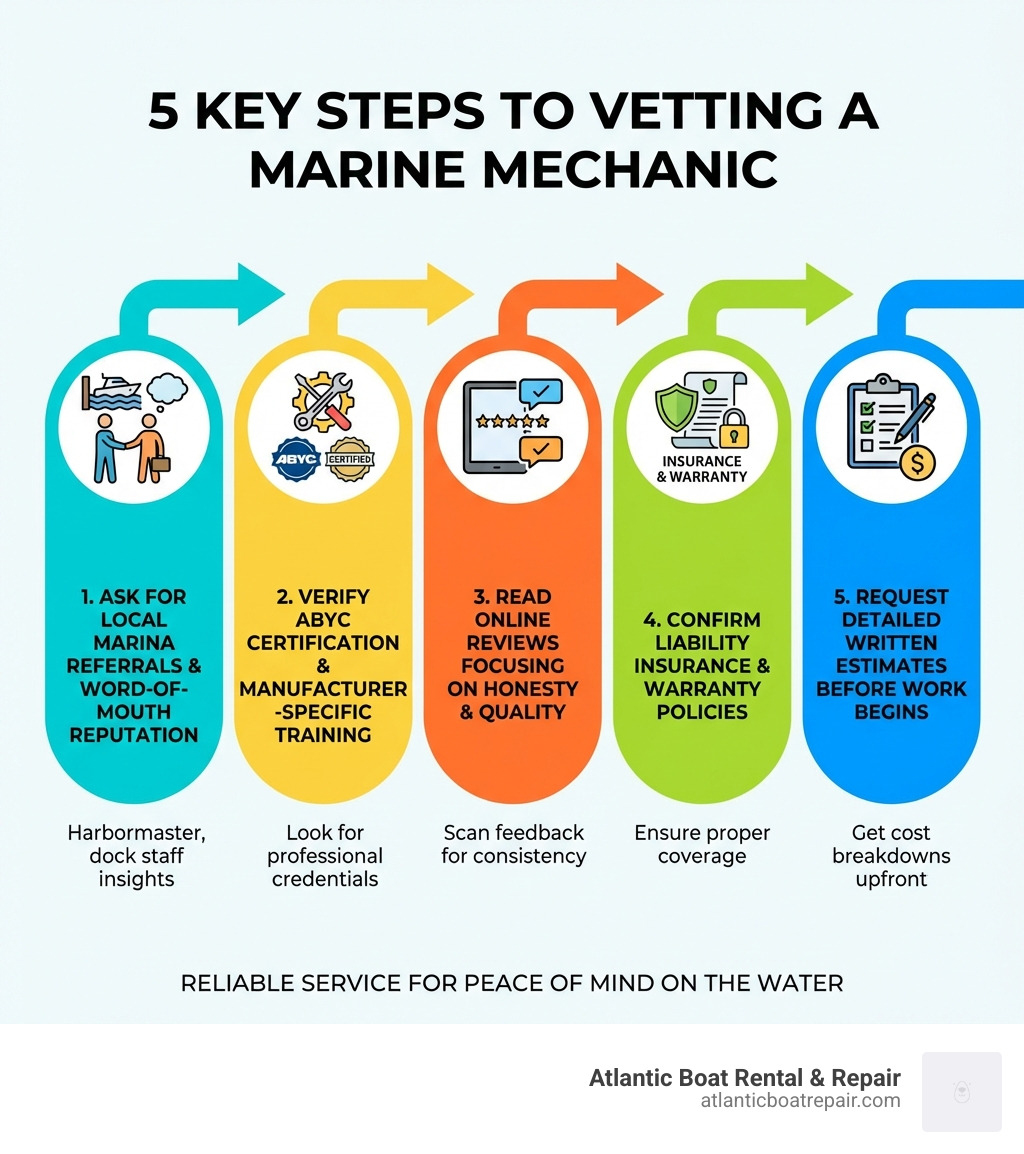
Steps for Vetting a "marine mechanic near me"
Don't just pick the first name you find. A little due diligence goes a long way.
- Ask for Local Referrals: This is often the best starting point. Talk to other boat owners at your marina in Plymouth, Kingston, or Duxbury. Ask your harbormaster, or check with local boating forums. Experienced boaters know who does good work and who to avoid.
- Check Online Reviews and Testimonials: Websites like Google Reviews can give you insight into a mechanic's reputation. Look for consistent themes in positive reviews (e.g., professionalism, fair pricing, timely service) and pay attention to how negative reviews are addressed. We maintain a strong reputation for customer satisfaction, with many positive reviews highlighting our expertise and helpfulness.
- Verify Certifications and Insurance: As we discussed, ABYC certification and manufacturer-specific training are important indicators of expertise. Always confirm the mechanic has current liability insurance. This protects both parties.
- Ask About Warranties on Parts and Labor: A reputable shop will stand behind its work. Inquire about the warranty period for both parts and labor. For example, we offer a one-year non-commercial and a six-month commercial warranty on our rebuilt gear cases.
- Request a Detailed, Written Estimate: Before any work begins, get a clear, itemized estimate that outlines the scope of work, parts costs, and labor charges. This prevents surprises and ensures transparency.
The Advantage of a Mobile Marine Mechanic
The convenience of a mobile marine mechanic can be a game-changer for boat owners, especially those with boats on trailers or moorings in places like Bourne or Sandwich.
- Best Convenience: Instead of hauling your boat to a shop, the mechanic comes to you—whether your boat is at your home, a marina, or a storage facility. This saves you time and effort.
- On-Site Service: Many repairs and maintenance tasks can be performed right where your boat sits. This is particularly beneficial for dockside repairs or pre-season checks.
- Reduced Downtime: With a mobile service, your boat spends less time out of the water or away from its mooring, meaning you get back to enjoying the water faster.
- Direct Communication: You're often present during the service, allowing for direct communication with the technician and a better understanding of the work being done.
Questions to Ask a Potential "marine mechanic near me"
When you're vetting a mechanic, don't hesitate to ask questions. A good professional will welcome them.
- "What experience do you have with my specific engine brand and model?" This ensures they're familiar with your equipment.
- "Can you explain your diagnostic process?" A clear explanation shows they have a systematic approach to troubleshooting.
- "Do you primarily use genuine OEM parts, or aftermarket parts?" We always advocate for OEM parts for their fit, function, and reliability.
- "What is your hourly labor rate, and how do you bill for diagnostic time?" Understand the cost structure upfront.
- "What is your estimated turnaround time for this type of repair?" Get a realistic expectation for completion.
- "What is your warranty policy on parts and labor?" Reiterate this important point.
- "Do you have references from other local boat owners?" Reputable mechanics will be happy to provide them.
If you have questions about your boat's needs, or if you're experiencing an issue, contact us – we're always here to help.
The Importance of Regular Maintenance and Quality Parts
We often say that a boat is happiest when it's being used and properly cared for. Around New England, with our short boating seasons and harsh saltwater environment, regular maintenance isn't a luxury—it's a necessity. Proactive care ensures your engine runs reliably, extends its lifespan, and maintains its resale value. It also keeps you safe.
Your Engine's Maintenance Schedule
Think of your boat's engine like your car's engine; it needs regular check-ups to perform its best.
- 100-Hour Service Intervals: This is a common benchmark for routine maintenance. It typically includes oil and filter changes, gear lube replacement, spark plug inspection, and a general check of the engine.
- Annual Service: Even if you don't hit 100 hours, an annual service is crucial. It covers everything in the 100-hour service, plus more in-depth checks like inspecting fuel lines, belts, hoses, and electrical connections.
- Water Pump Impeller Replacement: This is a critical item, often recommended every 1-2 years depending on use. The impeller is a rubber component that pumps cooling water through your engine. A worn impeller can lead to overheating and severe engine damage.
- Anode Inspection and Replacement: Sacrificial anodes (zinc, aluminum, or magnesium) protect your engine and drive components from galvanic corrosion in saltwater. They should be inspected regularly and replaced when they're significantly depleted.
These preventative measures are far less costly than emergency repairs.
The Value of OEM Parts
When it comes to marine engine repairs, not all parts are created equal. We strongly advocate for the use of Original Equipment Manufacturer (OEM) parts.
- Precision Fit and Function: OEM parts are designed and manufactured by the original engine builder. This means they fit perfectly and are engineered to exact specifications, ensuring optimal performance and compatibility.
- Reliability and Durability: OEM parts undergo rigorous testing to meet the manufacturer's quality standards. This translates to greater reliability and a longer lifespan compared to many aftermarket alternatives.
- Warranty Protection: Using non-OEM parts can sometimes void your engine's warranty. Sticking with genuine parts helps protect your investment.
- Long-Term Performance: While aftermarket parts might seem cheaper upfront, they can often lead to premature wear, reduced performance, and more frequent repairs in the long run. We've seen this play out many times. For instance, when we rebuild Honda outboard gear cases, we exclusively use genuine OEM Honda parts to ensure superior precision and reliability.
Boat Winterization and Summerization
For boat owners in Massachusetts, proper winterization and summerization are absolutely essential. Missing these critical seasonal services can lead to costly damage.
- Winterization: This process is about protecting your boat from the harsh New England winter. It involves:
- Draining and Flushing: Ensuring all water is drained from the engine block, cooling systems, and plumbing to prevent freezing and cracking. Antifreeze is circulated where necessary.
- Fuel Stabilization: Adding fuel stabilizer to prevent fuel degradation and moisture buildup during storage.
- Engine Fogging: Spraying a protective oil into the engine's cylinders to prevent rust and corrosion.
- Battery Maintenance: Removing, cleaning, and trickle-charging batteries to prevent discharge and prolong their life.
- Shrink Wrapping: For boats stored outdoors, professional shrink wrapping provides a custom-fit cover that protects against snow, ice, and UV damage.
- Summerization (De-winterization): This is the reverse process, getting your boat ready for launch in the spring. It includes:
- System Checks: Inspecting all hoses, belts, electrical connections, and fluid levels.
- Engine Start-Up: Carefully starting the engine and checking for proper cooling, oil pressure, and any leaks.
- Battery Reinstallation: Reinstalling and connecting fully charged batteries.
- Safety Gear Inspection: Ensuring all safety equipment (flares, life jackets, fire extinguishers) is on board and in good condition.
These services protect your investment and ensure your boat is ready when the weather breaks.
Conclusion
Finding a reliable marine mechanic near me is more than just a search query—it's about forging a relationship built on trust and competence. Your boat is a significant investment and a source of enjoyment, and it deserves the attention of a skilled professional.
We've covered the critical signs that your boat needs attention, what comprehensive services to expect, and how to properly vet a marine mechanic. We've also emphasized the non-negotiable importance of regular maintenance and the use of quality OEM parts, especially given the demands of boating in New England.
Proactive maintenance is always key to preventing costly breakdowns and ensuring your time on the water is worry-free. For boat owners on the South Shore looking for dealer-level expertise and an honest assessment, Atlantic Boat Repair provides meticulous service and rebuilt engines that are tested to perform. We pride ourselves on superior precision and rigorous testing for new-like performance and reliability. For a detailed look at what we do, visit our services page.
Comments
Be the first to comment on this article!