
Wheel Hubs, Bearings, and Beyond: A Deep Dive into Marine Trailer Hubs
Why Marine Trailer Hubs Are Critical for Safe Boat Transportation
Marine trailer hubs are the mechanical assemblies that allow your trailer wheels to rotate smoothly around the axle while supporting the full weight of your boat. Understanding the different types available is essential for safe trailering and preventing costly breakdowns.
Key Types of Marine Trailer Hubs:
- Idler Hubs - Standard hubs without brakes, used on lighter trailers or non-braking axles
- Brake Hubs - Integrated with drum brake systems for heavier boats requiring stopping power
- Galvanized Hubs - Hot-dipped coating protects against saltwater corrosion, ideal for boat trailers
- Stainless Steel Hubs - Premium option offering maximum corrosion resistance in harsh marine environments
- Painted Steel Hubs - Budget-friendly option better suited for utility trailers than marine use
Common Configurations:
- 4-lug hubs typically use a 4-inch bolt circle
- 5-lug boat trailer hubs commonly use a 4.5-inch bolt circle
- Available for axle capacities ranging from 2,000 to 7,000+ pounds
A worn or corroded hub isn't just an inconvenience—it's a safety hazard that can lead to wheel failure while towing your boat at highway speeds. The good news is that with proper material selection and regular maintenance, marine trailer hubs can provide years of reliable service even in harsh saltwater conditions.
I'm Ron Cribbie, owner of Atlantic Boat Repair, and over decades of working with recreational and commercial vessels in New England, I've seen how proper marine trailer hub maintenance prevents roadside emergencies and protects your investment. Whether you're launching weekly or seasonally, understanding your trailer's hub system is just as important as maintaining the boat itself.
Anatomy of a Marine Trailer Hub
When we talk about marine trailer hubs, we're referring to a sophisticated assembly of several interconnected parts that work in harmony to keep your wheels turning. Think of it as the heart of your trailer's wheel system, enabling smooth rotation and supporting the immense weight of your vessel as you travel through Massachusetts, whether to Plymouth, Duxbury, or Sandwich.
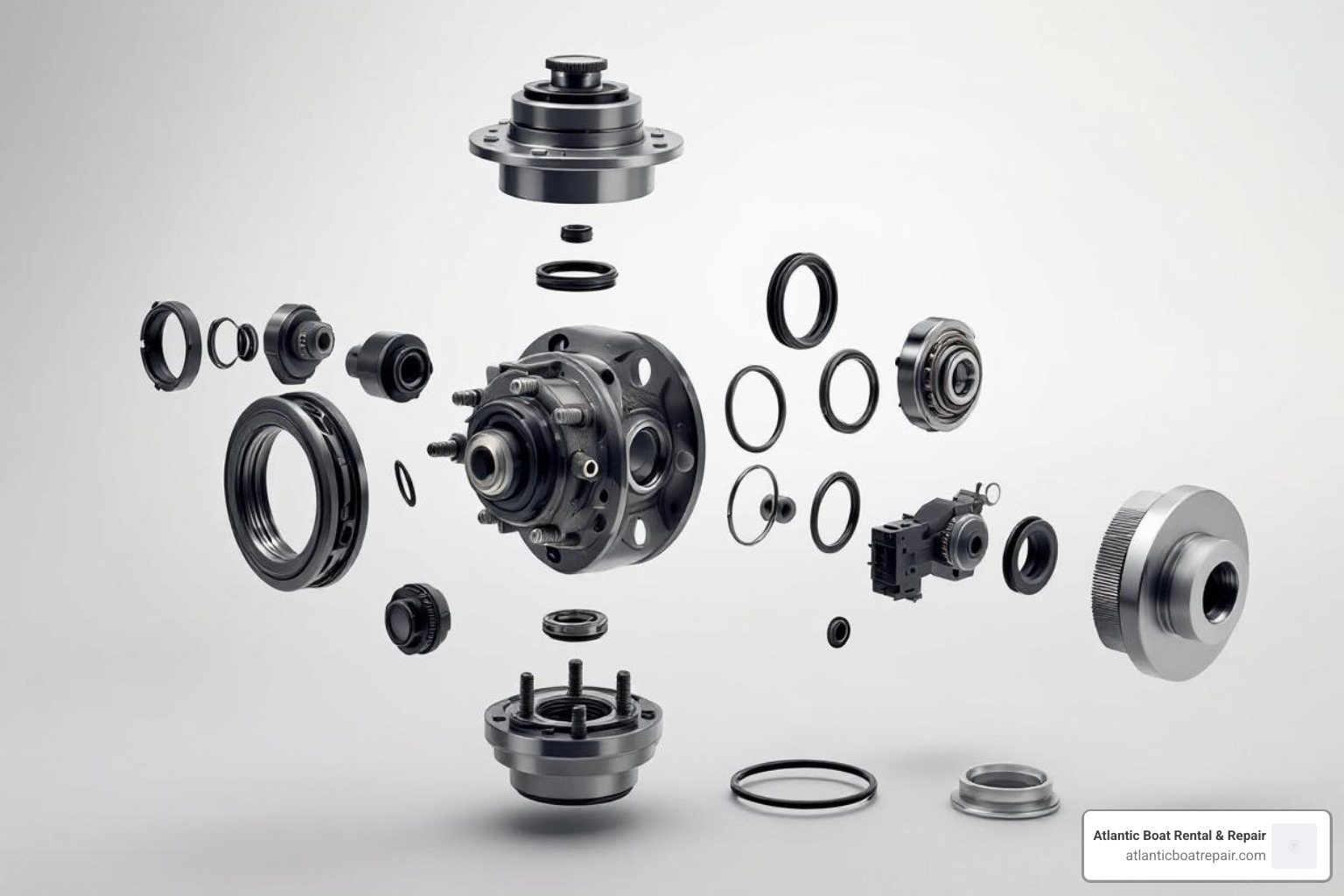
At its core, a hub kit is an essential component that allows wheels to rotate smoothly around a fixed axle. These components are critical for maintaining the stability, safety, and performance of your trailer's wheel assembly. When you purchase a complete hub kit, it often comes fully assembled with pre-greased bearings, which significantly cuts down on the mess and makes final installation much easier. This convenience is a huge plus, especially for us here at Atlantic Boat Repair, where we appreciate anything that simplifies the process while ensuring top-notch quality.
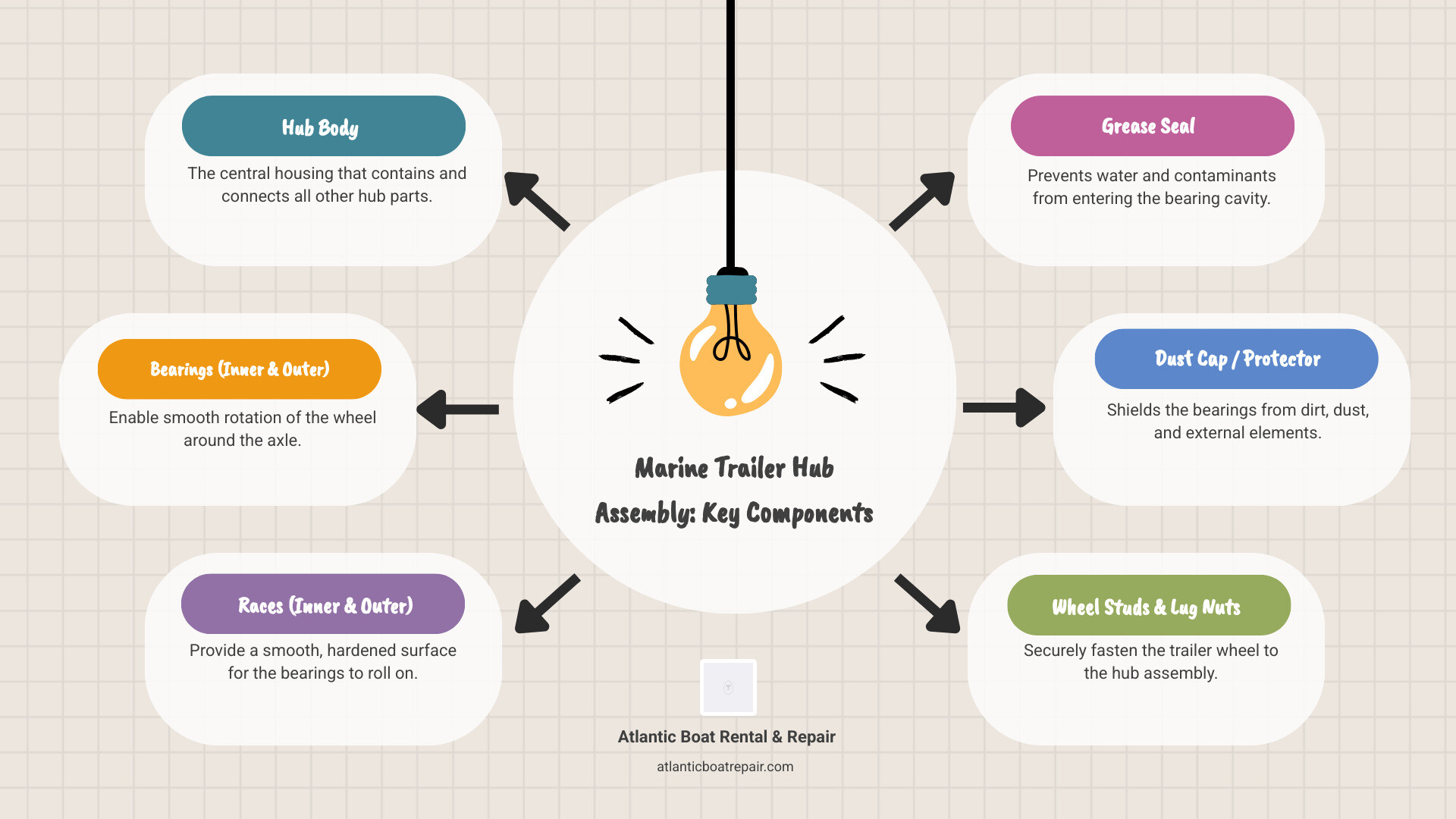
The primary components of a typical marine trailer hub assembly include:
- Hub Body: This is the main casting or housing that everything else fits into. It's designed to hold the bearings, races, and seal, and provides the mounting points for your wheel.
- Inner and Outer Bearings: These are precision-engineered components, typically tapered roller bearings, that allow the hub to spin freely on the axle spindle. They come in specific sizes, such as an outer bearing (e.g., number 44649) with a 1 1/16-inch inner diameter and an inner bearing (e.g., number 68149) with a 1 3/8-inch inner diameter.
- Inner and Outer Races (or Cups): These are the hardened steel surfaces pressed into the hub body against which the bearings roll. They are crucial for the smooth operation and longevity of the bearings.
- Grease Seal: Located at the back of the hub, this vital component prevents the lubricating grease from escaping and, more importantly, stops water, dirt, and other contaminants from entering the bearing cavity. For marine applications, this is perhaps the most critical component after the bearings themselves.
- Dust Cap or Bearing Protector: Fitted over the front of the hub, this cap provides an additional layer of protection for the outer bearing and helps retain grease. Bearing protectors, like Bearing Buddies, can also maintain positive pressure within the hub, which helps prevent water intrusion when the hub is submerged.
- Wheel Studs: These are bolts pressed into the hub body, onto which the wheel is mounted.
- Lug Nuts: These nuts thread onto the wheel studs to secure the wheel firmly to the hub.
Key Components and Their Functions
Each component in a marine trailer hub assembly plays a distinct and crucial role:
- Bearing Function: The inner and outer bearings are the workhorses, facilitating the smooth, low-friction rotation of the wheel around the axle spindle. They bear the entire load of the trailer and boat, distributing it evenly to allow for safe towing. Without properly functioning bearings, friction would cause immediate overheating and catastrophic failure.
- Race Purpose: The inner and outer races provide the perfectly smooth, hardened surfaces against which the tapered rollers of the bearings glide. They are designed to withstand the constant rolling contact and high loads. When replacing bearings, it's always best practice to replace the races simultaneously, even if they appear visually sound, to ensure proper bearing tolerance and maximize the lifespan of the new bearings.
- Grease Seal Importance: For boat trailers, especially those frequently launched into the briny waters of Cape Cod Bay or other local Massachusetts waters, the grease seal is a frontline defense. Its primary function is to keep marine-grade grease inside the hub and, crucially, to keep saltwater and debris out. A compromised grease seal is an open invitation for water intrusion, leading to rust and premature bearing failure.
- Dust Cap Role: While the grease seal handles the heavy lifting of keeping contaminants out, the dust cap provides an extra layer of protection for the outer bearing. It shields the bearing from dust, dirt, and splash, and helps contain the grease, preventing it from slinging out. Bearing protectors, a common type of dust cap, take this a step further by allowing for easy grease replenishment and maintaining internal pressure.
- Studs and Nuts: The wheel studs provide the anchor points for your trailer wheel. The lug nuts then secure the wheel tightly against the hub. It's essential that these are in good condition and torqued to the manufacturer's specifications to prevent wheel detachment, a truly terrifying prospect on any roadway.
Choosing the Right Hub: Types, Materials, and Measurements
Selecting the correct marine trailer hubs for your boat trailer is paramount. It’s not a one-size-fits-all scenario, and getting it wrong can lead to costly repairs or, worse, dangerous situations on the road. We want to ensure your boat travels safely from Kingston to the launch ramp in Bourne.
First, we distinguish between two main functional types:
- Idler Hubs: These are standard hubs used on axles that do not have brakes. They simply allow the wheel to spin freely. They are common on lighter single-axle trailers or on the non-braking axles of tandem setups.
- Brake Hubs: These hubs are designed to integrate with a brake system, typically drum brakes. They have a braking surface (the drum) cast into the hub itself, allowing the brake shoes to create friction and slow the trailer. For heavier boats, brake hubs are a necessity for safe stopping power.
Beyond the type, you must consider the axle capacity and spindle size. Hubs are rated for specific axle capacities, such as 2000 lb, 3500 lb, 5200 lb, 6000 lb, and 7000 lb. It's crucial to match the hub's capacity to your trailer's axle rating to ensure it can handle the load. The spindle size, or the diameter of the axle shaft where the bearings sit, dictates the size of the bearings you'll need, which in turn determines the correct hub.
Material Matters: Galvanized and Stainless Steel Advantages
For marine trailer hubs, the material is critically important due to constant exposure to water, especially saltwater. In our experience servicing boats across Massachusetts, corrosion is the silent enemy of trailer components.
| Feature | Painted Steel Hubs | Galvanized Steel Hubs | Stainless Steel Hubs |
|---|---|---|---|
| Corrosion Resist. | Low - susceptible to rust once paint chips | High - hot-dipped zinc coating provides excellent protection | Very High - superior resistance to rust and saltwater |
| Cost | Lowest | Moderate | Highest |
| Longevity | Shortest in marine environments | Good for frequent freshwater/occasional saltwater exposure | Excellent, longest lifespan in harsh marine conditions |
| Application | Best for utility trailers, not recommended for marine | Ideal for most boat trailers, especially in saltwater | Best for heavy-duty marine use, premium protection |
- Corrosion Resistance: This is the number one concern for any marine trailer component. Saltwater is incredibly corrosive, and even freshwater can promote rust. The right material acts as a shield against this constant attack.
- Saltwater Protection: This is where galvanized and stainless steel truly shine. While painted steel hubs might be cheaper initially, they are simply not suitable for the harsh saltwater environment found along our New England coast. Once the paint chips, rust quickly sets in, compromising structural integrity.
- Longevity: Investing in corrosion-resistant materials means your hubs will last significantly longer, reducing the frequency of replacements and the risk of unexpected breakdowns.
Galvanized hubs are an excellent choice for most boat trailers. They are hot-dipped in zinc, creating a protective coating that is highly resistant to rust and corrosion, even in saltwater. Many of our customers rely on galvanized hubs for their durability. For example, a "Boat Trailer Hub Galvanized 5 Lug with Bearings fits 3500 lb. Axles" is a popular and robust option, often suitable for trailer tire sizes ranging from 13 to 15 inches. These types of hubs offer a great balance of protection and value.
For those seeking the ultimate protection and longest lifespan, stainless steel hubs are the premium option. They are described by some as the "Best Trailer Hub Available" due to their superior resistance to corrosion, even in the most demanding marine environments. While they come with a higher price tag, their longevity and peace of mind can make them a worthwhile investment for frequent saltwater users.
How to Measure for Your New Marine Trailer Hubs
Accurate measurement is non-negotiable when replacing or upgrading your marine trailer hubs. We need to ensure a perfect fit for both your axle and your wheels.
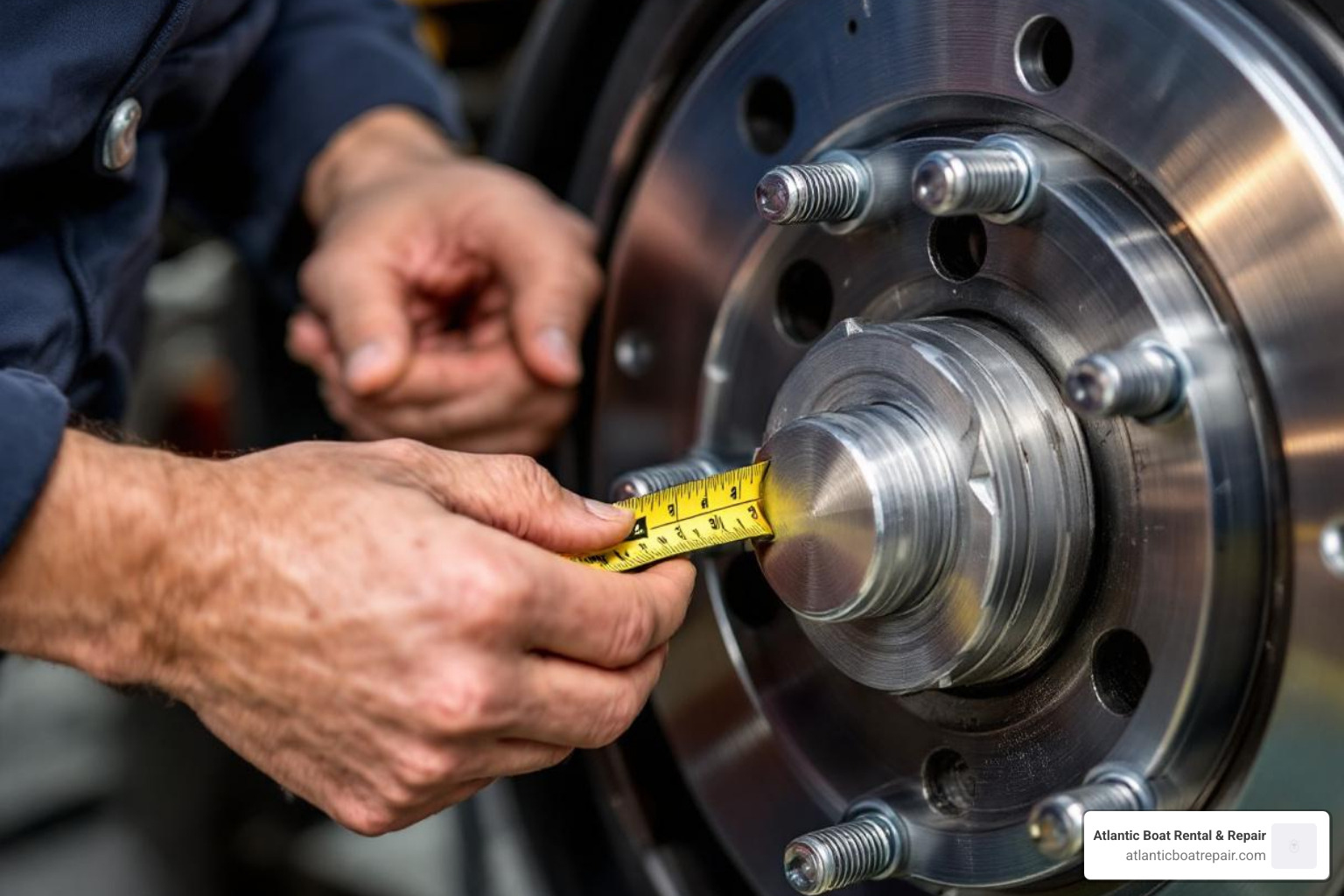
- Bolt Circle Diameter (BCD): This determines if your wheel will fit the hub.
- How to measure: For hubs with an even number of lugs (like 4 or 6), measure from the center of one stud to the center of the stud directly opposite it. For hubs with an odd number of lugs (like 5), measure from the center of the hub to the center of any stud, and then multiply that measurement by two.
- Common patterns: Most 4-lug hubs have a 4-inch bolt circle. Most 5-lug boat trailer hubs commonly have a 4 1/2-inch bolt circle diameter.
- Bearing Size Identification: This is crucial for matching the hub to your axle spindle.
- Stamped Numbers: The easiest way is to find the reference numbers stamped on the inner and outer bearings themselves (e.g., 44649, 68149).
- Micrometer Measurement: If the numbers are unreadable, you'll need to measure the inner diameter (ID) of both the inner and outer bearings with a micrometer. For example, an outer bearing might have a 1 1/16-inch ID, and an inner bearing a 1 3/8-inch ID. These measurements correspond to specific bearing part numbers.
- Axle Spindle Diameter: The bearing sizes must precisely match the diameter of your axle spindle. If they don't, the hub will not fit correctly, leading to immediate failure.
- Hub Length Considerations: While less common, some trailer manufacturers use "short hubs" on specific straight axles (e.g., 1-inch & 1 1/16-inch). If you have an unusual setup, comparing the length of your old hub to the new one might be necessary.
Always take the time to accurately measure these specifications. If you're unsure, it's always best to consult with experts. We're here to help you get the right parts for your trailer. Trailer Parts Superstore - Hub Technical Information offers additional technical details on trailer wheel hubs.
Installation and Maintenance for Your Marine Trailer Hubs
Once you've chosen the perfect marine trailer hubs for your boat, proper installation and diligent maintenance are the keys to ensuring their longevity and, most importantly, your safety on the road. We've seen countless issues arise from improper installation or neglected upkeep, and we want to help you avoid them.
Regular inspection is your first line of defense. Before and after each trip, especially if you're submerging your trailer, give your hubs a quick check. Look for any signs of grease leakage, excessive heat, unusual noises, or wheel wobble. Investing in bearing protectors, such as Bearing Buddies, can also be a wise move. These handy devices help maintain positive pressure in the hub, keeping water out and allowing for easy grease replenishment.
For those inevitable moments when repairs are needed, we offer expert boat trailer services right here in Massachusetts, ensuring your trailer is always in top condition.
The Critical Role of Marine-Grade Grease
When it comes to marine trailer hubs, not all grease is created equal. Using the wrong type of grease is a common mistake that can lead to rapid bearing failure, particularly in saltwater environments.
- Water Washout Protection: This is the paramount feature of marine-grade grease. Unlike standard automotive grease, marine formulations are specifically designed to resist being washed out by water, whether from rain, road spray, or submersion during launching and retrieving your boat. This outstanding water washout protection ensures that your bearings remain lubricated even after being submerged.
- Corrosion Inhibitors: Marine-grade grease contains special additives that actively fight rust and corrosion, which are constant threats in the damp, salty conditions typical of marine use. This excellent corrosion protection is vital for the lifespan of your bearings and races.
- Grease Compatibility: A crucial, often overlooked, aspect is grease compatibility. Different greases use different base types (e.g., lithium, calcium, aluminum complex). Mixing incompatible greases can lead to disastrous consequences.
- Dangers of Mixing Grease Types: Incompatible greases can cause adverse chemical reactions. This can result in the grease breaking down, losing its lubricating properties, and leading to rust, pitting, and scoring of metal components. Always ensure you're using the same type of grease or thoroughly clean out all old grease before introducing a new type.
- Proper Packing Technique: Thoroughly greasing bearings is critical. You need to work the grease around all the rollers and into the cage until it squeezes out the other side. Don't just smear it on the outside! After packing the bearings, the hub interior should also be packed with grease before installing a new grease seal.
Step-by-Step Installation Guide
Proper installation of marine trailer hubs is essential for safety and longevity. While this is a general guide, always refer to your specific hub and axle manufacturer's instructions.
- Clean the Spindle: Ensure your axle spindle is carefully clean and free of any old grease, dirt, or rust. Any debris can compromise the new bearings and seals.
- Install Races: Using a proper race driver or a block of wood and a hammer, carefully tap the new inner and outer races into the hub body. They must sit flush and squarely in their seats. Always replace both inner and outer races when installing new bearings, even if the old ones look fine. This ensures proper bearing tolerance.
- Pack Bearings: As discussed, thoroughly pack both the inner and outer bearings with high-quality marine-grade grease. Work the grease into every crevice until it extrudes from the other side of the bearing.
- Install the Inner Bearing and Seal: Place the packed inner bearing into its race in the back of the hub. Then, carefully install a new grease seal. Use a seal driver or a block of wood to gently tap it into place until it's flush with the hub. Be careful not to bend or damage the seal.
- Mount the Hub: Carefully slide the assembled hub onto the axle spindle. Be gentle to avoid damaging the new grease seal.
- Install the Outer Bearing and Hardware: Place the packed outer bearing into its race. Install the washer, then thread on the spindle nut.
- Setting Bearing Preload: This is a critical step. While spinning the hub, tighten the spindle nut firmly (usually around 20-25 ft-lbs) to seat the bearings. Then, back off the nut approximately a quarter turn to half a turn until it's finger-tight. The goal is to allow the wheel to spin freely with minimal end play (side-to-side movement). Install the cotter pin or retaining clip to secure the nut. If using an EZ-Lube system, follow its specific instructions for greasing.
Common Problems, Failures, and Prevention
Even with the best intentions, marine trailer hubs can develop issues. Recognizing common problems and understanding their prevention is key to keeping your boat trailer reliable for trips to our local waters in Duxbury, Plymouth, or anywhere else on the Massachusetts coast.
Here are the most frequent culprits behind hub failures:
- Bearing Failure Signs: The most common issue. Signs include:
- Noise: A grinding, humming, or roaring sound coming from the wheel.
- Heat: The hub feeling excessively hot to the touch after driving.
- Vibration: A noticeable vibration felt through the trailer or tow vehicle.
- Wheel Wobble: Excessive side-to-side movement of the wheel when rocked by hand.
- Grease Leakage: Grease oozing from the dust cap or around the seal.
- Overheating Hubs: This often points to insufficient lubrication, overtightened bearings, or worn-out bearings. Overheating can quickly lead to catastrophic failure, seizing the wheel, and potentially causing a fire.
- Water Intrusion: For marine trailers, water is the primary enemy. If the grease seal is damaged or improperly installed, saltwater can enter the hub, emulsifying the grease and causing rapid rust and corrosion of the bearings and races. This is a leading cause of premature failure.
- Seal Failure: The grease seal itself can fail due to age, damage during installation, or simply wear and tear. A failed seal allows grease out and water in, leading to the issues described above.
- Corrosion: Even with galvanized hubs, prolonged exposure to saltwater and neglect can lead to corrosion on the hub body, studs, and other components. Rusted hubs can weaken, making them unsafe. We've seen many rusted hubs on trailers used exclusively for saltwater trailering, underscoring the need for vigilant maintenance.
Prevention through Maintenance: The good news is that most of these failures are preventable with diligent maintenance:
- Regularly inspect your hubs for signs of trouble.
- Ensure proper bearing adjustment and lubrication with marine-grade grease.
- Replace grease seals proactively, especially if you submerge your trailer frequently.
- Rinse your trailer thoroughly with fresh water after every saltwater launch.
Hub Kits vs. Individual Parts
When it comes to replacing or repairing marine trailer hubs, you generally have two choices: buying individual parts or opting for a complete hub kit. We often get asked which is better.
- Complete Hub Kits: These kits, like the "CE Smith Boat Trailer Wheel Hub Assembly Kit", typically include everything you need: the hub body, inner and outer bearings, inner and outer races (often pre-installed), a grease seal, a dust cap, and sometimes even lug nuts and a cotter pin. Many hub kits even come fully assembled with pre-greased bearings, which cuts down on the mess and makes installation significantly easier. This is incredibly convenient, especially if you're doing a full replacement or are less experienced with bearing packing.
- Hub-Only Options: These are just the hub castings themselves, without any of the internal components. You would then need to purchase the bearings, races, seals, and caps separately.
Cost vs. Convenience:
- Kits: Generally offer better value and convenience, especially for a full replacement. The components are typically matched for compatibility, reducing guesswork.
- Individual Parts: Useful if only one specific component, like a seal or a single bearing, needs replacing and the rest of the assembly is in excellent condition. However, replacing just one bearing while keeping old races is not recommended.
When to Rebuild vs. Replace:
- Rebuild: If the hub body is in good condition (no cracks, severe corrosion, or damage to the race seats), and only the bearings, races, or seal are worn, you can rebuild it with new individual parts.
- Replace: If the hub body itself is cracked, severely corroded, or if the race seats are damaged, it's safer and more reliable to replace the entire hub assembly with a new kit. Given the critical role of hubs, we generally recommend replacing the entire assembly if there's any doubt about the hub body's integrity.
Understanding Warranty Coverage
When you purchase new marine trailer hubs, understanding the warranty coverage is important. While we don't offer direct warranties on third-party parts, we can help you understand what to expect from manufacturers.
- Manufacturer Defects: Most warranties cover defects in materials and workmanship from the manufacturer. If a hub fails prematurely due to a manufacturing flaw, it's typically covered.
- Wear and Tear Exclusion: Warranties generally do not cover normal wear and tear. Bearings, seals, and even the hub body itself are consumable items that wear out over time, especially under the strenuous conditions of marine trailering.
- Typical Coverage Period: Warranty periods vary by manufacturer, but for trailer hubs, they typically range from 90 days to a year, though some premium stainless steel options might offer longer.
- Importance of Proper Installation: A manufacturer's warranty is often contingent on proper installation and maintenance. If a hub fails due to incorrect bearing preload, lack of lubrication, or damage during installation, the warranty may be voided. This underscores why following installation guidelines (or having professionals like us handle it) is so important. Always keep your purchase receipts and any documentation related to maintenance.
Conclusion
We’ve steerd through the intricate world of marine trailer hubs, from their fundamental components and critical role in safe trailering to the nuances of selecting the right type and material. We've also highlighted the paramount importance of meticulous installation and consistent maintenance with marine-grade grease.
A well-maintained marine trailer hub isn't just about avoiding an inconvenient breakdown on a busy highway in Massachusetts; it's about safeguarding your precious boat and ensuring the safety of everyone on the road. The investment in proper parts, like galvanized or stainless steel hubs, and the time spent on regular checks and lubrication, pays dividends in peace of mind and extended service life.
Whether you're launching your boat into the waters of Plymouth, Kingston, Duxbury, Bourne, or Sandwich, your trailer hubs are working tirelessly beneath you. By understanding their needs, you empower yourself to keep them performing flawlessly. For expert boat trailer services and advice on all your trailering needs, trust the precision and experience of Atlantic Boat Rental & Repair. We’re here to ensure your journey to the water is always smooth sailing.
Comments
Be the first to comment on this article!