
The Price of Peace: Understanding Outboard Head Gasket Replacement Costs
Why Understanding Outboard Engine Repair Costs Matters
Outboard head gasket replacement cost typically ranges from $800 to $1,500 or more, depending on your engine size, make, and the extent of damage. Here's what you need to know:
Quick Cost Breakdown:
- Parts (gasket kit): $100-$300
- Labor (4-8 hours): $400-$1,200
- Additional repairs: $200-$500+ (head machining, thermostat, bolts)
- Total average: $800-$1,500 for straightforward repairs; $2,000-$3,000+ if extensive damage exists
If you've noticed white smoke from your exhaust, milky oil, or your engine overheating after a day on the water, you might be facing a blown head gasket. It's one of those repairs that makes boat owners' hearts sink—and wallets lighter.
The head gasket is a thin seal between your engine's cylinder head and block. When it fails, oil and coolant mix where they shouldn't, combustion gases escape, and your engine's performance drops fast. Running an engine with a failing head gasket can turn a $1,500 repair into a $5,000 rebuild or a complete engine replacement.
Understanding the real costs involved helps you make smart decisions. Should you repair it? Replace the engine? Or is that old motor telling you it's time for a professionally remanufactured alternative?
Let's break down everything that affects your final bill—and help you decide the best path forward for your boat.
Spotting the Trouble: Symptoms of a Failing Outboard Head Gasket
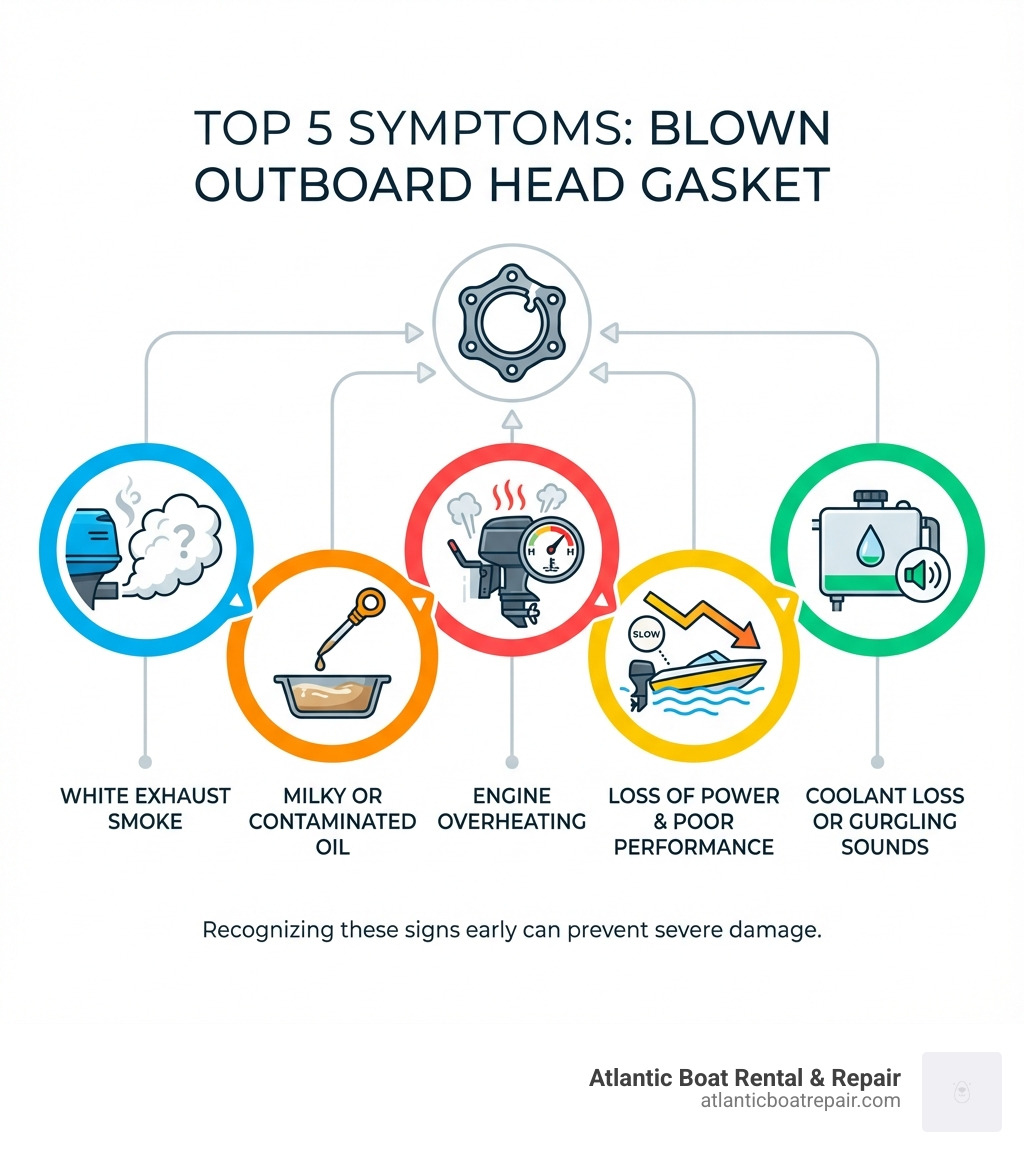
A head gasket's job is crucial: it seals the combustion chamber and prevents engine fluids—like oil and coolant—from mixing or leaking externally. When this critical seal fails in your outboard engine, it can manifest in several noticeable ways. Recognizing these symptoms early can save you from more extensive damage and a much higher outboard head gasket replacement cost.
One of the most common and alarming signs is the presence of white exhaust smoke. This isn't just a bit of steam on a cold morning; this is persistent, often thick, white smoke billowing from your exhaust. This happens when coolant leaks into the combustion chamber and is burned along with the fuel, turning into steam. Often, this white smoke will have a distinct, sweet smell.
Another tell-tale sign of trouble is engine overheating. If your temperature gauge is consistently running high, or your engine goes into "limp home" mode due to excessive heat, it could be a failing head gasket. The leak allows combustion gases to escape into the cooling system, creating pressure and preventing proper coolant circulation, leading to overheating.
You might also notice a significant loss of power or poor performance from your outboard. A compromised head gasket means the engine isn't maintaining optimal compression, leading to an inefficient combustion process. This translates to sluggish acceleration, reduced top speed, and overall weak engine operation. In severe cases, a compression test might reveal low cylinder compression in one or more cylinders.
Keep a close eye on your engine's fluids. Water in the oil is a serious symptom. If you check your dipstick and the oil appears milky, foamy, or like a "chocolate milkshake," it means coolant is mixing with your engine oil. This contamination drastically reduces the oil's lubricating properties, leading to rapid wear and potential catastrophic engine failure. Conversely, you might find oil in your coolant reservoir, appearing as an oily film or sheen on the surface.
Finally, listen for unusual sounds. A gurgling sound from your cooling system, particularly the radiator or overflow tank (if your outboard has one), can indicate combustion gases leaking into the coolant. This internal pressure can also lead to excessive coolant consumption, requiring you to frequently top off the coolant levels without any visible external leaks.
Why You Can't Ignore These Signs
Ignoring the symptoms of a failing head gasket is a gamble you don't want to take with your outboard engine. What starts as a relatively manageable outboard head gasket replacement cost can quickly escalate into a much larger bill, or worse, leave you stranded on the water far from Plymouth, Kingston, Duxbury, Bourne, or Sandwich.
Continuing to run an engine with a blown head gasket guarantees further engine damage. The mixing of oil and coolant can destroy bearings, cylinder walls, and other critical internal components. Overheating can warp or crack the cylinder head or engine block itself, turning a gasket replacement into a much more complex and expensive repair involving machine shop work or even a complete engine rebuild. The stress on the engine can also lead to premature failure of other components.
Beyond the financial implications, there are significant safety risks. An engine that suddenly loses power or overheats excessively puts you and your passengers in a dangerous situation, especially in busy waterways or adverse weather conditions.
We always advise our customers that prompt diagnosis and repair are key. If you suspect an issue, don't delay. For a professional assessment and to understand the potential costs involved, we encourage you to Get a Quote from our certified technicians. Addressing the problem early can prevent irreversible damage and keep your boating adventures smooth and safe.
What Causes an Outboard Head Gasket to Fail?
While head gaskets are designed to be durable, they operate under immense pressure and extreme temperatures, making them susceptible to failure over time. Several factors can contribute to an outboard head gasket giving up the ghost.
One of the most common culprits is overheating. If your engine consistently runs hotter than it should, the intense heat can cause the cylinder head and engine block to expand at different rates, stressing the gasket. Prolonged overheating can lead to the gasket warping, cracking, or simply losing its sealing integrity. Overheating can be caused by various issues, such as a failed water pump impeller, a clogged cooling system, or low coolant levels.
Saltwater corrosion is another significant factor, especially for engines used in our local Massachusetts waters. Unlike automotive engines, outboards are often exposed to harsh marine environments. Saltwater can be corrosive to engine components over time, and if it somehow breaches the cooling system or external seals, it can accelerate gasket degradation.
A failed water pump impeller is a frequent cause of overheating in outboard engines. The impeller is responsible for circulating cooling water through the engine. If it wears out, breaks, or gets clogged with debris, the engine won't cool properly, leading to dangerous temperature spikes that can blow a head gasket.
Cooling system blockages, whether from mineral deposits, rust, sand, or marine growth, can restrict coolant flow and cause localized hot spots in the engine, putting undue stress on the head gasket. Improper installation of the head gasket itself, such as incorrect torque settings on the head bolts, can also lead to premature failure.
Finally, engine age and hours, combined with high-load operation, play a role. Head gaskets are under constant stress. Over many years and thousands of hours of operation, the materials can simply fatigue. Regularly running your outboard at wide-open throttle or under heavy loads (like towing) can also contribute to wear and tear, especially if the cooling system isn't perfectly maintained.
How to Prevent Head Gasket Failure
Preventing head gasket failure often comes down to diligent maintenance and smart operating practices. While no component lasts forever, we can significantly extend the life of your outboard's head gasket and minimize the risk of a costly outboard head gasket replacement cost.
Regular maintenance is paramount. This includes adhering to your manufacturer's recommended service schedule, which typically involves oil changes, spark plug replacements, and most importantly for head gaskets, cooling system inspections. We emphasize checking and flushing your engine's cooling system regularly, especially after saltwater use, to prevent corrosion and blockages.
For engines operating in saltwater, thorough engine flushing after each use is critical. This helps remove corrosive salt deposits from the cooling passages, which can contribute to internal corrosion and blockages that lead to overheating.
Always ensure your engine is properly warmed up before operating at high speeds or under heavy loads. This allows engine components to reach their optimal operating temperature gradually, reducing thermal shock and stress on the head gasket. Keep a watchful eye on your temperature gauge; any abnormal readings should be investigated immediately.
Regularly replacing your water pump impeller is a non-negotiable preventative measure. Impellers are wear items and should be changed according to your engine manufacturer's schedule, typically every 100-300 hours or every 1-3 years, regardless of appearance. A worn impeller is a silent killer of head gaskets.
For detailed maintenance schedules custom to your specific outboard engine, and to ensure you're doing everything possible to prevent head gasket issues, please Contact Us. Our team in Plymouth, Kingston, Duxbury, Bourne, and Sandwich, Massachusetts, is here to help you keep your engine running smoothly and reliably.
The Big Question: Analyzing the Outboard Head Gasket Replacement Cost
Now, let's tackle the question that's likely brought you here: how much does it truly cost to replace an outboard head gasket? As we mentioned in the intro, a straightforward outboard head gasket replacement cost can range from $800 to $1,500 or more. However, this is just an average, and the total can climb significantly depending on various factors.
To break it down, the cost of the head gasket itself is often a relatively small portion of the overall bill. A high-quality marine head gasket or gasket set might range from $100 to $300. The bulk of the expense comes from the labor involved, which can be extensive due to the complex nature of accessing and replacing the gasket.
Modern outboard engines, with their intricate designs and tight packaging, often require significant disassembly just to reach the cylinder head. This complexity means more labor hours, and consequently, higher labor costs. For instance, replacing a head gasket on a V6 outboard engine might involve more components and take longer than on a simpler inline-4 engine, due to the number of cylinders and the engine's overall architecture.
Key Factors That Influence the Final Price
The final outboard head gasket replacement cost is a dynamic figure influenced by several key factors:
- Engine Make and Model: Just like cars, different outboard brands (e.g., Mercury, Yamaha, Suzuki, Evinrude, Honda) and specific models have varying parts costs and labor requirements. Some engines are simply more complex to work on than others. A larger, more powerful engine will generally have higher parts and labor costs.
- Horsepower: Higher horsepower engines often mean larger, more complex cylinder heads and more robust gaskets, which can increase both parts and labor expenses.
- Labor Rates: Labor rates for marine mechanics can vary. In our service areas of Plymouth, Kingston, Duxbury, Bourne, and Sandwich, Massachusetts, you can expect competitive but professional rates that reflect the specialized skills required for marine engine repair.
- Marine Mechanic Specialization: Certified marine technicians possess specialized knowledge and tools for outboard engines. While their rates might be higher than a general mechanic, their expertise ensures the job is done correctly, preventing costly re-dos.
- Geographic Location: While we operate in specific Massachusetts towns, general economic factors can influence labor rates. However, our focus is on providing consistent, fair pricing across our service locations.
- OEM vs. Aftermarket Parts: Original Equipment Manufacturer (OEM) parts are made by the engine manufacturer and typically cost more but offer guaranteed fit and quality. Aftermarket parts can be cheaper but quality can vary. We generally recommend OEM for critical components like head gaskets for optimal reliability.
- Extent of Related Damage: This is where costs can truly skyrocket. If the head gasket failure led to severe overheating, the cylinder head might be warped or cracked, requiring machining (resurfacing) or even replacement. If coolant mixed with oil, internal engine damage (bearings, cylinder walls) could necessitate a partial or complete engine rebuild, pushing the cost well into the thousands.
Breaking Down the outboard head gasket replacement cost: Labor and Additional Services
When you receive an estimate for an outboard head gasket replacement, it's not just the gasket itself that you're paying for. The labor is the most significant component, reflecting the skill, time, and specialized equipment required.
Typical labor time involved in replacing an outboard head gasket can range from 4 to 8 hours for a straightforward job. However, this can easily extend if complications arise. For instance, if the engine suffered significant overheating, a crucial step is cylinder head inspection. The mechanic will carefully examine the head for warping or cracking. If warping is detected, the cylinder head will need to be sent to a machine shop for "decking" or resurfacing to ensure a perfectly flat mating surface for the new gasket. This machining process adds to both the time and cost.
Beyond the gasket and labor, several additional parts and services are often recommended or necessary:
- Head Bolt Replacement: Head bolts are critical for clamping the cylinder head securely. Many manufacturers recommend replacing them, especially "torque-to-yield" (TTY) bolts, as they stretch during initial tightening and cannot be reliably reused.
- Thermostat Replacement: Since the engine's cooling system is being opened up, it's a wise practice to replace the thermostat. This inexpensive component is vital for temperature regulation, and replacing it prevents future cooling issues that could lead to another head gasket failure.
- Coolant/Fluid Replacement: After the repair, the cooling system will be refilled with fresh coolant, and if oil contamination occurred, the engine oil and filter will need to be changed.
- Other Gaskets and Seals: To access the head gasket, other components like intake and exhaust manifolds are removed, requiring their respective gaskets to be replaced during reassembly.
The total labor time for these associated tasks, combined with the primary gasket replacement, means a significant investment of time and expertise. This is why the outboard head gasket replacement cost is often higher than many boat owners initially expect.
Making the Right Call: Repair, Replace, or Rebuild?
When faced with a blown head gasket, especially if the damage is extensive, you're at a crossroads. Should you pursue the repair, consider replacing the entire engine, or explore a rebuild? This decision often hinges on the overall health of your engine, its value, and your long-term boating plans.
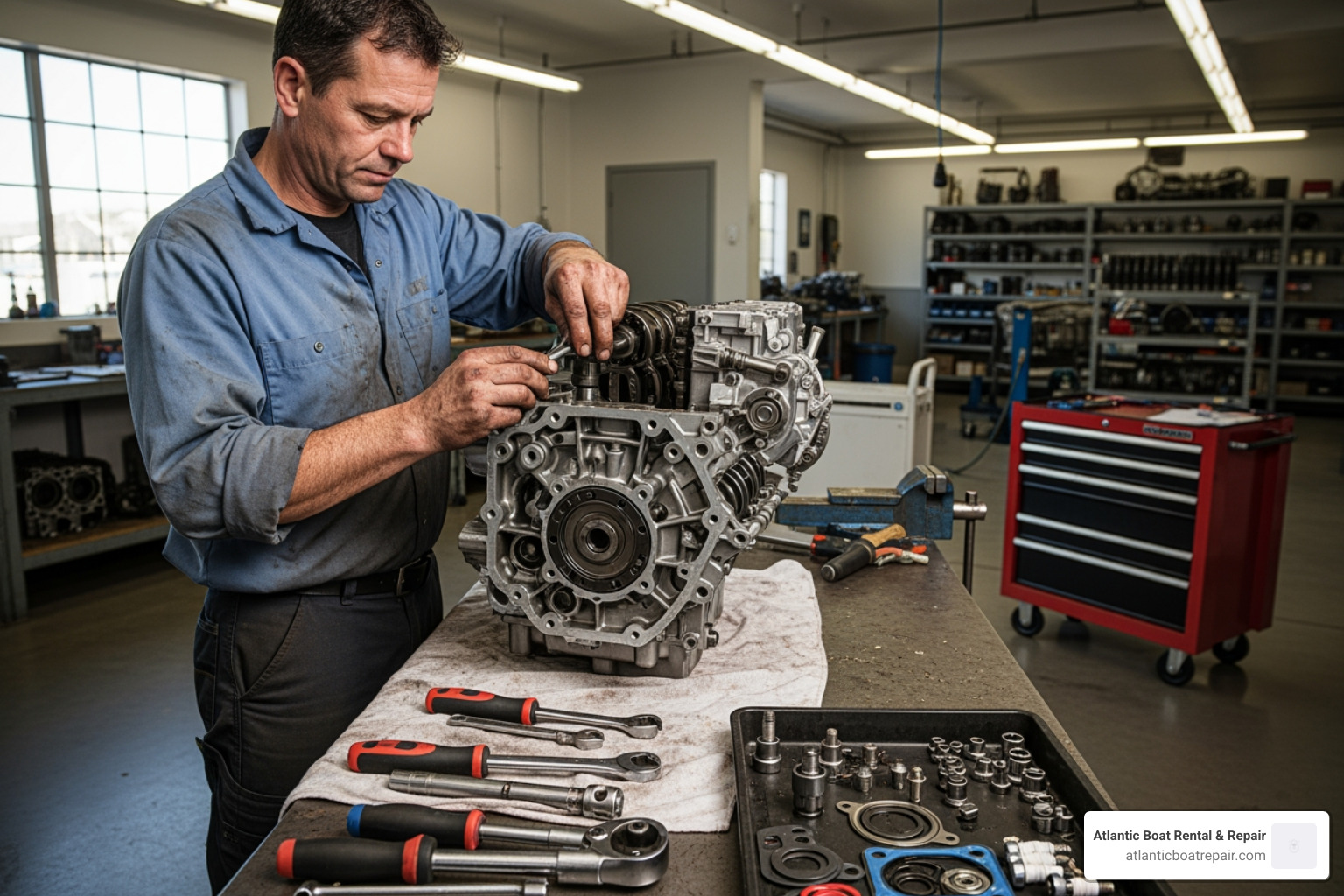
Assessing engine health is paramount. A simple head gasket replacement on an otherwise sound engine is usually a good investment. However, if the head gasket failure was a symptom of deeper issues, such as a severely overheated engine with internal damage, the calculus changes. We rigorously test our engines and ensure superior precision in all our repairs, but sometimes, the damage is too great for a cost-effective repair.
Long-term reliability is another key consideration. If your engine has high hours and other components are nearing the end of their lifespan, investing heavily in a head gasket repair might just postpone other expensive issues. This is where the option of a professionally remanufactured "0" time engine, like those we sell at Atlantic Boat Rental & Repair, becomes very attractive. These engines are rebuilt to new-like performance and reliability, often exceeding manufacturer specs.
DIY vs. Professional: Tackling the outboard head gasket replacement cost
For many boat owners, the idea of a DIY repair is appealing, especially when considering a potentially high outboard head gasket replacement cost. However, replacing a head gasket on an outboard engine is far from a simple task. It is a complex job that requires specialized knowledge, tools, and meticulous attention to detail.
As experts in the field note, head gasket replacement is not a DIY project for most. The process involves extensive disassembly of the engine, careful inspection of critical surfaces, precise cleaning, and reassembly to exact torque specifications. Even for knowledgeable individuals, it can take about five hours of focused work, and that's often just the start.
Special tools are frequently needed, including torque wrenches, specialized gasket scrapers, and sometimes even engine lifting equipment. Incorrect torque settings can lead to immediate gasket failure or other engine damage. The risks of improper repair are significant: a poorly installed gasket can fail quickly, leading to repeat repairs, or worse, catastrophic engine damage that turns a repairable issue into a total loss.
Professional warranty is another crucial factor. When you trust your outboard to certified marine mechanics, you typically receive a warranty on parts and labor, giving you peace of mind. A DIY job offers no such protection. Given the complexity and importance of this repair, we strongly recommend leaving it to professionals to ensure the job is done right the first time.
Is the Repair Worth It? Cost vs. Engine Value
A common "rule of thumb" in the automotive world, which can also apply to marine engines, suggests that you should only undertake a significant repair if the vehicle (or engine, in this case) is worth at least double the cost of the repair. If your outboard head gasket replacement cost is $1,500, and your entire outboard engine is only worth $1,000-$2,000, then repair might not be the most financially sound decision.
Consider the age of the engine and its total engine hours. A newer engine with low hours, even with a high repair bill, might still have many years of reliable service ahead. An older engine with thousands of hours, however, might be better replaced or rebuilt.
Be wary of "stop-leak" products. While some promise a quick fix for minor leaks, they are generally not recommended for head gasket issues. These additives can clog radiators, damage water pumps, and create more problems than they solve, potentially leading to even higher repair costs down the line. We, at Atlantic Boat Rental & Repair, advise against their use.
Compare the outboard head gasket replacement cost to the overall value of your outboard engine and, by extension, your boat. If the repair is extensive and approaches the cost of a good used or professionally remanufactured engine, it might be time to consider other options. A new (to you) engine could offer greater long-term reliability and a better return on your investment.
Conclusion
Understanding the outboard head gasket replacement cost and its implications is crucial for any boat owner. Head gasket failure is a serious issue that, if ignored, can lead to cascading engine damage, safety risks on the water, and significantly higher repair bills. We've seen how common symptoms like white exhaust smoke, milky oil, and engine overheating are clear indicators that your outboard needs immediate attention.
Several factors contribute to head gasket failure, including overheating, saltwater corrosion, and worn-out impellers. The cost of repair is influenced by your engine's make and model, horsepower, local labor rates in areas like Plymouth, Kingston, Duxbury, Bourne, and Sandwich, Massachusetts, and the extent of any related damage. While the gasket itself is relatively inexpensive, the labor involved in accessing and replacing it, along with necessary additional parts and potential machine shop work, drives up the final price.
For these complex repairs, we strongly advocate for professional diagnosis and service. Attempting a DIY head gasket replacement without the proper expertise and tools can lead to further damage and negate any potential savings.
The best defense against a high outboard head gasket replacement cost is preventative maintenance. Regular servicing, diligent flushing after saltwater use, and timely replacement of wear items like impellers can significantly extend your engine's lifespan and prevent premature gasket failure.
For extensive damage, or if your engine has reached the end of its reliable life, a professionally remanufactured "0" time engine from a specialist like Atlantic Boat Rental & Repair can be a cost-effective and reliable alternative. Our engines are rebuilt with superior precision (twice manufacturer specs) and undergo rigorous testing for new-like performance and reliability, offering you peace of mind on the water.
Don't let a blown head gasket ruin your boating season. For expert advice, precise diagnostics, and reliable marine engine services, we invite you to Explore Our Engine Services.
Comments
Be the first to comment on this article!