
Don’t Blow Your Top: The Ultimate Guide to Outboard Head Gasket Replacement
Introduction: The Critical Seal in Your Engine's Powerhouse
Outboard head gasket replacement is a critical repair to save your engine from catastrophic damage. If you see white smoke, notice overheating, or find milky oil, you likely have a failing head gasket that needs immediate attention.
Quick Answer: Key Steps for Outboard Head Gasket Replacement
- Diagnose the problem - Perform a compression test; more than 10% variance between cylinders indicates failure.
- Gather tools and parts - You'll need a torque wrench, gasket scrapers, straight edge, feeler gauge, new gasket ($30-$50), and possibly new bolts.
- Remove the cylinder head - Follow the proper bolt loosening sequence (reverse spiral pattern).
- Check for warpage - Use a straight edge and feeler gauge (max 0.004 inches tolerance).
- Clean mating surfaces - Use only plastic or brass scrapers on aluminum.
- Install new gasket - Follow the correct orientation and torque sequence in multiple stages.
- Reassemble and test - Re-torque after the initial break-in period (10-20 hours).
Cost: A DIY repair costs $40-$100, while professional service is $200-$500+.
Your head gasket sits between the engine block and cylinder head, sealing combustion pressure while keeping coolant and oil separate. When it fails—often due to overheating, saltwater corrosion, or age—the results can be devastating. Unlike cars, accessing an outboard's head gasket is straightforward. With basic mechanical skills and the right tools, this is a manageable DIY job that can save you hundreds.
However, significant overheating can warp the cylinder head, a problem requiring professional machining or replacement. We'll show you how to check for this and when to call in the experts.
Is Your Head Gasket Failing? Diagnosis and Key Symptoms
A failing head gasket can cause a cascade of problems that severely impact your outboard's performance and longevity. Ignoring these warning signs can turn a simple repair into a costly engine overhaul.
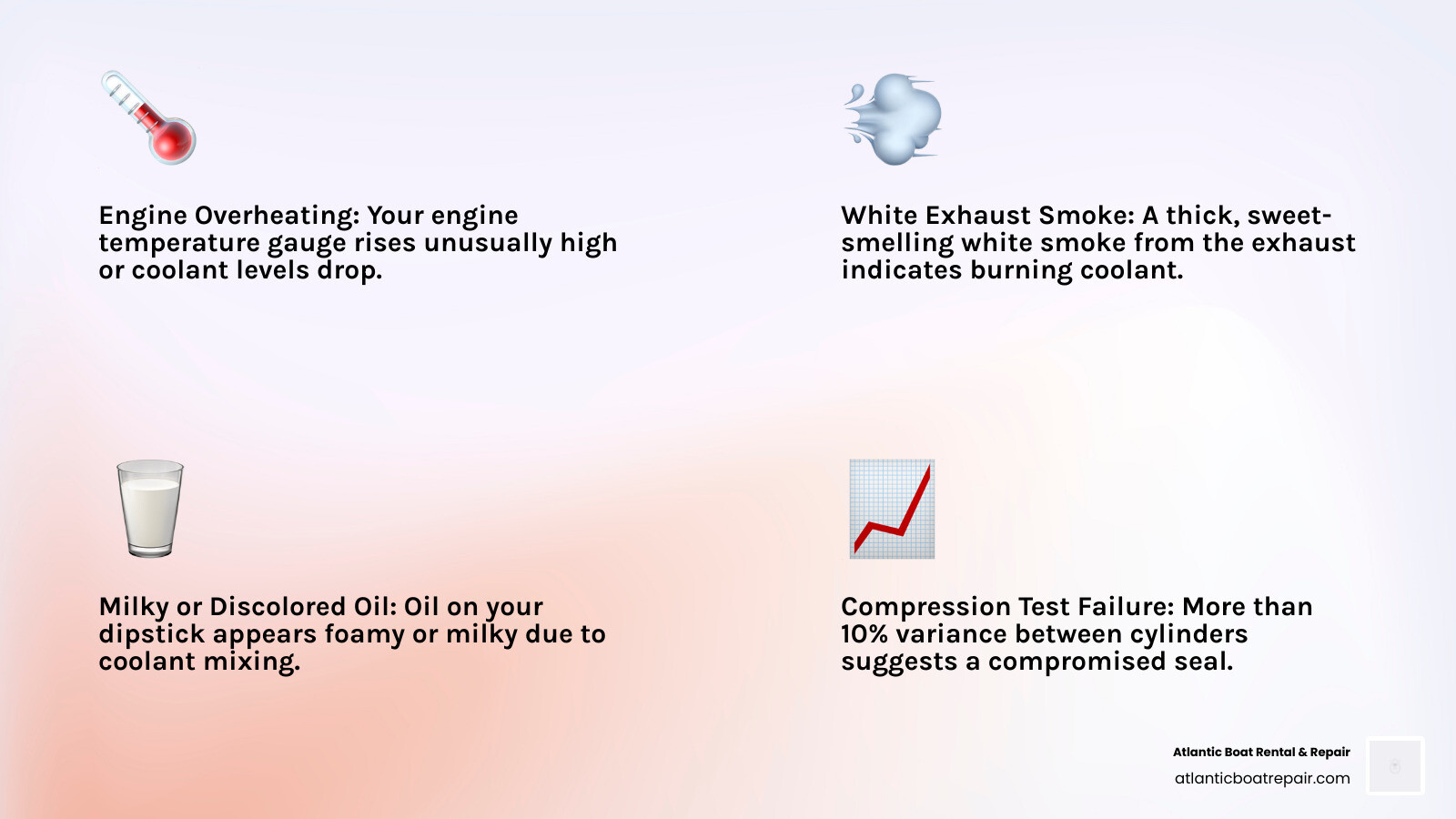
Here are the most common symptoms of a failing head gasket:
- Engine Overheating: A compromised gasket can leak coolant, leading to rapid temperature spikes that can warp the cylinder head.
- Loss of Power: If your outboard feels sluggish or struggles to get on plane, it could be due to leaking compression from a bad gasket.
- White Exhaust Smoke: Persistent, sweet-smelling white smoke indicates coolant is entering the combustion chamber and being burned off.
- Milky or Discolored Oil: A milky, frothy, or grayish appearance on your dipstick is a classic sign that coolant is mixing with engine oil, reducing its lubricating properties.
- Rough Idle or Misfires: A leak can reduce compression in one or more cylinders, causing the engine to run unevenly. Water on spark plugs can also cause poor ignition.
- Water Intrusion: Look for water in spark plug holes or "steam-cleaned" spark plugs, which indicate water has been entering that cylinder.
Neglecting a failing head gasket is severe, potentially escalating to thousands in repairs or a new powerhead. For more on the causes of head gasket failure, see this guide on how to change a head gasket | Mobil™ Motor Oils .
How to Perform a Compression Test
A compression test is the best way to diagnose a bad head gasket. It's a simple procedure that measures how well each cylinder is sealing.
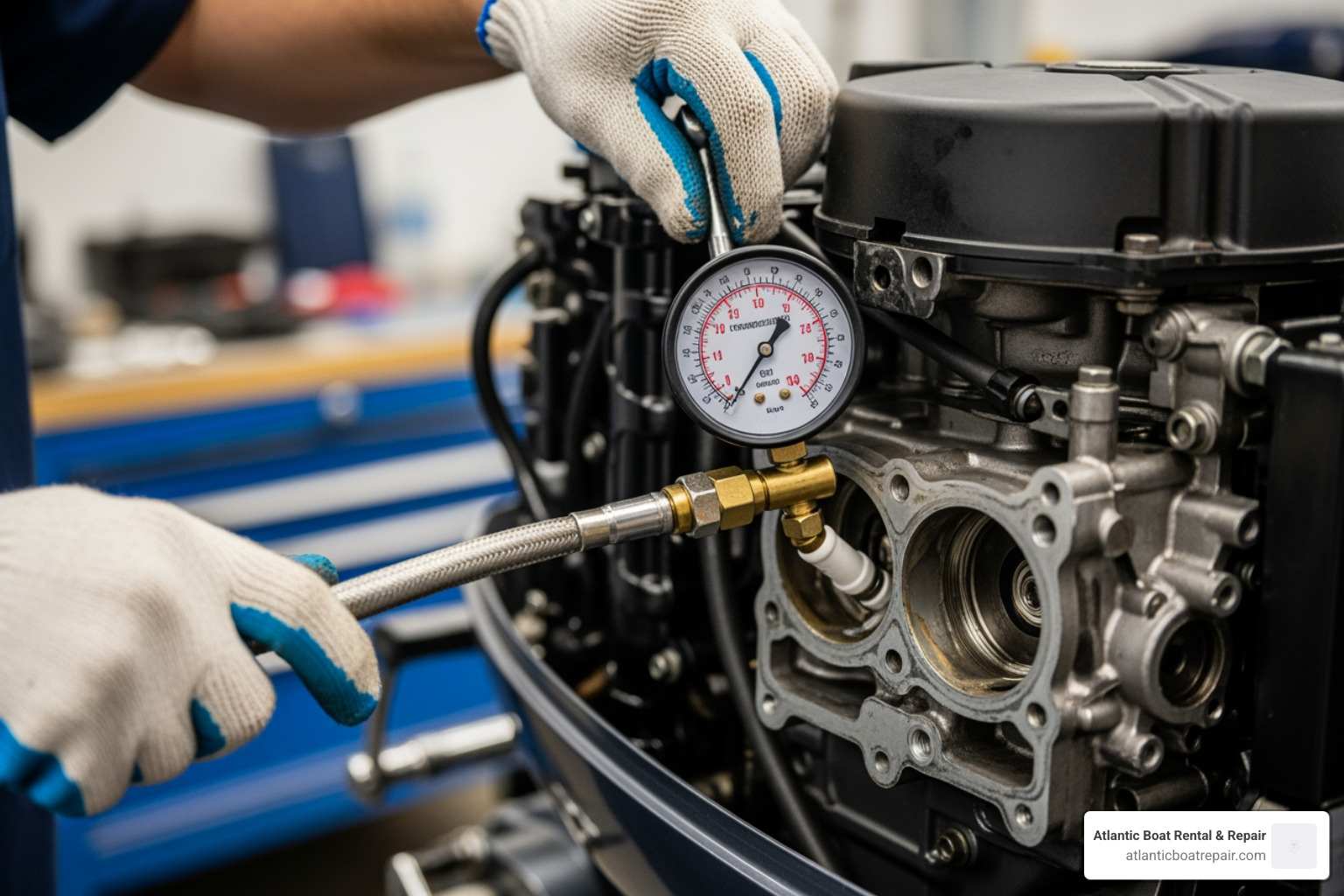
Here's how to perform a compression test:
- Warm Up the Engine: Run the engine to operating temperature for accurate results.
- Disable Fuel and Remove Plugs: Disable the fuel pump and remove all spark plugs.
- Insert Compression Gauge: Securely thread the gauge into one spark plug hole.
- Crank the Engine: With the throttle wide open, crank the engine 4-6 times and note the highest reading.
- Repeat for All Cylinders: Repeat the process for each cylinder.
- Interpret the Results: Compare the readings. A variance of more than 10% between cylinders strongly suggests a head gasket failure. For example, if most cylinders are 150 PSI, a reading of 130 PSI on one is a clear red flag.
Identifying Water Intrusion and 2-Stroke vs. 4-Stroke Signs
Visual inspections offer more clues:
- Steam-Cleaned Spark Plugs: A plug that looks unusually clean indicates water has been steam-cleaning carbon deposits off it.
- Milky Oil and Gray Slime: Frothy oil on the dipstick or a gray, slimy residue under the oil cap confirms water contamination.
2-Stroke vs. 4-Stroke Differences: While symptoms are similar, there are key differences:
- Compression: 2-strokes often have higher compression readings than 4-strokes. Always consult your service manual for specs.
- Oil System: In a 4-stroke, milky oil on the dipstick is a clear sign. Since 2-strokes mix oil with fuel, this symptom doesn't apply; instead, look for water in the gearcase oil or unusual deposits in the combustion chamber.
Our diagnostic services can pinpoint the exact cause of your outboard's issues, regardless of engine type.
The Complete Guide to Outboard Head Gasket Replacement
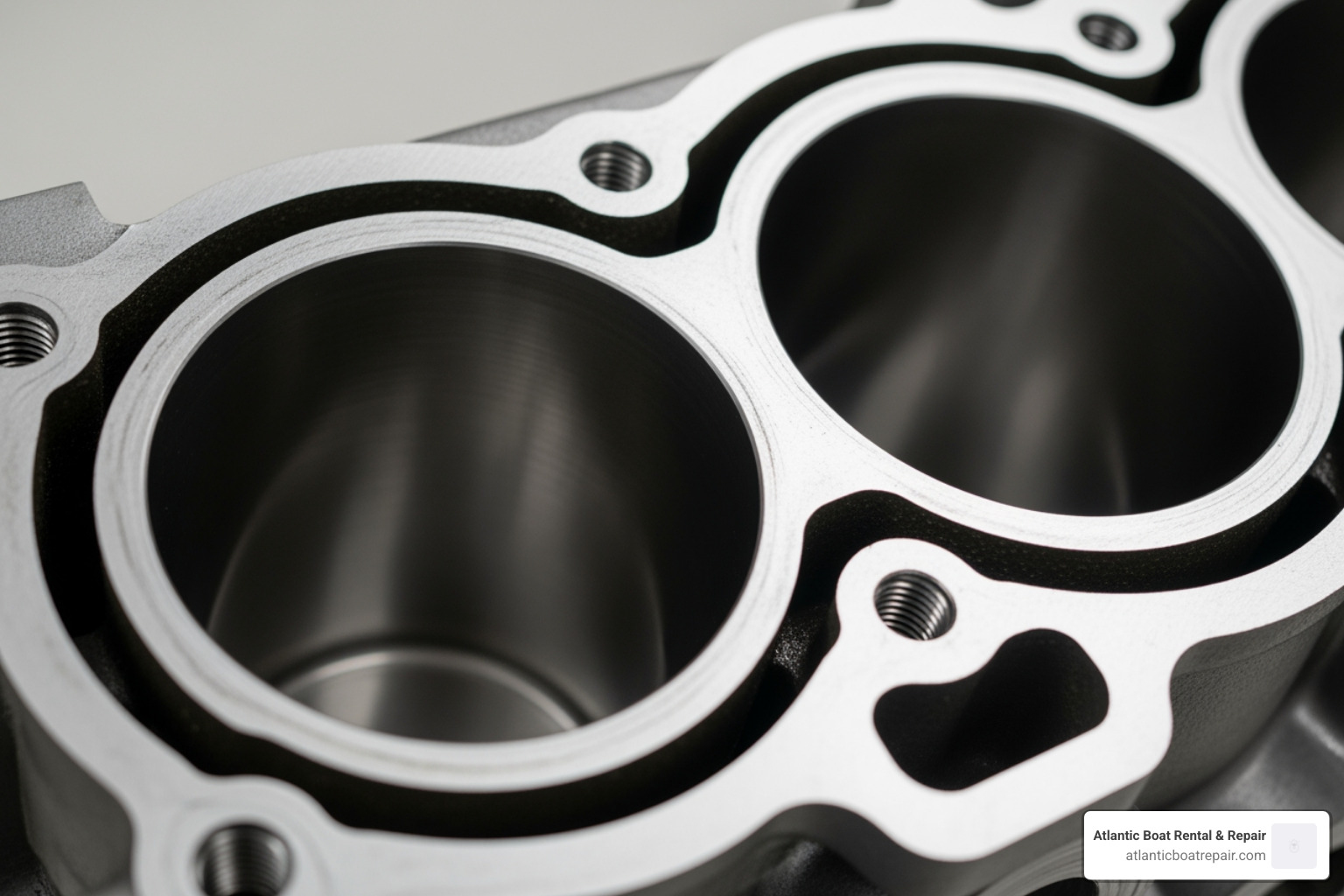
Replacing an outboard head gasket is a job many DIYers can tackle. Unlike cars, outboard engines are generally more accessible. However, it's still a difficult job that can take a first-timer around 5 hours, as noted by automedia.com. The process requires careful disassembly, meticulous cleaning, and precise reassembly.
If you're not confident in your mechanical skills or if the engine has severely overheated, professional service is the wiser choice. We at Atlantic Boat Rental & Repair are ready to assist boaters in Plymouth, Kingston, Duxbury, Bourne, and Sandwich, Massachusetts.
DIY vs. Professional: A Cost and Effort Breakdown
Deciding whether to do it yourself or hire a pro comes down to cost, time, and skill.
| Category | DIY Replacement | Professional Replacement |
|---|---|---|
| Parts Cost | $30 - $70 | $50 - $100 |
| Tools Cost | $10 - $50 (if needed) | $0 |
| Labor Cost | $0 (Your time) | $160 - $480 (2-4 hours) |
| Total Estimated Cost | $40 - $100 | $210 - $580+ |
| Skill Level | Moderate to High | Expert |
| Time Investment | 3-5 hours | 2-4 hours |
| Warranty/Guarantee | None (on labor) | Typically provided |
| Risk Factors | Higher risk of errors | Lower risk, professional diagnosis |
The DIY route offers significant savings, but mistakes can be costly. Consider professional service if:
- The engine severely overheated: The cylinder head is likely warped and needs professional machining ($80–$150) or replacement.
- You lack tools or experience: A pro ensures the job is done right, especially with critical steps like torquing bolts.
- You're short on time: A professional can complete the job much faster.
If you're weighing your options, we're happy to provide a transparent professional quote.
Tools and Parts Needed for the Job
Gathering the right tools and parts is crucial for a successful replacement.
Essential Tools:
- Service Manual: Your guide for model-specific sequences and torque specs.
- Torque Wrench: Non-negotiable for tightening head bolts correctly.
- Socket Set and Wrenches
- Gasket Scrapers (Plastic/Brass): Never use metal scrapers on aluminum surfaces.
- Straight Edge and Feeler Gauges: To check for warpage.
- Thread Chaser/Tap: To clean bolt holes.
- Rubber Mallet, Solvents, and Scotch-Brite Pads
Necessary Parts:
- New Head Gasket: Use a high-quality OEM or equivalent part.
- Replacement Head Bolts: Replace if required by the service manual (torque-to-yield) or if corroded.
- Sealant: Only if specified by the service manual.
- New Thermostat, Gasket, and Anodes: Good practice to replace these while you have access.
Step-by-Step Guide to a Successful Outboard Head Gasket Replacement
Always consult your engine's service manual for precise instructions. This is a general overview.
- Preparation and Disassembly:
- Disconnect the battery, drain coolant and oil.
- Remove obstructions like the cowling, carburetors, and exhaust manifold. Take photos to help with reassembly.
- Loosen head bolts in stages, following the reverse of the tightening sequence (usually outside-in) to prevent warping.
- Gently tap the head with a rubber mallet to break the seal. Never pry between the head and block.
- Cleaning and Inspection:
- Clean Mating Surfaces: This is the most critical step. Use plastic/brass scrapers and a solvent to remove all old gasket material from the head and block. Surfaces must be spotless.
- Clean Passages and Threads: Clean salt and debris from coolant passages. Use a thread chaser to clean bolt holes for accurate torque readings.
- Check for Warpage: Use a straight edge and feeler gauge on the head and block. If a 0.003-inch feeler gauge fits under the straight edge, the head is likely warped beyond the typical 0.004-inch tolerance and needs professional machining.
- Inspect Components: Visually inspect cylinder walls for scoring and pistons for carbon buildup.
- Gasket Installation and Reassembly:
- Install New Gasket: Place the new gasket on the block, ensuring correct orientation (look for "TOP" markings). Most are installed dry.
- Install Head and Bolts: Gently lower the head, then hand-tighten the bolts (lightly oiled, if specified).
- Torque Bolts: Using your torque wrench, tighten bolts in multiple stages and in the sequence specified by your service manual (usually a spiral from the center out). This ensures even clamping pressure.
- Reinstall all other components and refill fluids.
- Post-Replacement Testing:
- Start the engine on a flush hose and let it reach operating temperature, checking for leaks.
- Re-torque the head bolts after an initial heat cycle or 10-20 hours of use, if your manual recommends it.
- Perform an on-water test to confirm proper performance.
For a visual guide, this Outboard head gasket replacement - YouTube video can be helpful.
Prevention: How to Extend the Life of Your Head Gasket
Many head gasket failures are preventable with proper maintenance, especially for boaters in saltwater environments like Plymouth, Kingston, Duxbury, Bourne, and Sandwich, Massachusetts. Overheating is the number one enemy of a head gasket, so maintaining your cooling system is paramount.
Here are key preventative measures:
- Follow Maintenance Schedules: Adhere to your manufacturer's service intervals. For example, Yamaha recommends replacing the head gasket every four years as proactive maintenance to prevent failure.
- Flush After Every Saltwater Use: This is non-negotiable. Flushing with fresh water removes corrosive salt deposits from cooling passages, preventing blockages that cause overheating.
- Replace the Water Pump Impeller: This critical part should be replaced every 2-3 years. A worn impeller reduces water flow and leads to overheating.
- Monitor Temperature: Pay close attention to your temperature gauge and any overheat alarms. Shut down the engine immediately if it overheats to prevent damage.
- Inspect Anodes: Regularly inspect and replace sacrificial anodes in the engine block and head to protect against galvanic corrosion.
- Check the Thermostat: Ensure your thermostat is functioning correctly (typically opening around 140–160°F for many outboards) to regulate engine temperature.
A healthy cooling system is the best defense against head gasket failure. If you have questions about your outboard's maintenance, Contact us for maintenance questions.
Frequently Asked Questions about Outboard Head Gaskets
Here are answers to common questions about outboard head gasket replacement.
Is it worth fixing a blown head gasket on an outboard?
Yes, absolutely. Replacing a head gasket is a cost-effective repair that prevents catastrophic engine damage. Ignoring it can lead to coolant mixing with oil, destroying lubrication and causing rapid internal wear. In severe cases, you could need a full powerhead replacement, which costs thousands. A timely repair preserves your engine's value and reliability.
What are the biggest mistakes to avoid during a head gasket replacement?
Here are the most critical errors to avoid:
- Using Metal Scrapers on Aluminum: This will gouge the soft metal and cause leaks. Always use plastic or brass scrapers.
- Not Checking for Head Warpage: After overheating, a head can warp. Installing a new gasket on a warped surface will fail. Use a straight edge and feeler gauge to check for flatness.
- Ignoring Torque Specs and Sequence: Head bolts must be tightened to precise values, in a specific order, and in stages. Not doing so can cause leaks or crack the head.
- Reusing Torque-to-Yield (TTY) Bolts: These bolts stretch and are designed for one-time use. Reusing them will result in improper clamping force.
- Improper Cleaning: Any residue on the mating surfaces or in bolt threads will compromise the seal and torque accuracy.
How does saltwater affect an outboard head gasket?
Saltwater is extremely harsh on head gaskets for two main reasons:
- Corrosion: Salt corrodes the aluminum engine block and cylinder head, weakening the sealing surfaces around the gasket.
- Overheating: Salt deposits build up in cooling passages, restricting water flow. This causes localized overheating, which puts immense stress on the head gasket and leads to premature failure. This is why flushing your engine after every saltwater use is critical.
Conclusion: Keep Your Engine Running Smoothly for Years to Come
The head gasket is a vital component that keeps your outboard running. Recognizing symptoms like white smoke, milky oil, or overheating is the first step in preventing a minor issue from becoming a catastrophic failure.
Whether you DIY the repair or seek professional help, understanding the outboard head gasket replacement process is key. Proactive maintenance, especially in the saltwater around Plymouth, Kingston, Duxbury, Bourne, and Sandwich, Massachusetts, is crucial. Regular flushing and timely impeller changes can dramatically extend your engine's life.
At Atlantic Boat Rental & Repair, we don't just fix engines; we remanufacture them to "0" time standards with superior precision and rigorous testing. Choosing us means investing in new-like performance and reliability for worry-free boating.
Don't let a blown head gasket ruin your season. If you suspect an issue or want to ensure your outboard is in peak condition, explore our expert engine services and let us put our passion for precision to work for you.
Comments
Be the first to comment on this article!