
Don’t Buy New: Why a Remanufactured Outboard Powerhead Might Be Your Best Bet
When Your Outboard Dies: Why a Remanufactured Powerhead Deserves a Hard Look

A remanufactured outboard powerhead is one of the most cost-effective ways to restore a failed outboard engine to like-new performance — without the price tag of a brand-new motor.
Quick answer for comparison shoppers:
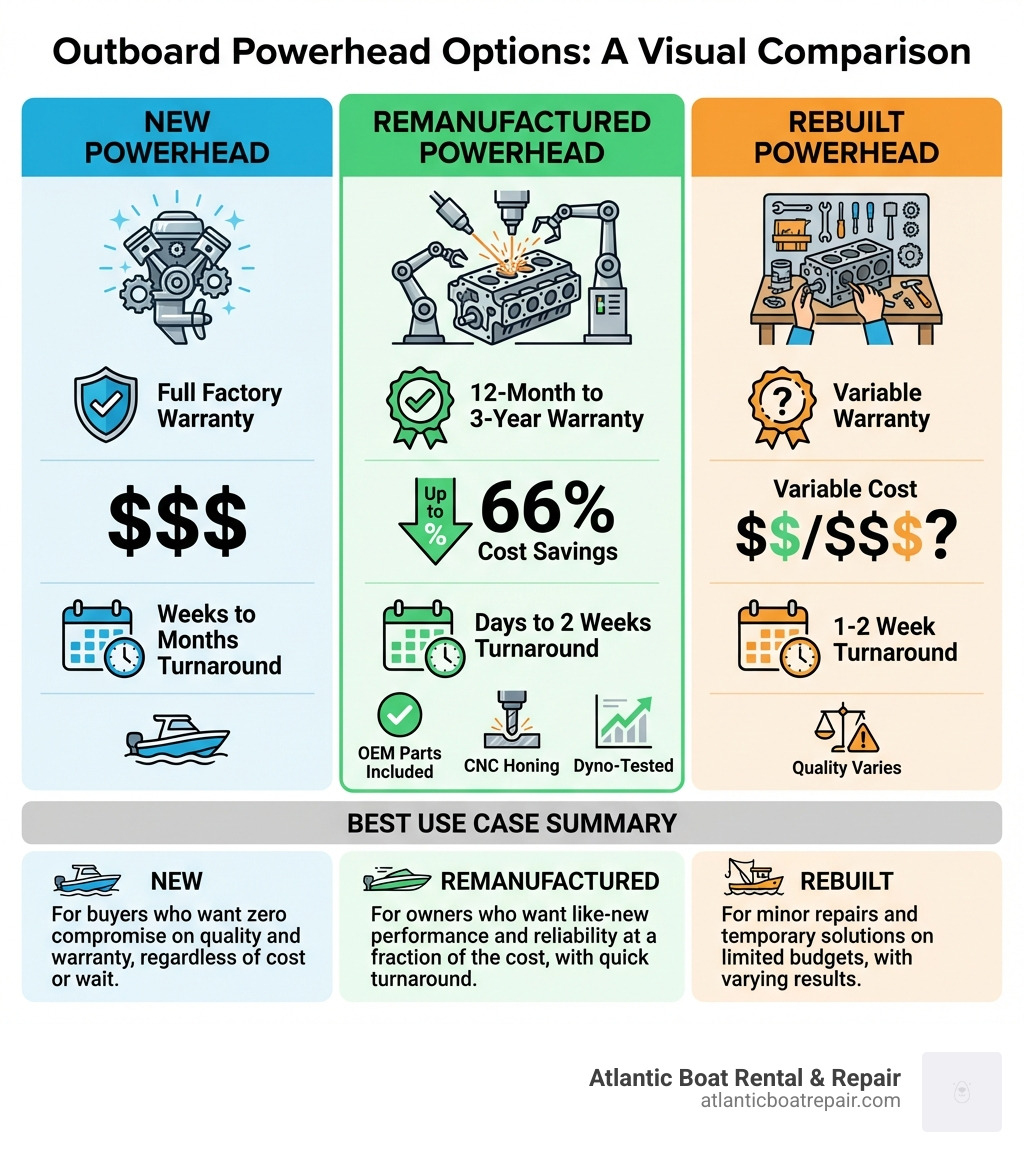
| Option | Cost vs. New | Warranty | Turnaround |
|---|---|---|---|
| New outboard motor | Full price | Full factory warranty | Weeks to months |
| Remanufactured powerhead | Up to 66% less | 12 months (up to 3 years on select units) | Often days; back on water in ~2 weeks |
| Rebuilt powerhead | Varies | Often limited or none | 1-2 weeks |
Here is what separates these three options at a glance:
- New - Factory-fresh, full warranty, highest cost
- Remanufactured - Factory-disassembled, precision-machined, OEM parts, tested, warrantied — not just patched up
- Rebuilt - Typically shop-bench work, variable quality, limited standardization
For most boat owners dealing with a blown powerhead, a remanufactured unit hits the sweet spot between reliability and cost. With New England's short boating season, you also can't afford to wait months for a new motor to arrive or spend weeks haggling with an insurance claim.
More than 202 remanufactured powerheads are available across major brands — Mercury, Yamaha, Johnson/Evinrude, and Suzuki — with many ready to ship the same day. That matters when you're trying to get back on the water before the South Shore season slips away.
I'm Ron Cribbie, owner of Atlantic Boat Repair, and after decades of hands-on marine service work I've seen how a properly sourced and installed remanufactured outboard powerhead can give a boat a second life — often performing as well as the day it left the factory. In this guide, I'll walk you through what to look for, what to avoid, and how to compare your real options.
Understanding the Remanufactured Outboard Powerhead
In simple terms, the powerhead is the "heart" of your outboard. It’s the actual engine block, including the crankshaft, pistons, and cylinder heads. When this unit fails—whether due to a broken ring, a spun bearing, or a cooling failure—you’re left with a heavy piece of aluminum that won't run.
A remanufactured outboard powerhead isn't just a used engine that’s been cleaned up. It is a core that has been completely stripped down to the bare block. Every single internal component is inspected against original factory specifications. If a part doesn't meet the "as-new" standard, it’s replaced.
We often see boaters around Plymouth and Duxbury confused by the "core exchange" process. This simply means you trade in your old, damaged powerhead as part of the deal. This "core" is then sent back to be remanufactured for the next person, which is why the cost stays so much lower than buying a brand-new engine from a crate. You can learn more about how we handle these complex engine swaps by visiting our Services page.
Remanufactured vs. Rebuilt vs. New
It is important to understand the terminology because "rebuilt" and "remanufactured" are often used interchangeably, but they aren't the same thing.
- New: You are buying a zero-hour engine from the manufacturer. It’s the most expensive route and often involves long lead times if the specific model isn't in local stock.
- Remanufactured: This process follows an assembly-line standard. The block is machined, honed, and fitted with new OEM internal parts. It essentially resets the clock to "zero hours." For example, Quicksilver 4-Stroke Dressed Powerheads are produced using the same precision standards as new Mercury engines.
- Rebuilt: This usually refers to a "bench rebuild." A technician takes your specific engine apart, identifies the broken parts, replaces them, and puts it back together. While this can work, it lacks the standardized machining and rigorous testing of a true remanufactured unit.
Benefits of Choosing a Remanufactured Outboard Powerhead
The most obvious benefit is the bottom line. You can typically save up to 2/3 (about 66%) of the cost of a new outboard motor by opting for a remanufactured powerhead. When a new 250HP outboard can cost upwards of $25,000 to $30,000, saving fifteen grand is a significant win for any boat owner.
Beyond the money, there’s the speed. In Massachusetts, our boating season is a sprint. If your engine goes down in July, waiting three months for a new motor means your season is over. Remanufactured units are often in stock and can be shipped and installed in about two weeks.
There's also an environmental angle. By choosing a remanufactured unit, you are recycling the heavy aluminum castings of the engine block and heads. This reduces the energy and raw materials needed to cast new parts. For those running older 2-stroke tech, a Quicksilver 2-Stroke Dressed Powerhead can keep a reliable hull on the water without the waste of a full repower.
The Professional Remanufacturing Process
A reputable remanufacturer doesn't just "fix" what's broken. The process is exhaustive. It starts with a total teardown. The block is then put through a sonic cleaning process. This uses high-frequency sound waves in a chemical bath to remove every trace of carbon, salt, and scale from the internal water jackets without using abrasives that could damage the metal's protective coatings.
Next comes the CNC honing. This ensures the cylinder walls are perfectly round and have the correct "cross-hatch" pattern. This pattern is vital because it allows oil to cling to the walls, lubricating the piston rings and ensuring a proper seal.
One of the biggest advantages of remanufacturing is the ability to include engineering updates. If a manufacturer discovered a flaw in a 2015 model and updated the piston design in 2020, a high-quality remanufactured unit will include those 2020 updates, making the engine better than it was when it originally left the factory.
Precision Machining and OEM Components
The machining tolerances in a remanufactured outboard powerhead are incredibly tight. Blocks are bored to specific oversizes—usually no more than .015" to .030"—to ensure the cylinder is perfectly true. If a block requires boring beyond .030", most top-tier remanufacturers will reject the core entirely to maintain structural integrity.
We insist on using 100% OEM (Original Equipment Manufacturer) internal components or high-quality equivalents that meet or exceed those specs. This includes:
- New pistons and rings
- New rod and main bearings
- Precision-ground crankshafts
- New gaskets and seals
For those looking at sterndrive or inboard options, you can see the level of detail required in documents like the Product Data Sheet for 4.3L Alpha, which outlines the rigorous specs these engines must meet.
Testing and Quality Assurance
Once assembled, the powerhead isn't just shipped out. It goes through a "hot test" or a dyno run. Many suppliers perform a 5-hour run-in period to ensure the rings seat properly and there are no leaks. A 60-point inspection follows, checking everything from oil pressure to compression across all cylinders. Finally, the unit receives a factory-fresh coat of marine-grade paint to prevent corrosion in our salty South Shore air. For those doing the install, resources like the 4.3L Alpha 4V Installation Drawing provide the necessary technical blueprints for a successful fit.
Selecting the Right Powerhead for Your Boat
Choosing the right unit requires more than just knowing your horsepower. You need the exact model year and serial number. Outboard manufacturers often make mid-year changes to crankshaft splines, cooling passages, or electrical mounting points.
Dressed vs. Undressed Remanufactured Outboard Powerhead Options
This is a critical choice that affects both cost and installation time.
| Component | Undressed Powerhead | Dressed Powerhead |
|---|---|---|
| Engine Block/Crank/Pistons | Included | Included |
| Cylinder Heads | Included | Included |
| Fuel System (Injectors/Carbs) | No | Included |
| Ignition System (Coils/Wires) | No | Included |
| Electrical Harness | No | Included |
| Flywheel/Stator | No | Included |
| Installation Time | 10–15 Hours | 3–5 Hours |
Undressed units are cheaper upfront but require you to move all the "jewelry" (fuel systems, electronics, etc.) from your old engine to the new block. This is fine if your old parts are in great shape. However, if your engine blew because of a lean fuel injector, and you move that bad injector to the new block, you’ll blow the new one, too.
Dressed units are "plug and play." They include new or refurbished fuel and ignition systems. They cost more, but they drastically reduce the risk of a repeat failure and save a lot on labor. If you’re looking for a completely new engine instead of a powerhead, Check our Tohatsu Inventory for new motor options.
Compatibility Across Major Brands
Whether you run a Mercury Verado, a Yamaha Offshore series, or an older Johnson/Evinrude, there are remanufactured options available.
Each brand has its quirks. Yamaha 4-strokes often require specific attention to the oil pump and harmonic balancer during the reman process. Mercury Optimax units need a perfectly calibrated air compressor. We work with suppliers who specialize in these brand-specific nuances to ensure the unit you get is built for the specific stresses of that engine's design.
Installation and Long-Term Maintenance
Installing a remanufactured outboard powerhead is a major job. It requires a heavy-duty shop crane, precision torque wrenches, and a clean environment. We always recommend replacing the water pump and thermostats at the same time. It’s cheap insurance to ensure your new "heart" doesn't overheat on its first trip out of Plymouth Harbor.
The "break-in" period is the most critical time in the engine's life. For the first 10 hours, you must vary the RPMs and avoid sustained wide-open throttle. This allows the new rings to seat against the freshly honed cylinder walls. Skipping this step is the fastest way to turn a new powerhead into a paperweight.
Common Signs You Need a Replacement
How do you know if you need a whole powerhead or just a minor repair? Look for these red flags:
- Loss of Compression: If one cylinder is significantly lower than the others, you likely have internal damage.
- Metal Shavings: Finding "glitter" or metal chunks in your gearcase oil or on your spark plugs is a sign of catastrophic bearing or piston failure.
- Overheating: Repeated alarms that aren't fixed by a new water pump often point to internal blockages or a warped head.
- Fuel Contamination: Water in the fuel can cause "scuffing" on the cylinder walls, leading to a seized motor.
If you're seeing these signs, don't wait until the engine throws a rod through the side of the block. Request a quote for your project and we can help you determine if a swap is your best path forward.
Warranty and Core Charge Realities
Most remanufactured powerheads come with a standard 12-month warranty for recreational use. Some factory-backed units, like those from Mercury, offer "Major Assembly Protection" (MAP), which can extend coverage for up to three years.
Be prepared for the core charge. This is a deposit (usually between $200 and $1,000) that you pay upfront. Once your old powerhead is shipped back to the manufacturer and inspected to ensure the block isn't cracked or "holed," you get that deposit back. It’s the manufacturer's way of ensuring they have parts to rebuild for the next customer.
Frequently Asked Questions about Remanufactured Powerheads
How much can I save compared to a new motor?
As mentioned, the savings are significant—often up to 66%. While a new 150HP 4-stroke might cost $16,000, a remanufactured powerhead for your existing mid-section might run you $4,500 to $6,000 plus labor.
How long does the installation process take?
For a professional shop, an undressed powerhead swap typically takes 10 to 15 hours of labor. A dressed powerhead can often be swapped in under 5 hours. From the day you order, you can usually expect to be back on the water in about two weeks.
What is a core charge and how does it work?
It's a refundable deposit. You pay it when you buy the new unit. You ship your old unit back in the same crate the new one arrived in. Once the manufacturer confirms the block is rebuildable, they refund your deposit.
Conclusion
At Atlantic Boat Repair, we believe in doing things right the first time. In the marine engine industry, precision is everything. Our approach to remanufacturing involves superior precision—often twice the manufacturer’s minimum specs—to ensure that when you head out past Gurnet Light, you have total confidence in your engine.
Whether you're fishing the South Shore or taking the family out near the Cape, a remanufactured outboard powerhead offers a reliable, warrantied, and cost-effective way to keep your boat in the water for years to come. If you’re not ready for a full remanufacture and want to see what else is available, View our Pre-Owned Inventory.
If you’re facing an engine failure and want to talk through your options, give us a call. We’re happy to take a look and give you an honest recommendation on whether a remanufactured powerhead is the right move for your boat.
Comments
Be the first to comment on this article!