
Don’t Get Hooked: What to Look for When Buying a Used Outboard
Why Buying a Used Outboard Requires a Different Approach
Used outboard motors can save you thousands compared to buying new—but only if you know what you're looking at. The market is full of solid options, from well-maintained trade-ins to motors with hidden saltwater damage or neglected maintenance. The difference between a reliable engine and an expensive mistake comes down to what you check before you buy.
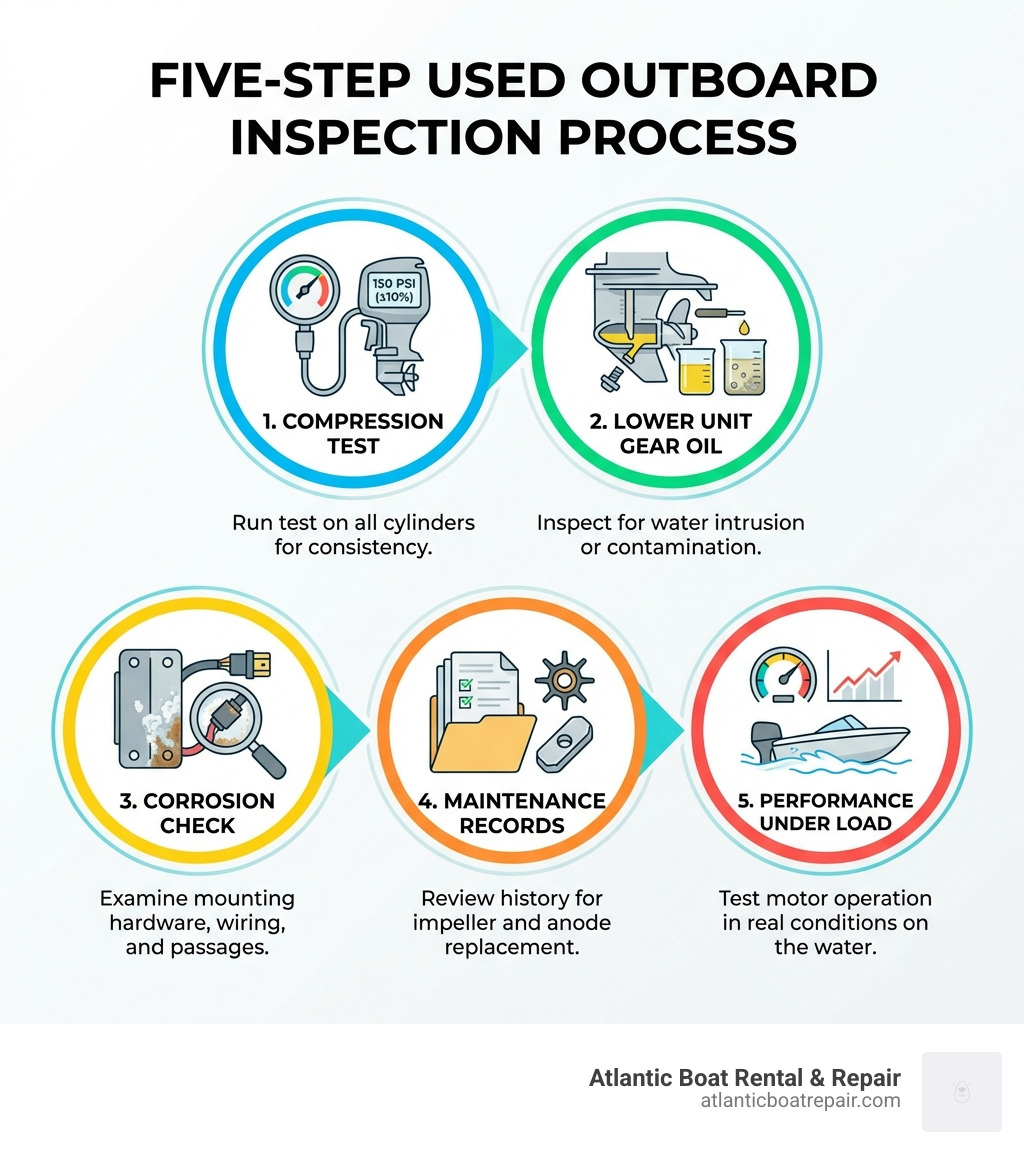
When shopping for a used outboard, focus on these five critical areas:
- Compression test results – All cylinders should read within 10% of each other
- Lower unit condition – Check gear oil for water intrusion or metal shavings
- Corrosion – Especially around mounting points, wiring, and cooling passages
- Maintenance history – Service records for impellers, anodes, and oil changes
- Performance verification – Run the motor under load, not just on muffs
Around Plymouth and the South Shore, we see plenty of used motors come through—some that have been cared for and some that haven't. Saltwater, short seasons, and winter storage all take their toll if maintenance gets skipped. The good news is that a properly inspected used outboard can run for years if you know what to avoid.
I'm Ron Cribbie, owner of Atlantic Boat Repair, and over the years we've rebuilt, repowered, and evaluated hundreds of used outboard motors for boat owners across New England. We've seen what holds up and what doesn't—and we'll walk you through what actually matters when you're evaluating a motor.
Why Used Outboard Motors Make Sense in New England
For many boat owners in Massachusetts, choosing a used outboard motor is a sound financial decision. The most obvious benefit is the significantly lower upfront cost compared to a new unit. New outboards, while exciting, experience steep depreciation in their first few years, much like a new car. Buying used allows you to avoid that initial financial hit.
A used motor can also be an excellent fit for repowering an older, well-loved hull. If your boat's structure is solid but the engine is tired, a quality used outboard can give it a new lease on life without the expense of buying a whole new boat.
In New England, we face unique realities: a shorter boating season, constant saltwater exposure, and the demands of winter storage. These factors mean that even a well-maintained new motor will inevitably show wear. Investing in a carefully selected used motor often provides better value, especially when considering the seasonal nature of boating around Plymouth, Kingston, Duxbury, Bourne, and Sandwich.
The market for used outboards is substantial, with a wide range of horsepower available, from small 2hp kickers to powerful 300hp units. This diversity means there's likely a used motor that fits your specific boating needs and budget.
Here’s a quick look at how 2-stroke and 4-stroke outboards typically compare:
| Feature | 2-Stroke Outboard | 4-Stroke Outboard |
|---|---|---|
| Weight | Generally lighter | Generally heavier |
| Torque | Stronger "hole shot" (initial acceleration) | Smoother, more consistent power delivery |
| Fuel Efficiency | Less fuel-efficient, uses oil in fuel | More fuel-efficient, no oil in fuel |
| Maintenance | Simpler design, fewer moving parts | More complex, similar to car engine |
| Emissions | Higher emissions, louder | Lower emissions, quieter |
| Cost | Often less expensive used | Can be more expensive used, but long-term savings |
| Noise | Louder at idle and higher RPMs | Quieter operation |
You can explore some of the options available right now by checking our current pre-owned inventory.
2-Stroke vs. 4-Stroke: What Matters for Used Outboards
When considering used outboard motors, the choice between a 2-stroke and a 4-stroke engine is more than just a matter of preference; it's about matching the motor to your boat and how you use it. Each type has distinct characteristics that impact performance, maintenance, and longevity.
For smaller boats, weight and balance are crucial. A lighter 2-stroke might be the better choice if your transom has weight limitations or if you frequently lift the motor. However, modern 4-strokes are continually becoming lighter. Torque and "hole shot" (how quickly the boat gets on plane) are often important for fishing boats or those used for watersports. Older 2-strokes are renowned for their immediate power delivery, while 4-strokes tend to have a smoother, more consistent power band.
Maintenance is another key factor. 2-strokes, with their simpler design, can sometimes be easier and less expensive to maintain if you're comfortable with basic tasks. However, they require mixing oil with fuel (unless it's an oil-injected model), which can be a hassle for some. Four-strokes, while more complex, are generally more fuel-efficient and produce fewer emissions, which is a plus for the environment and your wallet. Parts and service support in Massachusetts are generally good for both types, especially for popular brands like Mercury, Yamaha, Suzuki, and Honda. We've worked on countless engines of both types and can attest to their varying needs.
Horsepower and Shaft Length: Getting the Fit Right
The right horsepower (HP) and shaft length are fundamental to a used outboard motor performing correctly and safely on your boat. Getting this wrong can lead to poor performance, handling issues, and even damage.
First, consider shaft length. This must match your boat's transom height. A short shaft (around 15 inches) is for smaller boats with low transoms. Long shaft (around 20 inches) is most common for boats with standard transoms. Extra-long shaft (around 25 inches) is for boats with higher transoms, often found on larger fishing boats or pontoon boats. If the shaft is too short, the propeller won't be deep enough, leading to cavitation and poor thrust. If it's too long, the lower unit will drag, creating unnecessary resistance and reducing efficiency.
Next, horsepower. This should align with your boat's maximum rated horsepower, which is usually found on the boat's capacity plate. Never exceed this rating. The boat's weight and your intended use also play a big role. A lightweight skiff used for cruising might do fine with a lower HP, while a heavier fishing boat full of gear and people will need more power to get on plane efficiently. Don't forget kicker motors—smaller outboards (often 9.9 HP or less) used for trolling or as a backup. These also need careful consideration of shaft length and mounting. We often see folks in the Cape Cod area needing reliable kickers for their fishing expeditions.
What to Check Under the Cowling: Key Inspection Points
This is where the rubber meets the road. A shiny exterior means nothing if the engine underneath is neglected. When inspecting used outboard motors, you need to get your hands dirty and look for specific red flags. This is not the time for politeness; it's the time for thoroughness.
One of the most critical inspection points, especially for boats used in saltwater around the South Shore, is corrosion. Check everywhere: around the powerhead, mounting brackets, wiring harness, and especially in the cooling passages. Excessive corrosion can indicate poor flushing habits or a motor that spent too much time submerged. Look for green or white powdery buildup. Pay close attention to the wiring harness and connector condition; frayed wires or corroded terminals are a precursor to electrical problems.
Milky oil in the engine or lower unit is an immediate deal-breaker. Milky engine oil typically signals water intrusion into the powerhead, often from a blown head gasket or a crack. Milky gear oil, found by checking the lower unit drain plug, indicates a leaky seal, which can lead to catastrophic gearcase failure if not addressed. We've seen many cases where a simple seal leak turned into a full lower unit replacement because it was ignored.
Inspect the gearcase itself for impact damage, cracks, or repairs. Spin the propeller by hand to check for smooth rotation and any excessive play. The cooling system is vital; check the tell-tale (the stream of water exiting the motor) for a strong, steady flow. A weak or intermittent stream could mean a clogged cooling system or a failing water pump impeller.
Verifying Performance Before You Buy
Beyond a visual inspection, you need to verify the motor's actual condition and performance. This requires some specific tests.
A compression test on all cylinders is non-negotiable. This tells you about the health of the engine's internal components, like pistons, rings, and valves. All cylinders should have readings within 10% of each other. Significant differences indicate wear or damage that could lead to costly repairs. For our "0" time rebuilt engines, we ensure precision that's twice manufacturer specs, providing new-like performance and reliability.
Check for spark on each cylinder. No spark, no go. This can point to issues with the ignition system, coils, or even the ECU. Next, drain a small amount of gear oil from the lower unit. As mentioned, milky oil is a bad sign. Also, look for metal shavings, which indicate internal gear wear. Check for any obvious seal leaks around the prop shaft or shift rod.
Finally, if possible, run the motor. Ideally, you want to see it run in a tank or on the boat in the water, not just on muffs. Observe how it starts, idles, and accelerates. Listen for unusual noises like knocking, grinding, or excessive vibration. We always test our units thoroughly in a dedicated tank before they leave our shop.
Maintenance History: Neglect vs. Proper Care
The maintenance history of a used outboard motor is a direct window into its previous life. A well-documented history is a strong indicator of a motor that has been cared for; a lack of records is a significant red flag.
Ask for service records. These should detail routine items like impeller replacements (critical for cooling, especially in warmer New England summers), thermostat checks, and anode replacements (essential for saltwater corrosion protection). Records for fuel line and filter changes are also important, as old fuel systems can cause significant performance issues.
Check the tilt/trim system for smooth, consistent operation without grinding noises or excessive leaks. Inspect the mounting brackets and hardware condition. Any signs of cracking, bending, or severe corrosion here could indicate a hard life or improper installation.
Signs of a well-maintained motor include a clean powerhead (not necessarily spotless, but free of excessive grime and oil leaks), fresh fluids, and a generally tidy appearance under the cowling. Conversely, a neglected motor might have old, dirty fuel filters, crusty spark plugs, frayed wiring, and obvious signs of corrosion or leaks. These are the motors that will nickel and dime you to death.
Where to Find Reliable Used Outboard Motors
Finding a good used outboard motor isn't just about price; it's about finding reliability. Knowing where to look can make all the difference.
One of the best places to start is local marine shops like ours. We often have trade-ins from customers we've known for years, meaning we have a good understanding of the motor's history. These motors are typically inspected and serviced by our technicians before they're offered for sale. Word-of-mouth in the South Shore boating community is also incredibly valuable. Fellow boaters often know who's selling a good motor or can recommend a reputable local source.
Online classifieds and marketplaces can offer a wider selection, but they also require more caution and a thorough inspection process. Always assume the seller knows more about the motor's flaws than they're letting on.
Why Buy from a Local Shop
Buying a used outboard motor from a local shop, especially one with a strong reputation in the Plymouth, Kingston, Duxbury, Bourne, or Sandwich areas, offers several distinct advantages over a private sale.
Firstly, motors sold by reputable shops are typically inspected and serviced by qualified technicians before they even hit the showroom floor. This means common issues are often addressed, and you're less likely to encounter immediate problems. While most used motors are sold "as-is," some shops might offer a limited post-sale support or a short warranty, which is rare in private sales.
Local shops also provide invaluable help with rigging, installation, and setup. Matching a used motor to your boat can be complex, involving throttle cables, steering, and electrical connections. A shop can ensure everything is installed correctly and safely. Plus, we have local knowledge of what works best in New England waters, from propeller selection to anti-corrosion strategies.
At Atlantic Boat Repair, we pride ourselves on providing comprehensive services. You can learn more about our services and how we can assist you with your outboard motor needs.
What to Know About Private Sales and Paperwork
While private sales can sometimes offer lower prices on used outboard motors, they come with a distinct set of legal and logistical considerations you need to understand, especially here in Massachusetts.
First, paperwork. You will need a bill of sale that clearly identifies both buyer and seller, the purchase price, and the engine's serial number. This serial number is crucial for registration and verifying the motor's history. In Massachusetts, an outboard motor generally does not require a title unless it's over 25 HP, in which case it needs to be registered with the Massachusetts Environmental Police. Always verify the engine serial number matches any documentation provided and check it against stolen property databases if possible.
Logistically, consider how you will pick up the motor. Outboards, even smaller ones, are heavy and awkward. You'll need appropriate transportation. If you're not comfortable with the installation yourself, factor in the cost of having a local marine technician install it for you. This is another area where buying from a shop simplifies the process, as installation can often be part of the deal or easily arranged. Don't overlook these details; they can quickly add unexpected costs and headaches.
The Real Cost of Ownership: Beyond the Sale Price
The purchase price of a used outboard motor is just the beginning. Savvy boat owners understand that the true cost of ownership extends far beyond the initial transaction. Overlooking these ongoing expenses can lead to budget surprises.
Consider fuel consumption. Older 2-stroke motors, while often cheaper to buy, are typically less fuel-efficient than modern 4-strokes. This difference can add up significantly over a season, especially with fluctuating fuel prices.
Winterization and seasonal storage are also major costs in New England. Every fall, your motor needs to be properly prepared for the cold months to prevent damage. This involves fuel stabilization, fogging the engine, changing gear lube, and often removing the battery. Proper storage is also essential to protect your investment from the elements.
Budgeting for repairs and parts is another critical aspect. Even a well-inspected used motor may eventually need parts. Parts availability for very old or discontinued engines can be a challenge, sometimes requiring a hunt for aftermarket or used components. We've seen owners struggle to find specific parts for vintage outboards, making repairs difficult or impossible.
Finally, don't forget propeller selection and rigging costs. The right propeller is essential for optimal performance and fuel efficiency. If your used motor comes without a prop, or with the wrong one for your boat, you'll need to factor in the cost of a new one. Rigging, if not included in the sale, involves all the controls, cables, and electrical connections to integrate the motor with your boat.
Maintenance Schedules for Older Outboards
Maintaining older used outboard motors is often more critical and sometimes more frequent than with newer models. A proactive approach can prevent minor issues from becoming major failures.
Regular water pump and impeller replacement is paramount, typically every 100 hours or annually, whichever comes first. This is especially true for saltwater use around Cape Cod and the South Shore, where salt and sediment can accelerate wear. Gear lube changes are also vital to protect the lower unit's internal gears. This should be done annually, at minimum, and inspected for water intrusion.
Spark plugs and fuel filters are relatively inexpensive to replace but crucial for engine performance and reliability. Dirty plugs or clogged filters can lead to rough running, poor fuel economy, and hard starting. If your motor has a timing belt, ensure it's replaced according to the manufacturer's schedule to prevent catastrophic engine damage.
Corrosion protection for saltwater use cannot be overstated. Regularly flushing the engine after each use, applying anti-corrosion sprays, and replacing sacrificial anodes are all part of extending your motor's life in our marine environment.
Common Issues Seen in the Shop
At Atlantic Boat Repair, we've encountered a wide range of issues with used outboard motors over the years. Understanding these common problems can help you evaluate potential purchases.
One frequent challenge is the reliability quirks that can come with older models. Just like any machinery, age brings increased potential for wear and tear on components like ignition systems, fuel pumps, and electrical connections. These might not be apparent during a brief inspection but can surface with regular use.
Parts availability is another significant hurdle for discontinued engines. While popular brands like Mercury, Yamaha, Suzuki, and Honda generally have good parts support for many years, extremely old or less common models can be a nightmare to find components for. We often have to source parts from specialized suppliers or use aftermarket alternatives.
Our local experience with these major brands, operating in the challenging New England environment, gives us a unique perspective. We know which models tend to hold up well in saltwater, which ones are prone to specific issues after a certain number of hours, and which ones are generally easier to repair. This hands-on experience is invaluable when assessing the true value and potential longevity of a used motor.
Frequently Asked Questions about Used Outboards
How many hours is too many for a used outboard?
This is one of the most common questions we get about used outboard motors, and the answer isn't a simple number. It's often said that "hours are like miles on a car," but it's more nuanced than that. A motor with 1,000 hours that has been carefully maintained, serviced regularly, and used gently might be a better buy than a motor with 300 hours that has been neglected, run hard, or improperly stored.
For modern 4-stroke outboards, 1,000 to 2,000 hours is often considered a reasonable lifespan if well-maintained, with some exceeding 3,000 hours. Older 2-strokes might have a shorter typical lifespan. What truly matters is the quality of those hours and the maintenance history. Always prioritize a motor with documented service records, regardless of the hour meter reading.
Should I consider a motor that’s been used in salt water?
Around Plymouth, Cape Cod, and the South Shore, most outboards see saltwater use, so it's a reality we deal with. The key is how well the motor was cared for after saltwater exposure. Motors that were consistently flushed with fresh water after each use and had their sacrificial anodes replaced regularly will fare much better than those that were neglected.
When inspecting a saltwater-used motor, look for excessive corrosion, especially around the powerhead, wiring, and mounting brackets. Check for signs of active electrolysis, which manifests as pitting or white powdery buildup on aluminum components. While saltwater use increases wear and tear, a well-maintained saltwater motor can still offer many years of reliable service. It's the neglect, not the saltwater itself, that's the real problem.
Can I get any kind of warranty or support on a used outboard?
For most used outboard motors purchased from a private seller, you typically won't get any warranty or guarantee; they're usually sold "as-is." This is why a thorough inspection is crucial. Some reputable marine dealerships might offer a very limited warranty (e.g., 30-90 days) on certain used motors they sell, especially if they've fully serviced them.
However, if you're looking for peace of mind closer to a new engine's reliability, consider a remanufactured outboard. At Atlantic Boat Repair, we specialize in "0" time rebuilt outboard engines. These aren't just repaired; they're carefully disassembled, all worn parts are replaced, and they're rebuilt to superior precision—twice manufacturer specs in many cases. Our remanufactured units undergo rigorous testing to ensure new-like performance and reliability, and they typically come with a warranty. This offers a middle ground between the cost of new and the risk of a standard used motor.
Conclusion
Navigating the market for used outboard motors can feel like a challenge, but with the right knowledge and a methodical approach, you can find a reliable engine that serves your boating needs for years to come. From understanding the nuances of 2-stroke versus 4-stroke to carefully inspecting for corrosion and verifying performance, every step is crucial.
The true value of a used motor isn't just its initial price tag, but its long-term reliability and the cost of ownership over time. Around Plymouth, Kingston, Duxbury, Bourne, and Sandwich, we understand the demands our local waters place on these engines.
At Atlantic Boat Repair, we offer more than just advice. We provide comprehensive services, from expert inspections to our own "0" time rebuilt engines. Our precision rebuilds and thorough testing mean you get a motor that performs like new, backed by our local expertise. We're committed to building long-term relationships with boat owners who value competence and honest recommendations.
If you want to talk through your options for a used outboard, or if you're considering a repower with one of our precision-rebuilt units, give us a call. We're happy to discuss your specific needs and help you make the best decision for your boat.
Comments
Be the first to comment on this article!