
Winterizing Your Pontoon: A Price Guide for Smart Boaters
Protecting Your Investment for Winter
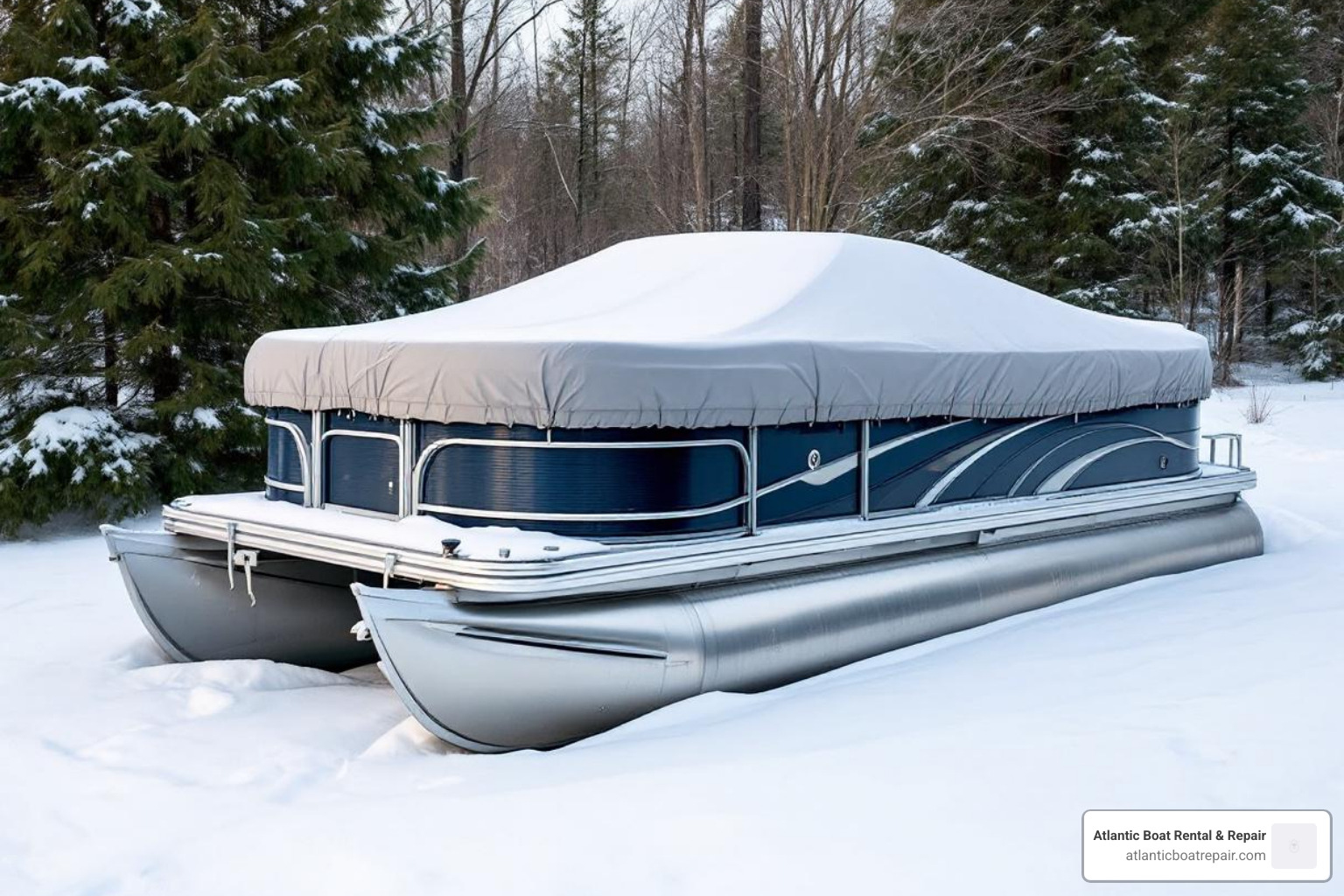
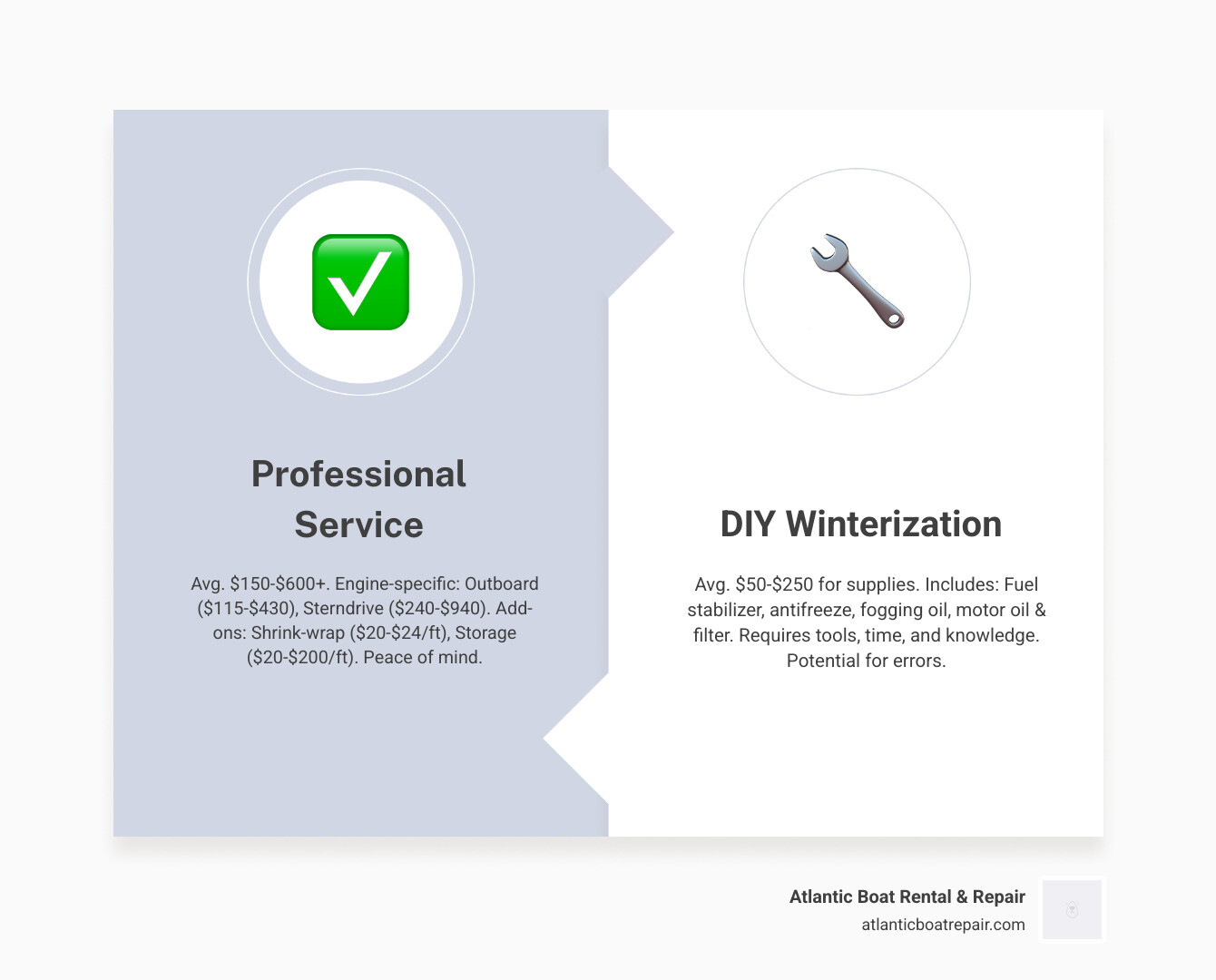
The cost to winterize pontoon boat ranges from $150 to $600+ for professional services, or $50 to $250 if you handle it yourself. Here's what determines your final price:
- Boat size: Smaller pontoons (under 20') cost less; larger boats (24'+) cost more
- Engine type: 2-stroke outboards ($115-$220), 4-stroke outboards ($330-$430), sterndrives ($240-$940)
- Service level: Basic (fuel stabilizer, fogging), Standard (+ oil change), Premium (+ full inspection)
- Storage: Indoor ($35-$200/foot), Outdoor ($20-$50/foot), or no storage (DIY at home)
- Add-ons: Shrink-wrapping ($20-$24/foot), pickup/delivery ($125-$235+)
As the nights get cooler and the leaves start to turn, boat owners across the country face a critical decision: how to protect their pontoon from the coming winter. If you live anywhere that sees temperatures below 40°F, winterization isn't optional—it's essential. Frozen water expands with enough force to crack engine blocks, split hoses, and destroy plumbing systems. The cost of repairing freeze damage can easily exceed $10,000, not to mention losing your entire next boating season.
But winterization doesn't have to be mysterious or overwhelming. Whether you choose to work with a professional marine service or tackle the job yourself, understanding the costs involved helps you make a smart decision that fits your budget and protects your investment.
I'm Ron Cribbie, owner of Atlantic Boat Repair, and I've spent decades helping boat owners in New England prepare their vessels for harsh winters. Understanding the cost to winterize pontoon boat equipment helps my clients budget appropriately and avoid the expensive consequences of skipping this essential maintenance.
Breaking Down the Professional Cost to Winterize a Pontoon Boat
When winter approaches here in Plymouth, Kingston, Duxbury, Bourne, and Sandwich, Massachusetts, the thought of preparing our beloved pontoons for the cold can feel daunting. That's where professional winterization services come in. For many boaters, the convenience and peace of mind that comes with hiring experts outweigh the upfront cost to winterize pontoon boat professionally. It means avoiding the stress of DIY, ensuring the job is done right, and potentially saving you from much larger repair bills down the line.
Professional services are typically offered by marinas, boatyards, and specialized marine repair shops like ours. The rates can vary based on the provider, their location, and the specific services they offer. While it might seem like a significant expense, you're paying for expertise, specialized tools, and the assurance that your pontoon is in capable hands. As Find Boating wisely puts it, repairing an engine left in the cold is "significantly more expensive than winterizing and de-winterizing your vessel." You can read more about this on their page: How Much Will It Cost to Winterize My Boat?.
Average cost to winterize pontoon boat: A National Snapshot
While prices can fluctuate, we've observed general trends in the industry that can give you a good idea of what to expect. Smaller boats, generally under 20 feet, might see professional winterization costs as low as $150-$300. Larger vessels, often 24 feet or more, can range from $400 up to $600 or even more, depending on their complexity.
The type and size of your pontoon's engine are major cost drivers. Here's a general breakdown of engine-specific pricing you might encounter:
- Outboard Motor Rates: These can range significantly depending on horsepower and whether it's a 2-stroke or 4-stroke engine.
- 2-Stroke Outboards: Generally, costs can be between $115 (for smaller HP) and $220 (for larger HP).
- 4-Stroke Outboards: These are typically more complex and expensive to winterize, ranging from $330 (for smaller HP) to $430 (for larger HP). Some high-performance or very large 4-stroke outboards with oil/filter/gear lube changes can even reach $550.
- Sterndrive (I/O) Rates: These engines require more extensive work due to their cooling systems.
- Basic winterization for a 4-cylinder sterndrive might start around $240.
- For 6 or 8-cylinder sterndrives, especially with Bravo/Volvo drives, costs can climb from $300 for basic services to $940 for a deluxe package that includes pulling the outdrive, inspecting bellows, greasing u-joints, and gimbal bearings.
These figures represent broad industry averages. Here in Massachusetts, our specific labor rates and parts costs might fall within or slightly above these ranges due to regional economic factors and the high demand for quality marine services.
What's Included? Tiers of Service Explained
Professional winterization isn't a one-size-fits-all service. Most marine shops, including ours, offer different tiers to suit various needs and budgets. Here's a look at what typically comes with each level:
| Service Tier | Typical Inclusions | Estimated Cost Range (Engine Only) |
|---|---|---|
| Basic | - Fuel stabilization (adding treatment to gas tank) - Engine fogging (protects internal engine components) - Draining engine block (for I/O and inboard) - Disconnecting battery |
$150 - $350 |
| Standard | - All Basic services, plus: - Engine oil and filter change - Lower unit (gearcase) oil change - Water/fuel separator filter change - Basic mechanical inspection |
$350 - $600 |
| Premium | - All Standard services, plus: - Impeller check/replacement (often recommended every 2 years) - Full diagnostic inspection - Cleaning (e.g., acid wash for pontoons) - Detailed component inspection (hoses, belts, anodes) - Water pump kit replacement (if needed) |
$600 - $950+ |
System Winterization: Beyond the engine, pontoons have other crucial systems that need attention. These are often add-ons or part of higher-tier packages:
- Livewells: Draining and treating can cost around $80.
- Ballast Systems: Winterizing these can range from $60 per tank or bag to $200 for a full system.
- Freshwater Systems (Heater/Transom Shower/Sink): Each of these can add $60-$120 to the bill to ensure they're drained and filled with non-toxic antifreeze.
- Porta Potties/Holding Tanks: Draining and treating these sanitary systems might cost $100-$120.
It's always a good idea to discuss your specific pontoon's needs with us. We'll help you choose the right package to protect your investment through the harsh New England winter.
Additional Services That Add to the Bill
While engine winterization is the core service, several other crucial services can add to your overall cost to winterize pontoon boat and ensure its optimal protection.
- Shrink-wrapping: This is a highly recommended service, especially for boats stored outdoors in our snowy Massachusetts winters. It creates a tight, protective shell around your pontoon, shielding it from snow, ice, rain, and UV damage. Costs typically range from $20 to $24 per foot. For boats with hardtops or towers, an additional surcharge of around $325 might apply due to the increased complexity of wrapping.
- Storage Costs: Once winterized, your pontoon needs a safe place to rest. Storage options vary widely in price and protection:
- Indoor Storage: The gold standard for protection, often climate-controlled or at least shielded from the elements. Costs are generally higher, ranging from $35 to $200 per foot for the season, or sometimes even monthly.
- Outdoor Storage: A more budget-friendly option, but it requires shrink-wrapping for adequate protection. Expect to pay $20 to $50 per foot. Some facilities offer outdoor storage with shrink-wrap included for around $30 per foot.
- Haul-out Fees: Getting your pontoon out of the water and onto a trailer or storage blocks isn't always included in winterization or storage. Charges for pulling a boat out can range from $150 (for one person with equipment) to $200 (for two people).
- Pickup and Delivery: If you can't transport your pontoon to our facility yourself, we offer convenient pickup and delivery services. Rates typically depend on distance, ranging from $125 to $235 or more for a one-way trip. For larger tri-toons, these rates might be slightly higher.
These additional services are often worthwhile investments, extending the life of your pontoon and ensuring it's ready to hit the water come spring.
DIY Winterization: Your Guide to Costs and Supplies
For the mechanically inclined and budget-conscious boater, winterizing your pontoon yourself can be a rewarding and cost-effective option. It gives you a hands-on understanding of your vessel and can significantly reduce the cost to winterize pontoon boat compared to professional services. However, it requires careful attention to detail and a good understanding of your engine and systems. If you're considering the DIY route, ensure you have the right tools, the necessary supplies, and a comfortable knowledge of the process. Barletta Pontoon Boats offers a helpful guide: How to Winterize a Pontoon Boat (6 Easy Steps).
Essential DIY Supply Cost Breakdown
When winterizing your pontoon yourself, the good news is that the supply costs are relatively modest. Here’s a breakdown of what you’ll likely need:
- Fuel Stabilizer: Essential for preventing fuel degradation and gumming over the winter months. Costs typically range from $10 to $20 for a bottle that treats a decent-sized tank.
- Antifreeze (Non-Toxic): Crucial for protecting your freshwater systems (if applicable) and sometimes used for flushing raw water systems. Always use propylene glycol-based marine antifreeze. Expect to pay $5 to $10 per gallon, and you might need several gallons depending on your boat's systems.
- Fogging Oil: Sprayed into the engine's cylinders to prevent corrosion during storage. A can usually costs $10 to $15.
- Motor Oil & Filter: If your engine requires an oil change as part of winterization (highly recommended for 4-stroke engines), this will be a significant cost. Expect to spend $30 to $60 for quality marine-grade oil and a new filter.
- Gear Lube: For changing your lower unit's gear oil, a bottle typically costs $10 to $20.
- Basic Tools: You'll need wrenches, a drain pan, a fuel filter wrench, and potentially a hand pump for gear lube. If you already own these, your cost is $0; otherwise, factor in initial tool purchases.
- Other incidentals: Shop rags, disposable gloves, possibly a fuel/water separator filter ($15-$30), and corrosion protection spray ($10-$20).
All told, the supplies for a comprehensive DIY winterization typically fall within the $50 to $250 range. This can be a significant saving compared to professional services, but it comes with a trade-off in time and potential risk.
DIY vs. Professional: Comparing the cost to winterize pontoon boat
The decision between DIY and professional winterization often boils down to a balance of cost, time, and mechanical confidence.
- Time Investment: DIY winterization requires a significant time commitment, often several hours, depending on your pontoon's complexity. A professional service handles everything, freeing up your valuable time.
- Risk of Error: Even a small mistake during winterization can lead to catastrophic and expensive damage, especially to the engine. For instance, not fully draining the engine's water can result in a cracked block, which is a four-figure repair. Professionals have the experience and training to minimize these risks.
- Engine Damage Risk: This is perhaps the biggest concern for DIYers. Winterizing an engine, particularly an inboard/outboard or complex 4-stroke outboard, involves precise steps. If you're not confident, the potential cost of engine damage far outweighs the savings of DIY. As the experts at Barletta Pontoon Boats advise, if you're not mechanically inclined, "It's not worth destroying your motor" by attempting engine winterization yourself.
- Warranty Considerations: Improper DIY winterization could potentially void your engine's warranty if damage occurs due to incorrect procedures. Professional services often provide documentation that can help maintain warranty validity.
- When to Call a Pro: If your pontoon has complex systems, if you're short on time, or if you simply prefer peace of mind, hiring a professional is the smart choice. We're here to help boaters in Plymouth, Kingston, Duxbury, Bourne, and Sandwich ensure their pontoon is perfectly prepared for winter. Don't hesitate to reach out for a personalized quote: Get a professional quote.
Key Factors That Influence Your Final Bill
Understanding the primary elements that dictate the final cost to winterize pontoon boat is crucial for smart budgeting. These factors are consistent whether you're in Massachusetts or elsewhere, though local market conditions will always play a role.
- Boat Size: This is one of the most straightforward factors. Larger pontoons require more materials (antifreeze, fogging oil), more labor time, and often higher storage and shrink-wrapping costs (which are typically priced per foot). A 25-foot triple-toon will inherently cost more to winterize and store than a 16-foot fishing pontoon.
- Engine Type (Outboard vs. I/O): As we discussed, outboards and sterndrives (inboard/outboard) have different winterization requirements. Sterndrives, with their closed-cooling systems and bellows, generally demand more labor and materials, leading to a higher cost. Inboard engines, while less common on pontoons, also have specific, often higher, winterization costs.
- Engine Horsepower: For outboard motors, higher horsepower engines often translate to higher winterization costs. This is because they might require more oil, larger filters, or more specialized attention. Our pricing for outboard winterization at Atlantic Boat Repair often scales with horsepower for this reason.
- Geographic Location: This is a significant factor. In our New England region, particularly around Plymouth, Kingston, Duxbury, Bourne, and Sandwich, winterization is a non-negotiable annual expense due to prolonged freezing temperatures. This high demand, combined with local labor rates and operating costs, can influence pricing. Areas with shorter, milder winters might see different pricing structures.
- Service Provider Choice: Different marinas, boatyards, and marine repair shops will have varying rates. It pays to shop around and compare services and prices, but always prioritize reputation and expertise, especially when it comes to critical engine work.
- Level of Service: As outlined in our tiers, a basic winterization will always be less expensive than a comprehensive package that includes oil changes, impeller checks, and detailing. The more services you opt for, the higher your bill will be.
The High Cost of Neglect: What Happens If You Don't Winterize?
Skipping winterization might seem like a way to save money, but it's a gamble that almost always leads to far greater expenses and headaches. Here in Massachusetts, where temperatures reliably dip well below freezing, not winterizing your pontoon is akin to leaving your house door open during a blizzard – disaster is almost guaranteed. The potential costs of not winterizing dwarf the cost to winterize pontoon boat services.
- Cracked Engine Block: This is the most infamous and costly consequence. Water expands by about 9% when it freezes, exerting immense pressure. If water remains in your engine block, manifolds, or cooling system, it will freeze, expand, and crack these critical components. Repairing this often means a complete engine overhaul or replacement, which can easily exceed $10,000. As BoatUS reports, over three-quarters of freeze claims involve engine block or exhaust manifold cracks.
- Damaged Plumbing: Just like your home's pipes, your pontoon's freshwater lines, pumps, and water heater are susceptible to freezing. Burst pipes can lead to leaks, water damage, and costly replacements for the entire system.
- Fuel System Corrosion: Without fuel stabilizer, gasoline (especially ethanol-blended fuel) can degrade and separate over months of storage. This creates corrosive byproducts that can damage fuel lines, carburetors, and injectors, leading to poor engine performance or failure in the spring.
- Mold and Mildew Damage: A closed-up boat, especially if not thoroughly cleaned, becomes a perfect breeding ground for mold and mildew in damp conditions. These can ruin upholstery, carpets, and even corrode electrical components, leaving you with unpleasant smells and expensive interior repairs.
- Pest Infestation: Without proper sealing and deterrents, your cozy pontoon can become a winter home for rodents, insects, and other critters. Mice can chew through wiring, upholstery, and even critical components, causing extensive damage and fire hazards. We've seen raccoons make a home in boats due to leftover trash!
- Voided Warranties: Most boat and engine manufacturers require proper winterization for their warranties to remain valid. If you skip or improperly perform winterization, any damage that occurs could leave you footing the entire bill.
Not winterizing is an invitation for expensive repairs and a lost boating season. As the BoatUS Boater's Guide to Winterizing emphasizes, proper preparation is a critical preventative measure against costly damage. You can find more comprehensive information on preventing such issues in the BoatUS Boater's Guide to Winterizing.
Frequently Asked Questions about Pontoon Winterization Costs
We often hear similar questions from our customers in Plymouth, Kingston, Duxbury, Bourne, and Sandwich, especially those new to pontoon ownership or boating in New England. Here are some of the most common inquiries regarding the cost to winterize pontoon boat.
How does the size of my pontoon boat affect winterization costs?
The size of your pontoon boat has a direct and significant impact on winterization costs. Here’s why:
- Per-foot pricing: Many services, such as shrink-wrapping and storage, are priced "per running foot" of your boat. A longer boat means a higher bill for these services. For example, shrink-wrapping costs $20-$24 per foot, so a 25-foot pontoon will cost significantly more than a 16-foot one.
- More materials needed: Larger boats generally have larger engines, bigger fuel tanks, and more extensive plumbing systems. This means more antifreeze, more fuel stabilizer, more fogging oil, and potentially more engine oil and filters.
- Larger engines: Often, larger pontoons come with higher horsepower engines, or even twin engines. As discussed, higher HP engines and multiple engines increase the complexity and material requirements for winterization, driving up the cost.
- Storage fees: Whether you opt for indoor or outdoor storage, facilities typically charge by the foot or by square footage. A larger pontoon will take up more space, leading to higher storage fees.
Are there regional differences in winterization prices?
Yes, absolutely. Regional differences play a considerable role in the cost to winterize pontoon boat.
- Northern states (higher demand, higher price): In regions like New England, where Atlantic Boat Repair is located, severe winters make winterization an absolute necessity. The high demand for services during a relatively short window (fall) can drive up prices. Labor rates in our area can also be a factor.
- Southern states (lower necessity, lower price): In warmer climates where freezing temperatures are rare or brief, some boaters may opt for minimal winterization or none at all, or they may simply run their boats year-round. This lower demand and different climate needs lead to different pricing structures.
- Local market competition: The number of marine service providers in a given area can also influence pricing. More competition might lead to more competitive rates.
For us, serving the Massachusetts coast, winterization is a critical and highly sought-after service each fall.
Can I just use a heater instead of winterizing my engine?
This is a question we hear often, and the answer is a resounding NO. Relying on a heater instead of proper winterization is a dangerous gamble that we strongly advise against.
- Power outage risk: Our New England winters can be unpredictable, bringing ice storms and heavy snow that often lead to widespread power outages. If the power goes out, your heater stops working, leaving your engine completely unprotected in freezing temperatures.
- Fire hazard: Electric heaters, especially if not marine-grade or improperly used, pose a significant fire risk on a boat. The confined space, presence of fuel, and potential for faulty wiring create a dangerous combination.
- Not a substitute: Heaters only provide ambient warmth. They do not address vital winterization steps like fuel stabilization, internal engine fogging, or draining and treating your boat's plumbing systems.
- Insurance policy issues: Many boat insurance policies have specific clauses regarding freeze damage and may not cover losses if proper winterization procedures were not followed, or if a heater was used as the sole preventative measure.
- False sense of security: A heater provides a false sense of security. It's simply not reliable enough to protect your expensive investment from the destructive force of freezing water.
The BoatUS guide clearly states that "electric heaters are no substitute for proper winterizing." It's far safer and more cost-effective in the long run to invest in proper winterization rather than risk everything on a heater.
Conclusion: Making the Smart Choice for Your Pontoon
As we've explored, the cost to winterize pontoon boat services can vary widely, influenced by factors like boat size, engine type, service level, additional services, and your choice between DIY and professional help. While the initial outlay might seem like an expense, it's truly an investment—an essential one, especially for boaters in our chilly New England climate.
Proper winterization is not just about avoiding immediate damage; it's about safeguarding your entire boating season next year. It protects your engine from catastrophic freeze damage, prevents plumbing bursts, deters pests, and maintains your pontoon's overall condition and resale value. Neglecting this crucial step can lead to repair bills that far exceed any winterization cost, not to mention the frustration of a lost season on the water.
At Atlantic Boat Repair, we pride ourselves on providing superior precision and rigorous testing in all our marine engine services, ensuring your "0" time rebuilt outboard engines perform like new. This same dedication to excellence extends to our winterization services for boaters in Plymouth, Kingston, Duxbury, Bourne, and Sandwich, Massachusetts. We understand the unique challenges our local winters pose and are here to offer expert, reliable service that gives you complete peace of mind.
Don't let winter catch you off guard. Make the smart choice to protect your pontoon, ensuring it's ready for countless hours of enjoyment when spring arrives.
Ready to secure your pontoon for the winter? Explore our expert boat winterization services and let us help you prepare for a worry-free spring.
Comments
Be the first to comment on this article!