
Gear Up for Adventure: How to Change Your Lower Unit Oil and Lube
Why This 30-Minute Task is Crucial for Your Outboard
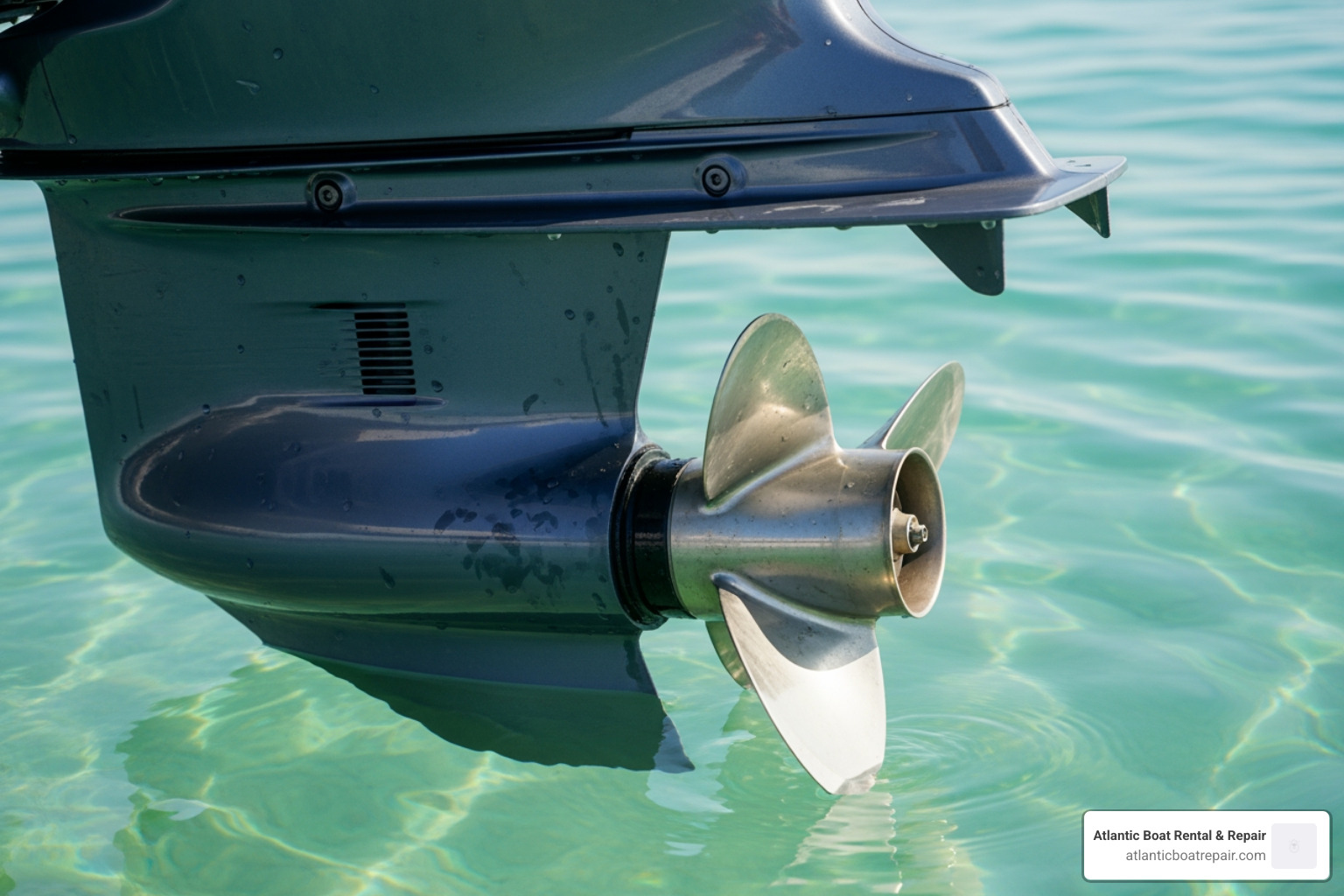
A lower unit oil change keeps your outboard motor's gears and bearings properly lubricated, preventing costly damage and ensuring reliable performance on the water.
Quick Answer: How to Change Lower Unit Oil
- Drain - Remove the lower drain plug, then the upper vent plug, and let old oil drain completely
- Inspect - Check the drained oil for water (milky appearance) or metal chunks indicating problems
- Refill - Pump new marine-grade gear lube through the bottom hole until it flows from the top
- Seal - Replace both plugs with new gaskets, starting with the top plug first
- Schedule - Change every 100 hours of use or annually, whichever comes first
Your lower unit houses the gears and bearings that transfer power from your engine to the propeller. These components operate under extreme pressure in a harsh saltwater or freshwater environment. The oil inside does three critical jobs: it lubricates moving parts to reduce friction, helps dissipate heat, and prevents corrosion.
When you neglect this simple maintenance task, water can seep past worn seals and contaminate the oil. Metal shavings accumulate. Gears grind against each other without proper lubrication. What starts as a $20 DIY oil change can quickly escalate into a $2,000+ lower unit rebuild or replacement.
The good news? Changing your lower unit oil takes about 30 minutes, requires minimal tools, and can save you from catastrophic engine failure. Whether you're a first-time boat owner or a seasoned captain, this guide walks you through every step of the process.
Gearing Up: Tools, Supplies, and the Right Lube
Before we dive into the nitty-gritty of the lower unit oil change, let's make sure we have everything we need. A little preparation goes a long way in making this task quick, clean, and hassle-free. Think of it like packing for a fishing trip – you wouldn't leave without your tackle box, right? The same goes for boat maintenance. Always consult your outboard's owner's manual; it's your ultimate guide for specific oil capacities, torque specifications, and any unique requirements for your model, whether you're boating in Plymouth, Kingston, or Duxbury. Safety first, always!
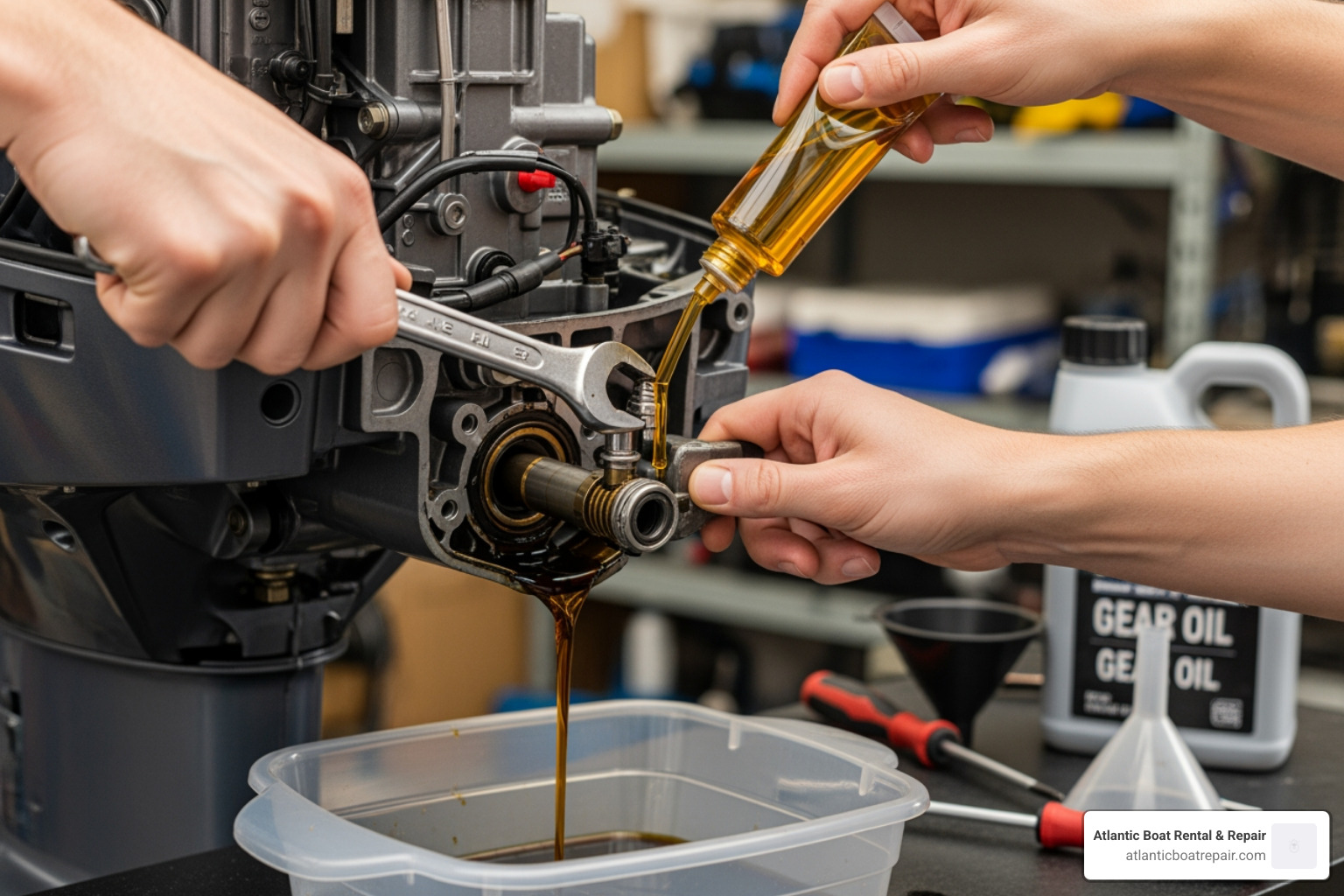
Essential Tools and Supplies for a Smooth Oil Change
Here's a checklist of what we'll need for our lower unit oil change:
- Large Flat-Head Screwdriver: Many drain and vent plugs are designed for a large flat-head screwdriver. Ensure it fits snugly to prevent stripping the screw head. Some models might require an Allen wrench or a specific wrench size, so double-check your manual.
- Wrench Set: A basic set of wrenches can be useful for any unexpected needs, though often not strictly required for the plugs themselves.
- Drain Pan: A clean, appropriately sized pan to catch the old oil. We want to be good stewards of our beautiful Massachusetts waterways, so no spills!
- Lower Unit Oil Pump with Adapter: This is a game-changer! These pumps screw directly onto the oil bottle and come with an adapter fitting for your lower unit's drain hole. They typically cost under $20 and make refilling a breeze.
- Clean Rags: Lots of them. Oil changes can get a little messy, even when we're careful.
- Disposable Gloves: Keep our hands clean and protect against any potential skin irritation from the oil.
- New Drain Plug Gaskets/Seals: This is crucial. Every time we remove the drain and vent plugs, we should replace the small O-rings or sealing washers. These usually come in packs for under $10 and are vital for preventing leaks and water intrusion. If we skip this, we're basically inviting trouble!
Choosing the Correct Lower Unit Oil
Just like your car needs specific engine oil, your outboard's lower unit demands particular gear lube. This isn't a place to cut corners or use whatever's lying around the garage.
- Marine-Grade Gear Lube: Always opt for oil specifically designed for marine lower units. This oil is formulated to handle the unique stresses of gears operating under water, including potential water contamination and extreme pressure.
- API GL-5 Rating: This rating indicates the oil is suitable for hypoid gears operating under severe conditions, which perfectly describes what's going on inside your lower unit.
- SAE 80W-90 Weight: This is a common viscosity grade for most outboards. However, always confirm the recommended weight in your owner's manual, as some manufacturers might specify different viscosities for certain models or operating temperatures.
- Manufacturer Recommendations: The safest choice is always to use the type and brand of oil recommended by your engine manufacturer. Brands like Mercury, Yamaha, Quicksilver, Johnson, and Lucas all offer marine-grade lower unit oils. While prices vary (e.g., Mercury $23.81-$29.99, Yamaha $19.17, Johnson $15.43), this is a small investment compared to the cost of repairs.
- Synthetic vs. Conventional Oil: While conventional oils meet manufacturer specifications, synthetic marine gear lubes can offer improved protection, especially in extreme conditions or for high-performance engines. They often provide better heat dissipation and film strength. However, ensure any synthetic oil still meets the API GL-5 and correct SAE weight requirements for your outboard.
- Do Not Use Automotive Oil: This is a big no-no. Automotive gear oil lacks the specific additives and properties needed to withstand the harsh marine environment and protect against water intrusion. Using it can risk damaging your engine or even voiding your warranty.
For more in-depth information on keeping your boat's engine in top shape, including routine maintenance beyond just oil changes, we encourage you to explore our More about outboard maintenance section.
Your Step-by-Step Guide to a Lower Unit Oil Change
Now that we've gathered our supplies and chosen the right lube, let's get our hands (gloved, of course!) dirty. This process is surprisingly straightforward, and with our guidance, you'll be a pro in no time, ready to tackle the waters of Bourne, Sandwich, and beyond.
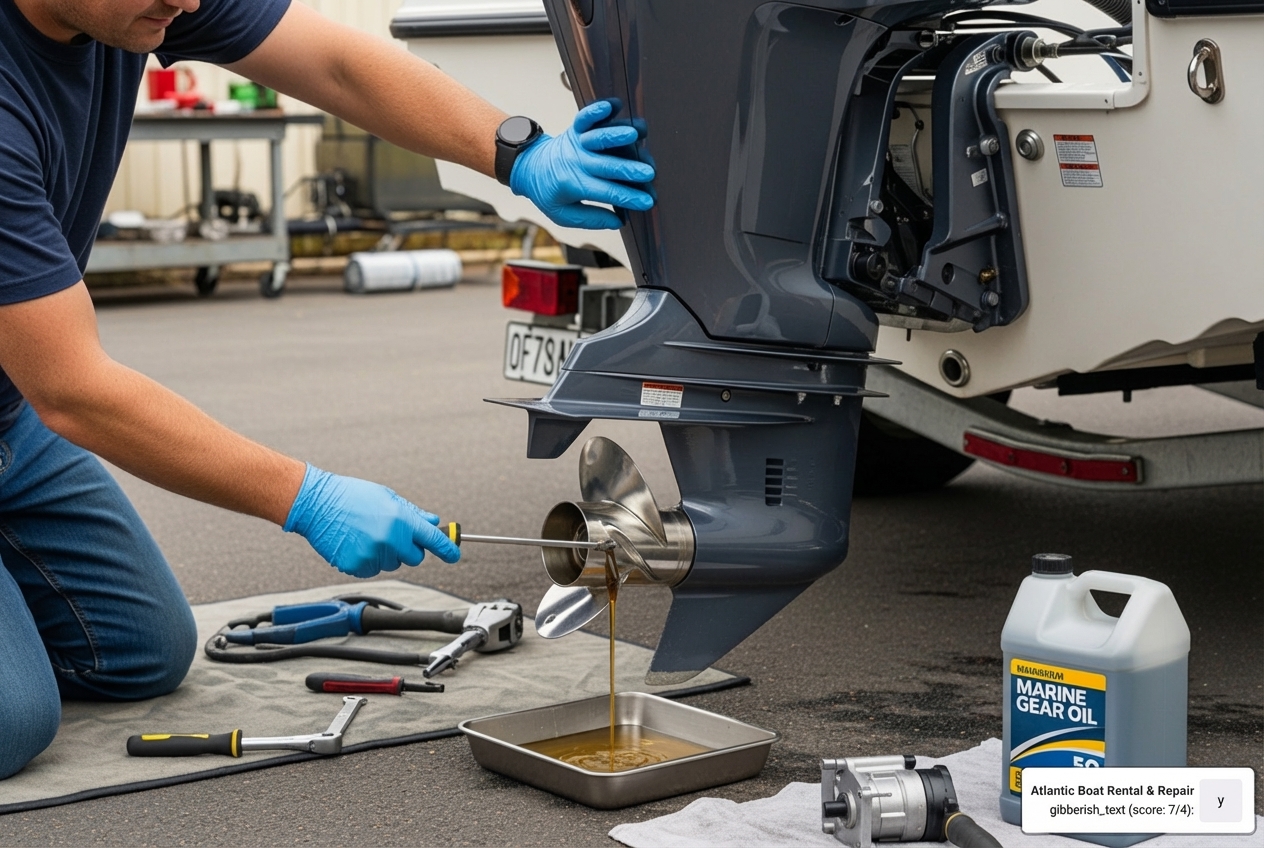
Step 1: Draining the Old Oil
- Vertical Engine Position: First things first, ensure your outboard motor is in a vertical, upright position. If it's tilted, the oil won't drain completely, and we want every last drop of that old, potentially contaminated, oil out.
- Place Drain Pan: Position your clean drain pan directly beneath the lower unit. Make sure it's large enough to hold all the old oil without overflowing.
- Remove Lower Drain Plug First: Using your large flat-head screwdriver (or appropriate tool), carefully remove the lower drain plug. This plug is often magnetic, designed to catch fine metal filings, so pay attention to its tip as you remove it. Be ready for a small gush of oil!
- Remove Upper Vent Plug: Next, remove the upper vent plug. This is crucial because it allows air to enter the lower unit, breaking the vacuum and letting the old oil drain much faster and more completely. If you remove the top plug first, the oil will drain slowly.
- Allow Oil to Drain Completely: Let the oil drain for at least 5-10 minutes, though we often recommend allowing it to drain for an hour or more, especially if you have other maintenance tasks to do. This ensures maximum drainage. Use this time wisely – perhaps grab a refreshing beverage (non-alcoholic, of course, we're working with machinery!).
- Inspect Magnetic Drain Plug Tip: While the oil is draining, take a close look at the tip of the magnetic drain plug. This is a critical diagnostic step that tells us a lot about the health of our lower unit.
Step 2: Inspecting for Trouble
This step is where we become marine detectives. The appearance of the drained oil and the condition of the magnetic drain plug can reveal potential issues that need our attention.
- Milky or Creamy Color: If the oil draining out looks milky white or creamy, it's a clear sign that water has contaminated your gearcase. This is often caused by a leaky seal, perhaps from fishing line wrapped around the prop shaft or simply from age and wear. If you see milky oil, do not proceed with refilling until the source of the water intrusion is identified and repaired by a professional. Continuing to operate with water in the lower unit will lead to severe damage.
- Gray Color: Gray oil indicates a more serious problem, often suggesting some kind of failure in the gears or a bearing. This means metal is grinding against metal, creating fine particles that discolor the oil. If your oil is gray, it's time to seek professional marine mechanic assistance.
- Metal Chunks vs. Fine Filings: Magnetic drain plug? It's doing its job by collecting metal.
- Fine Filings: A small amount of very fine, almost paste-like metal filings on the magnet is generally considered normal wear. Think of it like dust in your house – it happens.
- Metal Chunks or Excessive Shavings: If the magnet is covered in noticeable metal chunks, flakes, or is almost completely caked with thick metal shavings, this is a red flag. It indicates significant internal wear or damage to the gears or bearings. In this case, we strongly recommend bringing your outboard to us at Atlantic Boat Rental & Repair for a thorough inspection. We're experts in precision diagnostics and can rebuild your lower unit to "0" time specifications, ensuring new-like performance and reliability.
Step 3: Refilling with Fresh Lube
Now for the satisfying part: introducing fresh, clean oil to protect our gears!
- Attach Pump to Bottom Hole: Once all the old oil has drained, and we've inspected it, screw the adapter fitting of your lower unit oil pump into the bottom drain hole. Make sure it's snug to prevent leaks.
- Pump Upwards to Prevent Air Pockets: Begin slowly pumping the new gear lube into the lower unit through the bottom hole. Filling from the bottom pushes any air pockets upwards and out through the open vent hole, ensuring a complete fill. If we tried to fill from the top, air would get trapped, leading to an incomplete fill and potential damage.
- Fill Until Lube Flows from Top Vent Hole: Continue pumping until the fresh gear lube begins to trickle out of the top vent hole, free of any air bubbles. This tells us the lower unit is completely full.
- Install Top Vent Plug with New Gasket: While the oil is still trickling out of the top hole, quickly install a new gasket (O-ring or sealing washer) onto the upper vent plug and screw it back in. Hand-tighten it initially, then use your tool to snug it down to the manufacturer's specified torque. Using a new gasket here is non-negotiable for preventing leaks.
- Quickly Remove Pump and Install Bottom Drain Plug: With the top plug secured, rapidly remove the pump adapter from the bottom hole. Be ready for a small amount of oil to escape – that's normal. Immediately install a new gasket onto the lower drain plug and screw it back into place. Hand-tighten, then torque it down. This quick swap minimizes oil loss and ensures the unit remains sealed.
After the Change: Best Practices and Next Steps
We've done it! Our outboard's lower unit is now happily swimming in fresh, clean oil. But our job isn't quite finished. A few final checks will ensure everything is buttoned up correctly and ready for our next adventure on the water.
- Final Checks: Double-check that both drain and vent plugs are securely tightened. Don't overtighten, as this can strip threads, but ensure they're snug enough to prevent leaks.
- Wiping Down the Unit: Use those clean rags to wipe off any spilled oil from the lower unit. A clean lower unit makes it easier to spot any potential leaks later.
- Checking for Leaks: Over the next day or two, keep an eye on the lower unit for any signs of fresh oil drips. If you see any, recheck the tightness of the plugs and ensure the new gaskets are properly seated.
How Often Should You Perform a Lower Unit Oil Change?
This is a common question, and the answer is crucial for the longevity of your outboard. Most sterndrive and outboard manufacturers, including those popular in our Massachusetts boating communities, advise us to change the gearcase oil in our lower unit every 100 hours or once a year, whichever comes first.
- 100-Hour Rule: If you're an avid boater, racking up more than 100 hours on the water during the season, we should be changing our lower unit oil every 100 operating hours. This is similar to how cars need oil changes every few thousand miles; your outboard has its own "mileage" markers.
- Annually at Minimum: Even if we only use our boats occasionally and don't hit that 100-hour mark, a lower unit oil change should be performed at least once a year. This is especially important because oil can degrade over time, absorb moisture, and its protective additives can break down, regardless of how many hours are logged.
- Pre-Winterization Maintenance: For those of us in Plymouth, Kingston, or any of our colder Massachusetts towns, performing the lower unit oil change right before we store our boat for winter is a best practice. This ensures any accumulated water or contaminants are removed before freezing temperatures can cause damage to the internal components.
- Saltwater vs. Freshwater Use: While the frequency guidelines are generally universal, outboards used predominantly in saltwater environments might benefit from more vigilant checks due to the corrosive nature of salt and potential for more rapid seal degradation.
Gear lube is cheap compared to a lower unit rebuild. This simple, regular maintenance is truly the best insurance for your outboard.
Proper Disposal and When to Call a Pro
Environmental responsibility is key. We love our oceans and lakes, and improper disposal of used oil harms them.
- Recycling Used Oil: We must properly dispose of our old oil by taking it to an oil recycling center. For information on how and where to do this, you can consult the EPA's guide on recycling used oil. Most auto parts stores or "quick lube" service stations in our local areas of Bourne, Sandwich, and surrounding towns will accept used oil. Check with your local municipality or waste disposal facility for guidelines specific to your town.
- Signs of Major Issues: While we encourage DIY maintenance, it's also important to know when to call in the experts. If, during our lower unit oil change, we noticed:
- Significant metal chunks or excessive shavings on the magnetic drain plug.
- Milky or gray oil, indicating water intrusion or gear/bearing failure.
- Difficulty removing plugs, suggesting galvanic corrosion or stripped threads.
- Any other unusual findings that make us scratch our heads.
- When to Seek Professional Help: These are all signs that our lower unit needs professional attention. At Atlantic Boat Rental & Repair, we specialize in diagnosing and repairing marine engines. Our team provides superior precision and rigorous testing, often exceeding manufacturer specifications, to get your outboard running like new. Don't hesitate to reach out if you encounter anything concerning. You can Request a Quote directly from us.
Frequently Asked Questions
We know you might have a few more questions bubbling up about your lower unit oil change. Let's tackle some of the most common ones.
What are the consequences of not changing lower unit oil?
Neglecting this vital maintenance task can lead to a cascade of problems, each more expensive than the last:
- Increased Friction and Heat: Old, degraded oil loses its lubricating properties. This causes gears and bearings to grind against each other, generating excessive friction and heat. Think of it like trying to run a race without shoes – painful and damaging!
- Premature Gear and Bearing Wear: The constant friction and heat accelerate the wear on these critical components. Over time, this leads to play in the gears, noisy operation, and ultimately, failure.
- Corrosion from Water Contamination: If seals fail and water enters the lower unit, it mixes with the oil, forming a milky emulsion that offers very little protection. Water also directly corrodes metal parts, especially in a saltwater environment, leading to rust and pitting.
- Catastrophic Lower Unit Failure: Without proper lubrication and with corrosion setting in, the gears can seize, or the bearings can fail completely. This often results in a "locked up" lower unit, rendering your outboard useless and requiring a complete rebuild or replacement. As we've mentioned, what starts as a simple $20 oil change can quickly turn into a multi-thousand-dollar repair bill.
How do I check the oil level between changes?
It's a good practice to periodically check your lower unit oil level, especially if you suspect a leak or before a long trip.
- Remove Upper Vent Plug: With the outboard in a vertical position, remove only the upper vent plug.
- Oil Level Should Be at the Bottom of the Plug Hole: The oil level should be right at the bottom edge of this hole. If no oil comes out, or if you can't see it, it's low.
- Use a Zip Tie or Wire to Check: For a more precise check, you can gently insert a small piece of clean wire or a zip tie into the top hole for about an inch, then withdraw it. If there's oil on the wire, your level is good.
- Topping Off Procedure: If the oil level is low, you can top it off. Re-install the top plug temporarily. Remove the bottom drain plug and insert your oil pump. Then, remove the top plug again to release the vacuum. Pump oil in through the bottom until it flows from the top, then quickly replace both plugs with new gaskets, starting with the top.
What is the cost of a DIY vs. professional lower unit oil change?
Let's break down the costs so you can make an informed decision for your boat in Plymouth, Duxbury, or wherever your adventures take you.
- DIY Cost Breakdown:
- Lube Cost: A quart of marine-grade lower unit oil typically ranges from $15 to $30 (e.g., Johnson at $15.43, Yamaha at $19.17, Mercury at $23.81-$29.99). Most smaller outboards will only need one quart.
- One-Time Pump Purchase: A lower unit oil pump is a one-time investment, usually under $20.
- Gasket Cost: A pack of replacement gaskets or O-rings is generally under $10.
- Total DIY Cost: For your first lower unit oil change, you're looking at an initial outlay of around $45-$60. Subsequent changes will only cost the price of the oil and gaskets, approximately $25-$40. This is a very inexpensive form of preventative maintenance.
- Professional Service Cost:
- The cost of having a mechanic handle your lower unit oil change will entirely depend on their listed labor costs for the job. Labor rates vary, but even for a quick service like this, you'll incur a shop minimum fee plus the cost of materials.
- While the parts cost might be similar to DIY, the labor will add significantly to the total, often pushing the cost into the $75-$150 range.
- Peace of Mind: For some, the peace of mind that comes from having a certified marine mechanic perform the service is worth the extra cost. They'll also be able to spot other potential issues during the process.
In most cases, performing the lower unit oil change yourself is much more cost-effective. It's a simple task that empowers you to understand your boat better and save money for more fuel or fishing gear!
Conclusion: Protecting Your Investment for Years of Fun
We've journeyed through the ins and outs of a lower unit oil change, from gathering our tools to inspecting the old oil and refilling with fresh lube. This seemingly small, 30-minute task is incredibly significant for the health and longevity of your outboard motor. By regularly changing your lower unit oil, we ensure the vital gears and bearings are properly lubricated, cooled, and protected from corrosion, preventing costly repairs and keeping us on the water.
We hope this guide empowers you to tackle this essential maintenance with confidence. It's a simple, cost-effective way to protect your investment and ensure many more years of trouble-free boating on the beautiful waters of Massachusetts, from Cape Cod to the North Shore.
However, if during your lower unit oil change, you find something concerning – like excessive metal shavings on the drain plug, or oil that's milky with water or gray from gear failure – don't hesitate. These are signs of deeper issues that require expert attention. At Atlantic Boat Rental & Repair, we specialize in "0" time rebuilt outboard engines, offering superior precision and rigorous testing that goes beyond manufacturer specifications. We provide new-like performance and reliability, giving you complete peace of mind.
For any major issues, or if you simply prefer to leave the wrenching to the professionals, we're here to help. Explore Our Services today and let us keep your outboard running at its absolute best.
Comments
Be the first to comment on this article!