
From Tune-Ups to Winterization: Your Complete Outboard Care Checklist
Why Your Outboard Engine Deserves Regular Attention
Outboard engine maintenance is the difference between reliable days on the water and costly breakdowns that leave you stranded. Here's a quick overview of essential tasks:
- After every trip: Flush with freshwater, check water pump output, inspect for leaks.
- Every 50-100 hours or annually: Change engine oil and filter, replace lower unit gear lube, inspect spark plugs.
- Every 100 hours: Replace water pump impeller, change fuel filters, grease all fittings.
- Seasonally: Winterize with fuel stabilizer, fog cylinders, drain cooling system.
Most major manufacturers recommend routine service every 100 hours of operation or at least once a year, whichever comes first. This schedule is based on the harsh reality that outboards operate in punishing environments with constant exposure to water, salt, and UV rays.
The payoff for staying on schedule is significant. Well-maintained outboards often last thousands of hours beyond the typical 1,500-3,000 hour lifespan. Neglecting maintenance doesn't just risk a ruined day on the water—it can shorten your engine's life by years.
This guide walks you through everything from post-trip checks to annual service and winterization. Whether you're a DIY enthusiast or prefer professional help, you'll learn what your outboard needs and when.
Your Essential Outboard Engine Maintenance Schedule
To enjoy the beautiful Massachusetts coastline from Plymouth to Duxbury, your outboard engine must be a dependable companion. Consistent outboard engine maintenance is what keeps your boat reliable, efficient, and ready for every season.
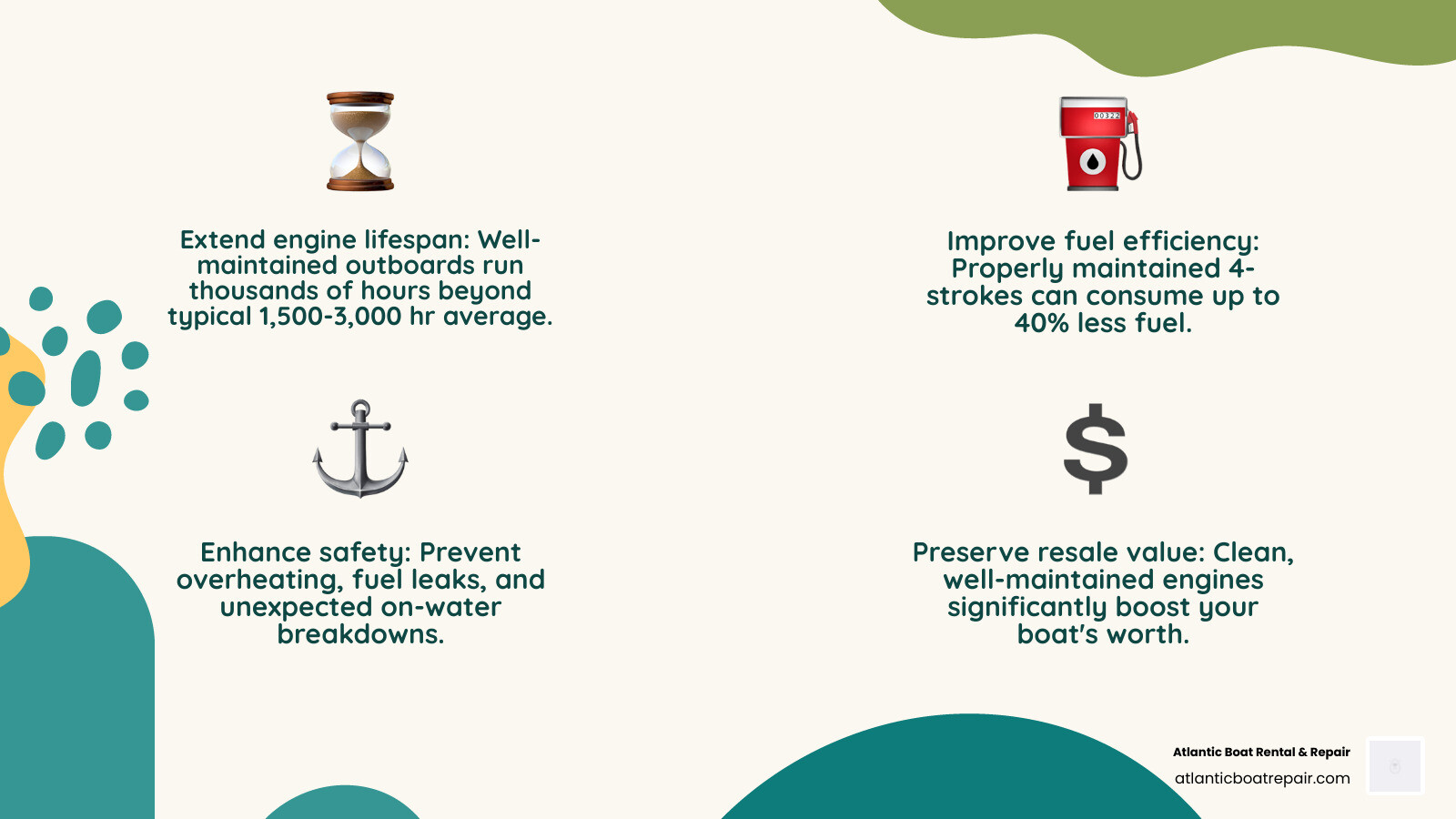
Regular maintenance extends your engine's lifespan significantly. While many outboards last 1,500 to 3,000 hours, well-maintained engines can run for thousands of hours beyond that. Proper care also ensures peak efficiency, saving fuel and money. Most importantly, preventive maintenance catches small issues before they become dangerous failures, preserving your boat's resale value and ensuring safety on the water.
Neglecting maintenance shortens your outboard's life and leads to costly repairs. A simple oil change or impeller inspection today can prevent a full powerhead rebuild tomorrow. The operating environment also influences your needs; the saltwater around Sandwich and Bourne is particularly aggressive, demanding diligent flushing and corrosion prevention.
Most manufacturers recommend service every 100 hours or at least once a year. This "100-hour rule" is a golden standard for addressing wear and tear. For more detailed information, consider exploring our Services, and for a broader technical overview of how outboards work you can also review this outboard motor guide.
How Often to Perform Maintenance
Understanding your outboard's maintenance rhythm is crucial.
- After Every Trip: Flushing your engine with freshwater is non-negotiable, especially in saltwater. Also perform a quick visual inspection for leaks and wipe down the engine cowl.
- 50-Hour Checks: This interim check-up often includes inspecting fuel filters, checking the propeller, and topping off fluids to ensure everything is running smoothly between major services.
- 100-Hour/Annual Service: This comprehensive service is essential. It typically involves changing engine oil and filter (for 4-strokes), replacing lower unit gear lube, inspecting spark plugs, and greasing all fittings.
- Seasonal Tasks: In Massachusetts, winterization in the fall and commissioning in the spring are vital to protect your engine from freezing, corrosion, and fuel degradation during long periods of inactivity.
- Long-Term Storage Prep: If storing your boat for more than a month, fuel stabilization and engine fogging are essential to prevent internal corrosion and fuel system problems.
Always refer to your specific engine's owner's manual for the precise schedule, which may include initial break-in service and more extensive checks at 300 or 500 hours.
The Consequences of Neglect
Ignoring maintenance leads to a cascade of problems. The most direct consequences include:
- Reduced Engine Life: Internal components wear faster, corrosion builds up, and seals degrade, leading to premature engine failure.
- Costly Repairs: A simple missed oil change can lead to a powerhead rebuild. A failed water pump can cause overheating and seize pistons. It's always cheaper to maintain than to repair.
- Ruined Days on the Water: Unexpected breakdowns can turn a perfect day of fishing off Cape Cod into a stressful ordeal.
- Decreased Performance & Safety: A neglected engine will have poor acceleration and fuel economy. It can also create safety hazards like engine fires from fuel leaks or loss of control from unlubricated steering.
Routine Checks and Post-Trip Essentials
After a day on the water, a few quick checks can prevent long-term issues.
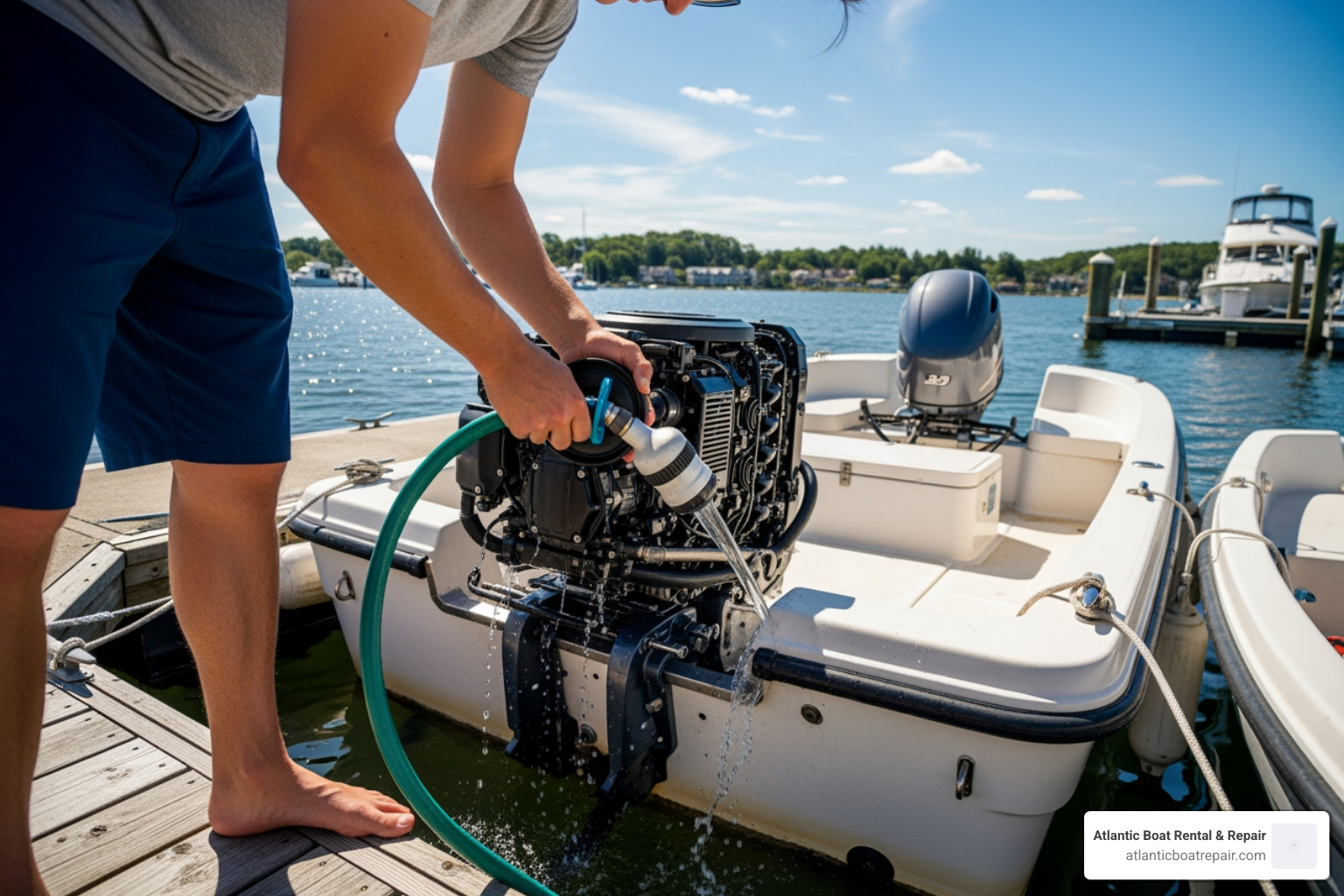
First, flush the engine with freshwater. This is paramount after running in the salty waters around Duxbury or the brackish estuaries near Bourne, as salt deposits can clog cooling passages and cause corrosion.
Next, clean and wax the engine cowling to protect it from UV rays and salt spray, which also helps preserve your boat's resale value. After cleaning, apply an anti-corrosive spray to the powerhead and visible metal components. Also, lubricate throttle, shift, and steering components to ensure smooth operation. Finally, during flushing, check the "tell-tale" stream from the water pump. A strong, steady stream indicates a healthy cooling system.
Best Practices for Flushing Your Outboard
Flushing your outboard is a simple yet critical task. Here's how to do it right:
- Earmuffs vs. Built-in Ports: Most outboards use either "earmuffs" that clamp over the water intake or a dedicated flushing port for a hose connection. Always use the method recommended in your owner's manual.
- Correct Water Pressure: When using earmuffs, avoid full blast from your garden hose. Moderate pressure is usually sufficient, as excessive pressure can damage internal seals.
- Running to Operating Temperature: If using earmuffs (which requires the engine to run), let it idle for 5-10 minutes. This allows the thermostat to open, ensuring freshwater circulates throughout the entire cooling system. Always confirm a strong "tell-tale" stream before starting the engine.
- Checking the "Tell-Tale" Stream: This small stream of water indicates the water pump is working. It should be strong and steady. If it's weak, intermittent, or absent, shut down the engine immediately, as your water pump impeller could be failing or an outlet could be clogged.
- Running Engine Out of Fuel: For carbureted engines, it's a good practice to disconnect the fuel line after flushing and let the engine run until it stops. This prevents gumming and stale fuel issues. This step is not necessary for EFI engines.
Corrosion Prevention and Management
Corrosion is the silent killer of outboard engines in a marine environment. Proactive steps can keep it at bay.
- Using Anti-Corrosive Spray: After cleaning, spray a marine-grade anti-corrosive lubricant on all exposed metal parts under the cowling, including electrical connections and linkage points.
- Wiping Down the Powerhead: Regularly wipe down the powerhead with a clean cloth to remove salt and moisture that can collect under the cowling.
- Checking and Replacing Sacrificial Anodes: These small zinc or aluminum parts are your engine's first line of defense against galvanic corrosion. They are designed to corrode instead of your engine's vital metal parts. Inspect them regularly and replace them when they are more than 50% corroded.
- Protecting Electrical Connections: Use dielectric grease on electrical connections to seal out moisture and prevent corrosion, ensuring reliable starting.
Key Component Inspection and Care
Beyond post-trip tasks, a deeper dive into specific components ensures long-term reliability. This includes the fuel system, propeller, and lower unit.
The Role of the Fuel System
Your engine's performance hinges on a clean, consistent supply of quality fuel.
- Fuel Quality and Ethanol: Ethanol in modern fuel can absorb water and degrade older rubber components, leading to clogged filters and injectors. Use non-ethanol fuel when possible, or be diligent with additives.
- Fuel Stabilizers: For any storage period, a marine-grade fuel stabilizer is crucial to prevent fuel breakdown and gumming. Run the engine after adding it to circulate the treated fuel.
- Fuel Lines and Primer Bulb: Periodically check fuel lines for cracks or brittleness. A worn fuel line is a fire hazard. Ensure the primer bulb is pliable and not cracked, as this can cause air leaks.
- Fuel-Water Separator: Regularly check and drain the fuel-water separator filter to trap water and debris before it reaches the engine.
For more detailed insights into engine health, we invite you to check out our More info about our engine services page.
Propeller and Lower Unit Health
The propeller and lower unit deserve careful attention.
- Inspecting for Dings and Dents: Even minor prop damage can cause vibration and reduce performance. Regularly inspect for dings or cracks, especially if you boat in shallow areas around Kingston.
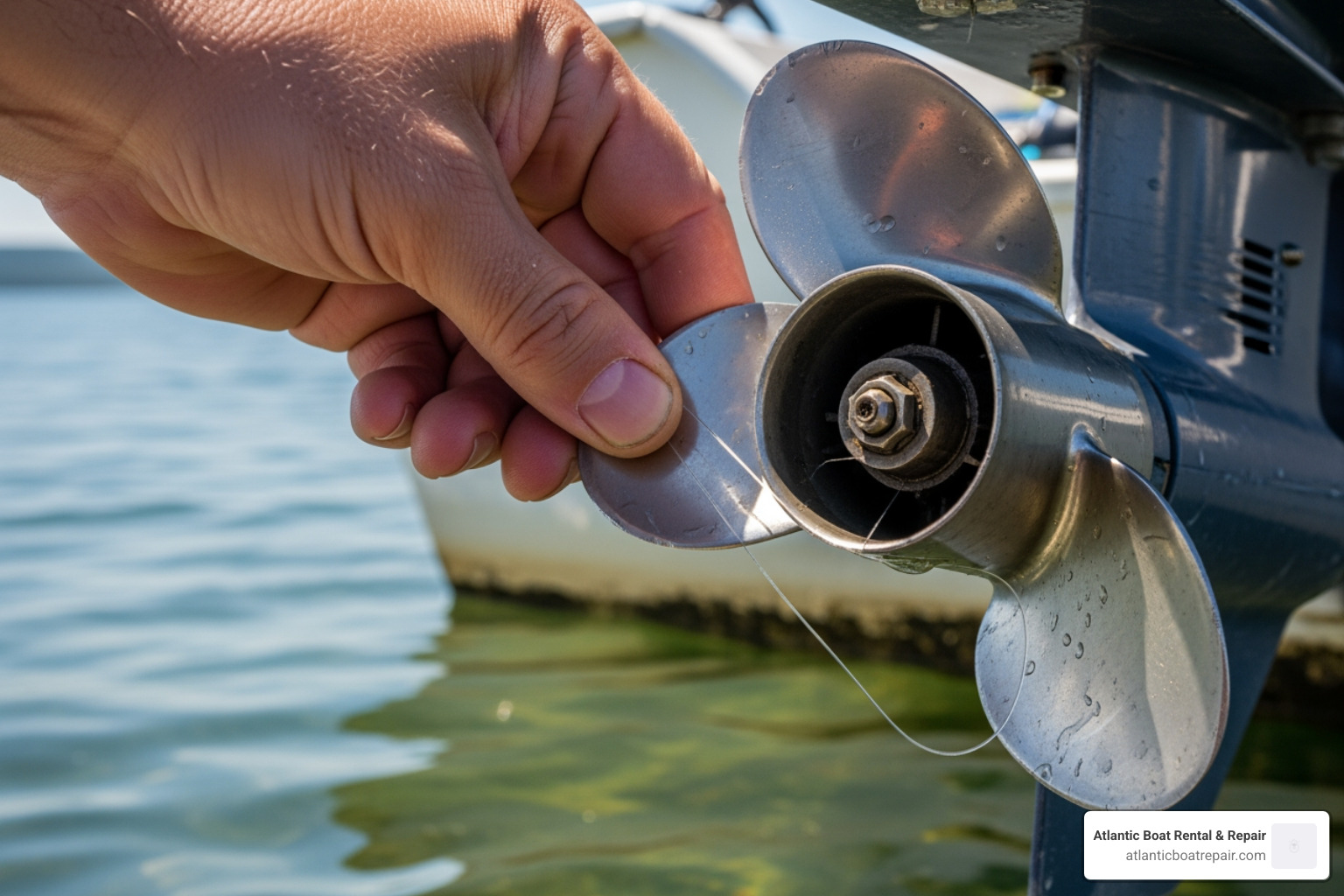
- Checking for Entangled Fishing Line: Fishing line wrapped around the prop shaft can cut into the lower unit seals, allowing water into the gearcase. This leads to expensive repairs.
- Checking Gear Lube for Milky Appearance: When changing your lower unit gear lube annually, check for a milky or frothy look. This indicates water intrusion from a failed seal and requires immediate professional attention.
- Greasing the Prop Shaft: When reinstalling your prop, apply marine-grade grease to the prop shaft to prevent corrosion and make future removal easier.
The Annual 100-Hour Service Deep Dive
The 100-hour service is the cornerstone of comprehensive outboard engine maintenance. Performed annually or every 100 hours, it's a thorough inspection and replacement of wear items that ensures your engine is ready for another season. Ignoring these intervals leads to cumulative wear and preventable failures. Essential parts typically replaced include:
- Engine oil and filter (4-strokes)
- Fuel filters
- Spark plugs
- Water pump impeller and gaskets
- Sacrificial anodes
Essential 100-Hour Outboard Engine Maintenance Tasks
Here are the key items on the 100-hour checklist:
- Changing Engine Oil and Filter (4-strokes): Fresh oil is paramount for proper lubrication, as outboards run at high RPMs and degrade oil quickly. Always use the manufacturer-recommended oil.
- Replacing Lower Unit Gear Lube: This protects the critical gears in your lower unit. Replace it annually and inspect the old lube for a milky appearance, which signals water intrusion.
- Replacing the Water Pump Impeller: This rubber part is crucial for cooling and is a common wear item. A failing impeller can lead to catastrophic engine overheating.
- Inspecting/Replacing Spark Plugs: Clean, properly gapped spark plugs ensure efficient combustion and smooth operation. Replace them annually or as needed.
- Replacing Fuel Filters: Clogged filters restrict fuel flow and cause performance issues. Replace them annually to maintain clean fuel delivery.
- Greasing All Fittings: Use marine-grade grease on all fittings for the trim-and-tilt unit, steering, and shift/throttle linkages to prevent corrosion and ensure smooth control.
Advanced Checks: Thermostat and Leakdown Test
While many 100-hour tasks are DIY-friendly, some advanced checks are best left to professionals.
- Inspecting or Replacing the Thermostat: The thermostat regulates engine temperature. A stuck thermostat can cause the engine to run too cold or, worse, overheat. Annual inspection is a good idea.
- Understanding the Engine Leakdown Test: This diagnostic test assesses the health of your engine's cylinders, valves, and piston rings by measuring air pressure loss. A high leakdown percentage indicates internal wear or damage and is best performed by a qualified marine technician to get a true picture of your engine's internal health.
Winterization: Preparing for Long-Term Storage
As the boating season winds down here in Massachusetts, proper winterization is critical to protect your investment from the harsh New England winter. Freezing temperatures, humidity, and long periods of inactivity can cause significant damage if your engine isn't prepared correctly.
- Fuel Stabilization: This is your first line of defense against stale fuel. Add a marine-grade fuel stabilizer to your fuel tank, then run the engine for 10-15 minutes to ensure the treated fuel circulates throughout the entire fuel system, including the fuel lines and injectors/carburetors. This prevents fuel breakdown and gumming during storage.
- Fogging the Engine Cylinders: For both 2-stroke and 4-stroke engines, fogging oil protects the internal cylinder walls and piston rings from rust and corrosion that can occur due to condensation during storage. Remove the spark plugs, spray fogging oil into each cylinder, and briefly turn the engine over by hand or with the starter (without allowing it to start) to distribute the oil. Replace with new spark plugs afterwards.
- Draining the Cooling System: This step is absolutely critical in our climate to prevent water from freezing and cracking the engine block or components. For engines with a freshwater cooling system, drain the system and refill it with a marine-specific antifreeze. For raw water systems, ensure all water is flushed out or displaced with non-toxic marine antifreeze according to manufacturer instructions.
- Changing Fluids Before Storage: It's best practice to change your engine oil and lower unit gear lube before winter storage. Used oil contains contaminants and acids that can cause corrosion during long periods of inactivity. Starting the next season with fresh fluids is a smart move.
- Battery Removal and Care: Remove your battery from the boat. Clean the terminals, then store the battery in a cool, dry place. Connect it to a "smart charger" or battery tender, which maintains the battery's charge level without overcharging, ensuring it's ready to go in the spring.
- Covering the Engine Properly: Once all other steps are complete, clean and wax the engine cowling. Then, use a breathable, waterproof engine cover to protect it from moisture, dust, and ice accumulation throughout the winter.
DIY vs. Professional Servicing
Deciding what outboard engine maintenance tasks to tackle yourself versus leaving to pros depends on your comfort, tools, and the job's complexity. Many routine tasks are DIY-friendly, while others need specialized knowledge.
| DIY Outboard Maintenance Tasks | Professional Service Tasks |
|---|---|
| Flushing the engine | Internal engine diagnostics (e.g., leakdown test) |
| Cleaning and waxing the cowling | Valve adjustments |
| Visual inspections (leaks, prop) | Complex electrical repairs |
| Fuel treatment and stabilization | Rebuilding carburetors or injectors |
| Checking/replacing sacrificial anodes | Advanced cooling system repairs |
| Greasing fittings | Lower unit seal replacement |
| Propeller inspection/swapping | Engine mounting and alignment |
| Topping off fluids | Warranty-related service |
DIY Outboard Engine Maintenance You Can Do
With basic tools and guidance, you can confidently perform many routine tasks:
- Flushing: Simple and essential after every trip.
- Cleaning and Waxing: Protects the finish and is easy to do.
- Visual Inspections: A quick habit that spots leaks, loose connections, or wear.
- Fuel Treatment: Adding stabilizer is a simple pour-and-run process.
- Propeller Checks: A simple visual task to check for damage or entangled fishing line.
- Checking/Replacing Sacrificial Anodes: Usually a simple wrench job.
- Greasing Fittings: Prevents corrosion and keeps parts moving freely.
Always prioritize safety: ensure the engine is off and the battery is disconnected before working on it.
When to Call an Expert
While DIY maintenance is rewarding, professional expertise is invaluable for complex issues. Call us at Atlantic Boat Rental & Repair if you encounter:
- Engine Won't Start: A complex electrical, fuel, or ignition problem may require diagnostic tools.
- Overheating Alarms: Persistent overheating signals a deeper problem with the water pump, thermostat, or cooling passages.
- Significant Power Loss or Strange Noises: Sudden performance drops, vibration, or unusual noises warrant immediate professional inspection.
- Water in Gear Lube: Milky gear lube means water has entered the lower unit, requiring professional seal repair to prevent costly gear damage.
- Complex Diagnostics: Persistent rough idling, misfires, or stalling often require specialized computer diagnostics.
At Atlantic Boat Rental & Repair, we specialize in precise diagnostics and service that often exceeds manufacturer specifications. For complex issues or annual servicing, explore our professional outboard services.
Frequently Asked Questions about Outboard Maintenance
Here are answers to some of the most common questions we hear from boaters in the Kingston and Duxbury areas.
Why does my outboard stall at high speed?
This frustrating problem is almost always related to a fuel delivery issue. Here's a quick troubleshooting guide:
- Check Fuel Tank Vent: A blocked vent can create a vacuum, starving the engine of fuel.
- Inspect Fuel Lines and Primer Bulb: Look for cracks, kinks, or a hardened primer bulb, which can cause air leaks.
- Clean or Replace Fuel Filters: Clogged filters are a frequent culprit, restricting fuel flow at higher RPMs.
- Clogged Carburetors or Injectors: Gumming from old fuel can restrict flow inside carburetors or fuel injectors.
- Weak Fuel Pump: A failing pump may not supply enough fuel pressure at high speeds.
How do I change the oil in a 2-stroke outboard?
You don't "change" the oil in a 2-stroke like you do in a 4-stroke. Two-stroke engines burn oil with the fuel.
- Mixed with Gasoline: For many older 2-strokes, oil is pre-mixed with gasoline in the fuel tank.
- Injected Automatically: Most modern 2-stroke outboards have a separate oil reservoir and an injection system that automatically mixes oil with the fuel.
For a 2-stroke, your main oil task is to always ensure the oil reservoir is full with the manufacturer-recommended 2-stroke oil. There is no crankcase oil to change.
What are the signs of a failing water pump?
A healthy water pump is vital for cooling. Watch for these warning signs:
- Weak or No "Tell-Tale" Stream: This is the most obvious sign the pump isn't circulating coolant.
- Engine Overheating Alarm: Do not ignore this warning.
- Steam from the Engine: Visible steam is a clear indicator of severe overheating.
- Excessively Hot Water Stream: The tell-tale stream should be warm, not scalding hot.
If you notice these signs, shut down your engine immediately to prevent damage. The cause is often a worn-out rubber impeller that needs replacement.
Conclusion
From the calm waters of Sandwich to the busy docks of Bourne, consistent outboard engine maintenance is the backbone of a great boating experience. We've seen how routine care, from simple post-trip flushing to comprehensive annual services and meticulous winterization, extends engine life, improves fuel efficiency, improves safety, and preserves your boat's resale value. Neglecting these tasks, on the other hand, leads to costly repairs, ruined days on the water, and a significantly shortened engine lifespan.
A little TLC today saves you a lot of headache and expense tomorrow. Your outboard is a complex piece of machinery, operating in a demanding environment, and it thrives on consistent attention.
At Atlantic Boat Rental & Repair, we understand the critical role your outboard plays in your time on the water. Our commitment to superior precision and rigorous testing ensures that whether you're looking for a remanufactured engine or professional service, you receive new-like performance and reliability that often exceeds manufacturer standards. For expert diagnostics and service that helps you get the most out of your engine, explore our professional outboard services. We're here to help you enjoy many more seasons of dependable boating.
Comments
Be the first to comment on this article!