
From Prop to Powerhead: Finding the Right Outboard Motor Parts
Why Finding the Right Outboard Engine Parts Matters
Outboard engine parts are the components that keep your boat running reliably. When replacing or repairing parts, it's crucial to get it right. Here are the key categories:
Key Categories of Outboard Engine Parts:
- Powerhead Components - Pistons, gaskets, bearings, cylinders, ignition parts, stators, and spark plugs
- Fuel System Parts - Carburetors, fuel filters, fuel pumps, vapor separator tanks (VST), and fuel lines
- Cooling System Parts - Water pumps, impellers, thermostats, hoses, and anodes
- Lower Unit (Gearcase) - Gears, seals, bearings, and propellers
- Electrical Components - CDI units, trim and tilt systems, rectifiers, and wiring harnesses
Every outboard has a specific model and serial number that dictates which parts fit. Using the wrong part—even if it looks similar—can cause poor performance, damage, or complete engine failure. Identifying the exact part you need is the first step to getting back on the water safely.
Using quality parts that match your engine's specs is often the difference between a short weekend and a full season of reliable boating. Parts designed for harsh marine environments—salt, heat, and vibration—outperform and outlast generic alternatives.
As Ron Cribbie, owner of Atlantic Boat Repair, my decades of marine service experience have shown that correct outboard engine parts prevent costly breakdowns. This guide will walk you through finding, selecting, and maintaining the right parts for your engine.
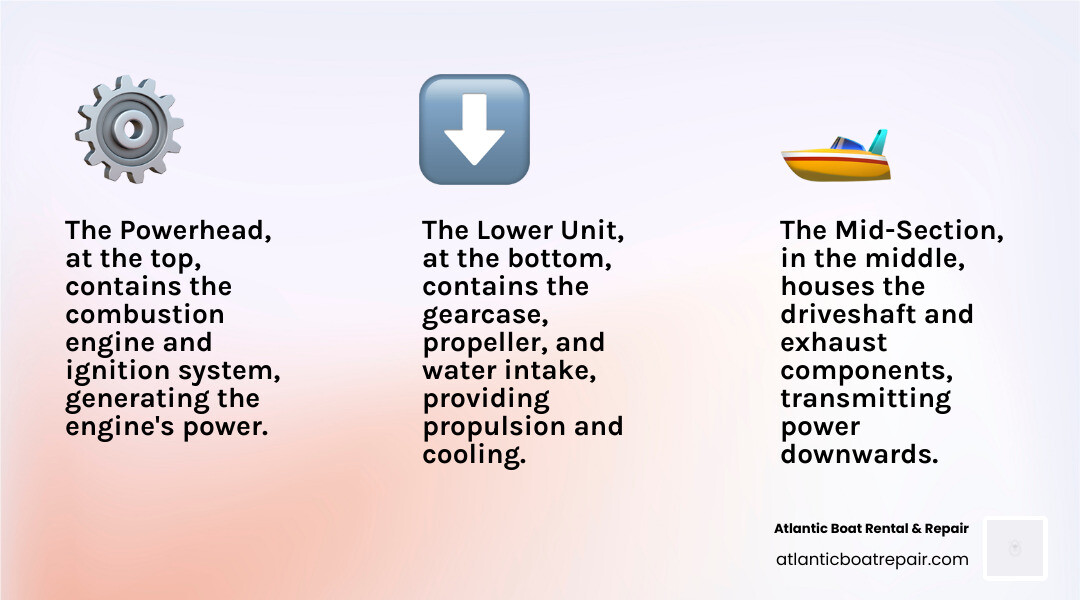
The Anatomy of Your Outboard: Key Components & Common Replacements
Understanding your outboard's interconnected systems and their individual outboard engine parts is crucial for maintenance and troubleshooting. Let's break down the main components.
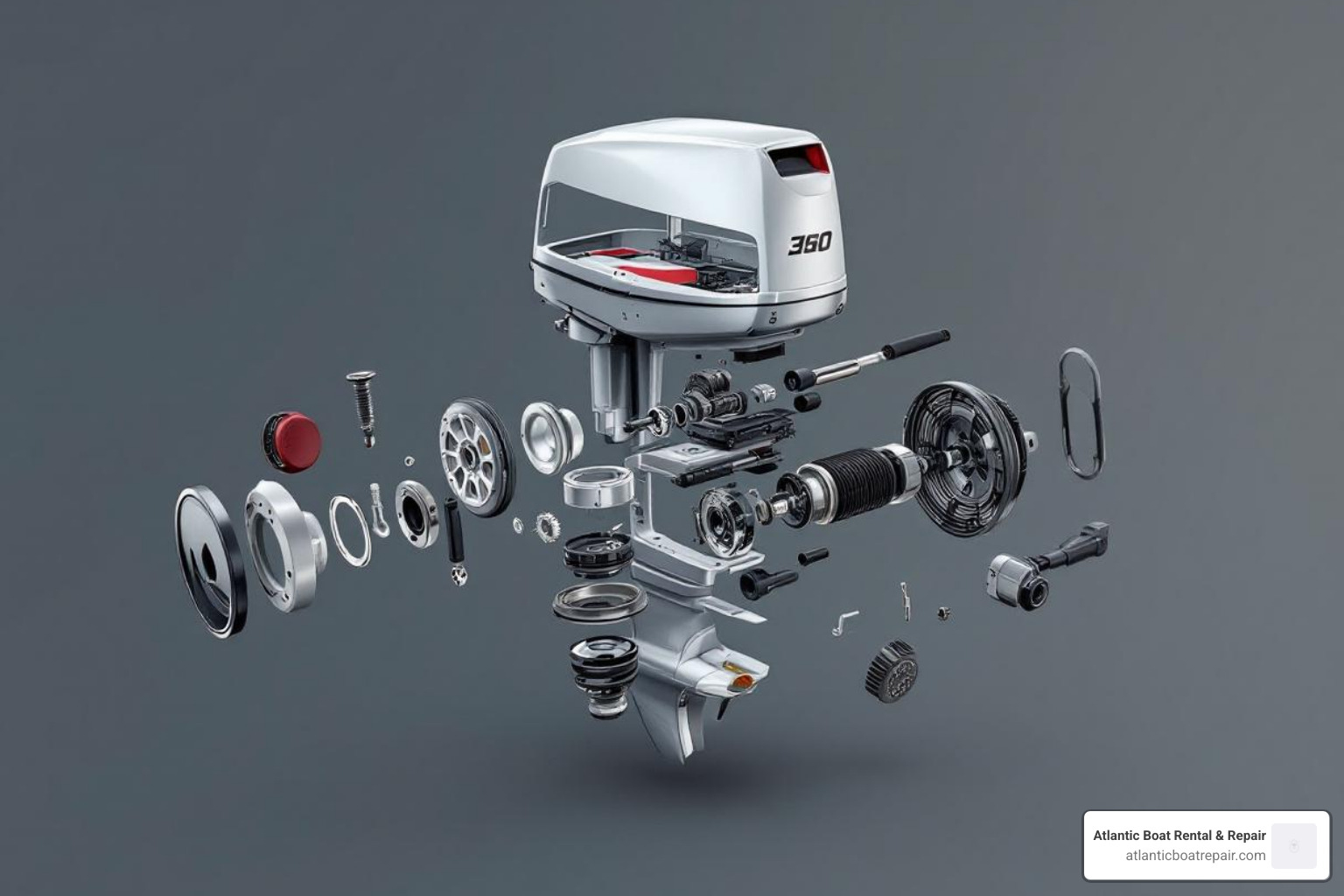
The Powerhead: The Heart of the Engine
The powerhead is the engine block where the combustion process generates power. Key outboard engine parts here include:
- Pistons: Move within cylinders to compress the air-fuel mixture and drive the crankshaft.
- Gaskets: Seal components like the cylinder head to prevent fluid and gas leaks.
- Bearings: Reduce friction and support rotating parts on the crankshaft and connecting rods.
- Cylinders: The chamber where combustion occurs; wear affects engine performance.
- CDI Units (Capacitor Discharge Ignition): Controls ignition timing; a common cause of misfiring or no-start issues.
- Ignition Parts: Coils, igniters, and other parts that create the spark for combustion.
- Stators: Generates AC current to power the ignition and charge the battery.
- Spark Plugs: Deliver the spark to ignite the fuel-air mixture; require regular replacement.
These powerhead components are core to your engine's operation and vital for reliable performance on the waters of Plymouth, Kingston, or anywhere in Massachusetts.
Fuel & Intake System
The fuel system delivers clean fuel to the engine; any hiccup can cause performance issues. Common outboard engine parts include:
- Carburetors: Mix air and fuel for combustion (on older or smaller engines).
- Fuel Filters: Prevent dirt, debris, and water from reaching the engine. Regular replacement is recommended.
- Fuel Pumps: Move fuel from the tank to the engine (mechanical or electric).
- Vapor Separator Tank (VST): On many fuel-injected engines, it prevents fuel vaporization and ensures consistent supply. A dirty VST filter is a common problem.
- Fuel Lines: Transport fuel; can degrade over time, causing leaks or blockages.
- Reeds: Valves in two-stroke engines controlling the air-fuel mixture flow.
If your engine sputters or loses power, the fuel system is the first place to check. Common symptoms of a clogged fuel system include engine sputtering, difficulty starting, loss of power, and a strong fuel odor.
Cooling System
Marine engines generate immense heat, and the cooling system prevents overheating and severe damage. Key outboard engine parts include:
- Water Pump: Circulates water through the engine to cool it.
- Impeller: The rubber heart of the water pump; a wear item that needs regular replacement.
- Thermostat: Regulates engine temperature by controlling water flow.
- Hoses: Carry cooling water throughout the system.
- Anodes (Sacrificial Anodes): Metal pieces (zinc/aluminum) that corrode to protect other metal engine parts.
- Water Pump Repair Kits: Typically include the impeller, gaskets, and seals for a complete overhaul.
A working cooling system is vital, especially on a busy summer day.
The Lower Unit (Gearcase) & Propeller
The submerged lower unit (gearcase) transmits power to the propeller. It's vulnerable to underwater impacts. Crucial outboard engine parts here are:
- Gears: Transmit power and allow for forward, neutral, and reverse.
- Seals: Prevent water from entering the gearcase and oil from leaking out.
- Propeller: Pushes water to create thrust. Minor damage can cause vibration and reduce efficiency.
- Skeg: Protects the propeller from impacts and aids in steering.
- Bearings: Support the drive and propeller shafts within the gearcase.
We often see lower units damaged by underwater obstacles. We also offer a selection of Pre-Owned Inventory and specialize in gearcase repairs, offering a set price regardless of internal damage and a one-year non-commercial (six-month commercial) warranty on rebuilds.
The First Step: Correctly Identifying Your Outboard Engine
Before ordering outboard engine parts, you must accurately identify your engine. Pinpointing the exact model, horsepower, and year is critical because even slight variations use different parts. Using an incorrect component can lead to costly mistakes, wasted time, and engine damage.
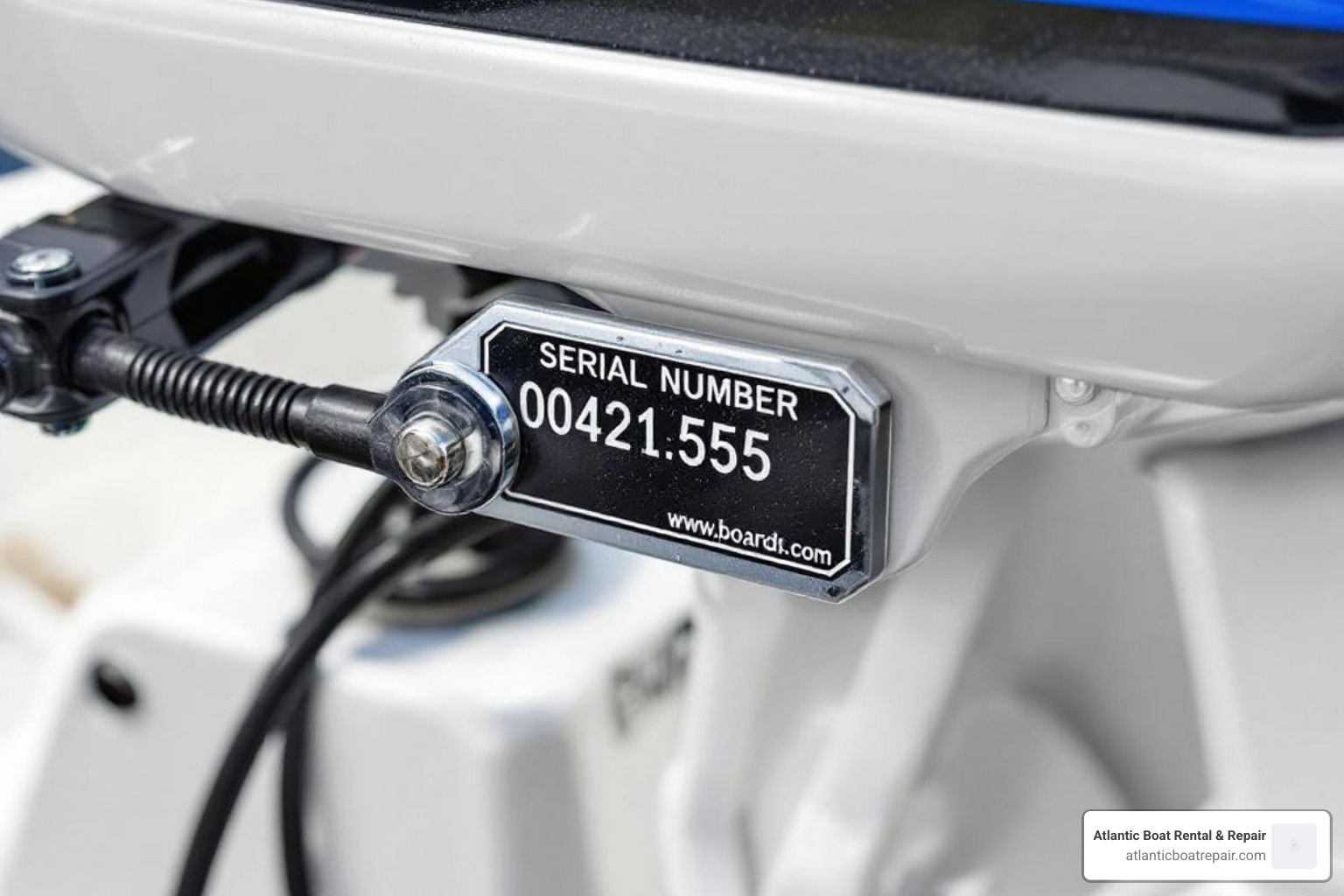
How to Find Your Engine's Model and Serial Number
Your engine's model and serial numbers are its unique identifiers. They are usually on a tag or sticker in one of these common places:
- Clamp Bracket: On the top outside edge of the part that clamps to the boat's transom.
- Swivel Bracket: On top of the bracket that allows the engine to steer, on either the port (left) or starboard (right) side.
- Instruction Plate: On some Mercury outboards, the tag is on the instruction plate between the thumb screws.
Here are some manufacturer-specific locations for major brands we service in Massachusetts:
- Evinrude & Johnson: Look on the CLAMP BRACKET or SWIVEL BRACKET.
- Mercury Outboard: Check the SWIVEL BRACKET or the INSTRUCTION PLATE.
- Mariner Outboard: Often on the CLAMP BRACKET or SWIVEL BRACKET.
- MerCruiser (Inboard/Sterndrive): For the engine, check near the STARTER or on the ROCKER ARM/FLAME ARRESTOR COVER. For the sterndrive, it's on the UPPER DRIVE SHAFT HOUSING.
- Yamaha: Typically on the CLAMP BRACKET or SWIVEL BRACKET.
- Suzuki: Usually on the CLAMP BRACKET. For engines post-2011, the serial number is often used for part identification.
Once you find these numbers, write them down or take a photo. This information is your key to finding the correct outboard engine parts.
Using Schematics to Find the Right Outboard Engine Parts
With your model and serial number, you can use parts schematics and online catalogs for precise identification:
- Online Parts Catalogs: Many manufacturers and suppliers have online catalogs where you enter your model/serial number to browse diagrams of your engine.
- Exploded Diagrams: These detailed illustrations show every individual outboard engine parts of an assembly, with each part numbered for easy identification.
- Part Numbers: After finding the part on a diagram, note its unique part number to order the correct component.
- Cross-referencing: Reputable catalogs will indicate if a part number has been superseded by a newer one.
While online resources are great, sometimes a human touch is needed. If you're unsure, especially with an older engine, don't hesitate to contact us. We can help you steer the complexities of finding the right parts. You can always Contact Atlantic Boat Rental & Repair for Parts Assistance.
OEM vs. Aftermarket Outboard Engine Parts: Making the Right Choice
When replacing outboard engine parts, you have two main options: OEM (Original Equipment Manufacturer) or aftermarket. Understanding the difference is key to making an informed decision.
The Benefits of Genuine OEM Parts
OEM parts are made by your engine's original manufacturer (e.g., a Mercury part for a Mercury engine). We often recommend them for several reasons:
- Guaranteed Fit and Function: Designed to exact factory specifications, OEM parts fit perfectly and function as intended, with no guesswork.
- Factory Specifications: Made with the same materials and quality standards as your engine's original components for optimal performance.
- Durability in Marine Environments: OEM parts are rigorously tested to withstand harsh marine conditions like saltwater, heat, and vibration, ensuring reliability.
- Warranty Protection: Using OEM parts helps maintain your engine's warranty, and the parts themselves often come with their own manufacturer warranty.
For critical components within the powerhead or lower unit, we almost always lean towards OEM for their proven reliability.
Understanding Aftermarket Alternatives
Aftermarket outboard engine parts are made by third-party companies and designed to be compatible with various engines.
- Variable Quality: This is the biggest risk. While some aftermarket parts meet or exceed OEM standards, others are of lesser quality.
- Lower Price Point: Aftermarket parts are generally less expensive, which can be appealing for routine maintenance or older engines.
- Wider Availability: Because multiple companies produce them, aftermarket parts can sometimes be easier to find.
- Potential Compatibility Issues: Slight differences in manufacturing can lead to fitment issues, reduced performance, or premature failure.
Which Should You Choose for Your Outboard Engine Parts?
The decision between OEM and aftermarket balances criticality, cost, and preference. Here's a quick comparison:
| Feature | OEM Parts | Aftermarket Parts |
|---|---|---|
| Fit | Guaranteed precise fit | May have slight variations, potential fitment issues |
| Quality | Meets or exceeds original factory standards | Varies widely, can be high or low quality |
| Price | Generally higher | Generally lower |
| Warranty | Often maintains engine warranty, includes part warranty | May void engine warranty, part warranty varies |
Our Recommendations:
- Critical Components: For internal engine parts (pistons, CDI units, major gears), we strongly recommend OEM outboard engine parts. The precision is worth the investment.
- Maintenance Items: For items like fuel filters, spark plugs, or impellers, quality aftermarket options from a reputable manufacturer can be a cost-effective choice.
- Budget Considerations: If budget is a concern, discuss your options with us. We can help identify where aftermarket is acceptable and where OEM is non-negotiable.
Investing in the right outboard engine parts is investing in your boat's longevity and reliability.
Maintenance and Troubleshooting: Extending the Life of Your Parts
Regular care safeguards the intricate outboard engine parts that power your adventures. Preventative maintenance and timely troubleshooting extend your engine's life and prevent unexpected breakdowns.
Signs Your Outboard Parts Need Attention
Your engine will often signal when something is wrong. Learning to recognize these signs can save you from bigger problems:
- Engine Won't Start: Could be a dead battery, bad starter, clogged fuel filter, or faulty ignition part.
- Sputtering or Stalling: Often points to fuel delivery issues (clogged filters, bad fuel pump) or ignition problems (fouled plugs, failing coils).
- Overheating Alarm: Indicates the engine is too hot, almost always due to a cooling system issue like a worn impeller.
- Unusual Noises (Knocking, Grinding): Knocking can signal internal engine problems, while grinding may indicate lower unit or starter issues. Investigate all strange noises.
- Loss of Power: Struggling to reach normal RPMs can stem from fuel, ignition, or propeller problems.
- Visible Corrosion or Wear: Inspect regularly for rust, leaks, and frayed wires to prevent major failures.
If you notice any of these signs, it's time to investigate or bring your boat to us for a professional diagnosis.
The Impact of a Regular Maintenance Schedule
A consistent maintenance schedule is the most effective way to extend the life of your outboard engine parts. Think of it as a health plan for your engine!
- 100-Hour Service: A critical check-up involving oil and filter changes (4-strokes), spark plug and gear lube replacement, and fuel filter/impeller inspection.
- Annual Service: Crucial even if you don't hit 100 hours. It includes the 100-hour service plus a more thorough inspection of belts, hoses, and electrical systems.
- Seasonal Upkeep (Winterization): Preparing your engine for the off-season in Massachusetts is vital. This involves stabilizing fuel, fogging the engine, and changing fluids to prevent corrosion and freeze damage.
- Fuel System Care: Inspect fuel lines for cracks and replace fuel filters annually. Use a fuel stabilizer during periods of inactivity to protect carburetors or injectors.
Regular maintenance optimizes performance and fuel efficiency. We offer comprehensive Services to keep your engine in top condition.
Basic Troubleshooting for Common Issues
Knowing a few basic troubleshooting steps can help you diagnose a problem or get back to the dock.
- Fuel System Clogs: If the engine sputters, check for fresh fuel and an open tank vent. Then inspect your primary and engine fuel filters, as a clog is a common culprit.
- Ignition Failure: If the engine cranks but won't start, check the spark plugs for damage. If new plugs don't help, the issue may be with the coils or CDI unit, which requires professional diagnosis.
- Cooling System Blockage: If your engine overheats, check the "tell-tale" water stream. If it's weak or absent, the water pump impeller is the likely issue. Also check for a clogged intake screen.
Safety first! Always consult your owner's manual and disconnect the battery before working on your engine.
Frequently Asked Questions about Outboard Motor Parts
We hear a lot of questions about outboard engine parts from boaters in Plymouth, Kingston, and across Massachusetts. Here are some common ones with our expert answers.
How often should I replace my water pump impeller?
As a rule, replace your impeller every 100-200 hours or annually, whichever comes first. Rubber hardens and loses flexibility over time, reducing its effectiveness, even if it looks fine. This preventative measure can save you from major engine damage due to overheating.
Factors that might require more frequent replacement include operating in sandy/silty water or extended periods of disuse, which can cause the rubber to dry out and crack.
Where can I find reliable sources for purchasing parts?
Finding reliable sources for outboard engine parts is crucial for getting high-quality components. Your best options are:
- Authorized Dealers: The top choice for brands like Mercury or Yamaha. They stock genuine OEM parts and have certified technicians who can ensure you get the right part.
- Reputable Online Marine Stores: Many online retailers offer extensive OEM and aftermarket catalogs. Look for good reviews, clear return policies, and helpful customer service.
- Specialized Repair Shops: Independent shops like Atlantic Boat Repair have access to a wide range of parts and can provide expert advice and installation.
Always verify a seller's reputation. Look for businesses that adhere to high industry standards, like those set by the American Boat and Yacht Council (ABYC), to ensure quality and safety. For your convenience, you can explore our selection of Outboard Engine Parts at Atlantic Boat Rental & Repair.
Can I use parts from a different horsepower engine of the same brand?
Generally, no. It's tempting to assume parts are interchangeable between similar horsepower engines of the same brand, but this is rarely the case. Even small variations in design, dimensions, or material specs exist.
Using incorrect outboard engine parts can lead to:
- Poor fitment, causing leaks or wear.
- Reduced engine performance.
- Damage to other components, leading to more costly repairs.
This is why using your engine's exact model and serial number is so important. It ensures every component is engineered for your specific engine, guaranteeing optimal performance and longevity. Don't guess; verify!
Conclusion: Keep Your Engine Running with the Right Parts and Service
Navigating outboard engine parts might seem daunting at first, but with the right knowledge and resources, you can ensure your boat is always ready for the waters of Massachusetts. We've covered the critical steps: understanding your engine's anatomy, accurately identifying your model and serial number, making informed choices between OEM and aftermarket parts, and committing to a regular maintenance schedule.
Investing in quality parts and consistent care isn't just about fixing problems; it's about preventing them, optimizing performance, and safeguarding your boating experiences. A well-maintained engine is a reliable engine, meaning more stress-free days fishing off the coast of Cape Cod or cruising the calm waters near Plymouth.
At Atlantic Boat Rental & Repair, we pride ourselves on providing not just parts, but comprehensive engine solutions and expert care. We understand the precision required for marine engines, and our commitment to exceeding manufacturer specifications ensures that when you choose us, you're choosing performance and reliability that feels new.
Don't let a mystery part or a nagging engine issue keep you from enjoying your time on the water. If you need assistance identifying a part, have questions about maintenance, or require professional service, our team is here to help. Request a Quote today, or for comprehensive engine solutions and expert care, explore all our Atlantic Boat Repair Services. We look forward to helping you keep your outboard running smoothly for years to come!
Comments
Be the first to comment on this article!