
Is Your Motor Humming? A Deep Dive into Tune-Up Services
Why Understanding Your Motor's Tune-Up Needs Matters
A service tune up motor is essential preventative maintenance that inspects, adjusts, and replaces wear-and-tear components to keep your engine at peak performance. Here's what you need to know:
What a Motor Tune-Up Includes:
- Inspection of ignition systems, fuel systems, and filters
- Replacement of spark plugs, air filters, fuel filters, and worn belts
- Fluid checks including oil, coolant, and transmission fluid
- Diagnostic scans to identify potential issues before they become failures
- Performance restoration to maintain original factory specifications
Key Benefits:
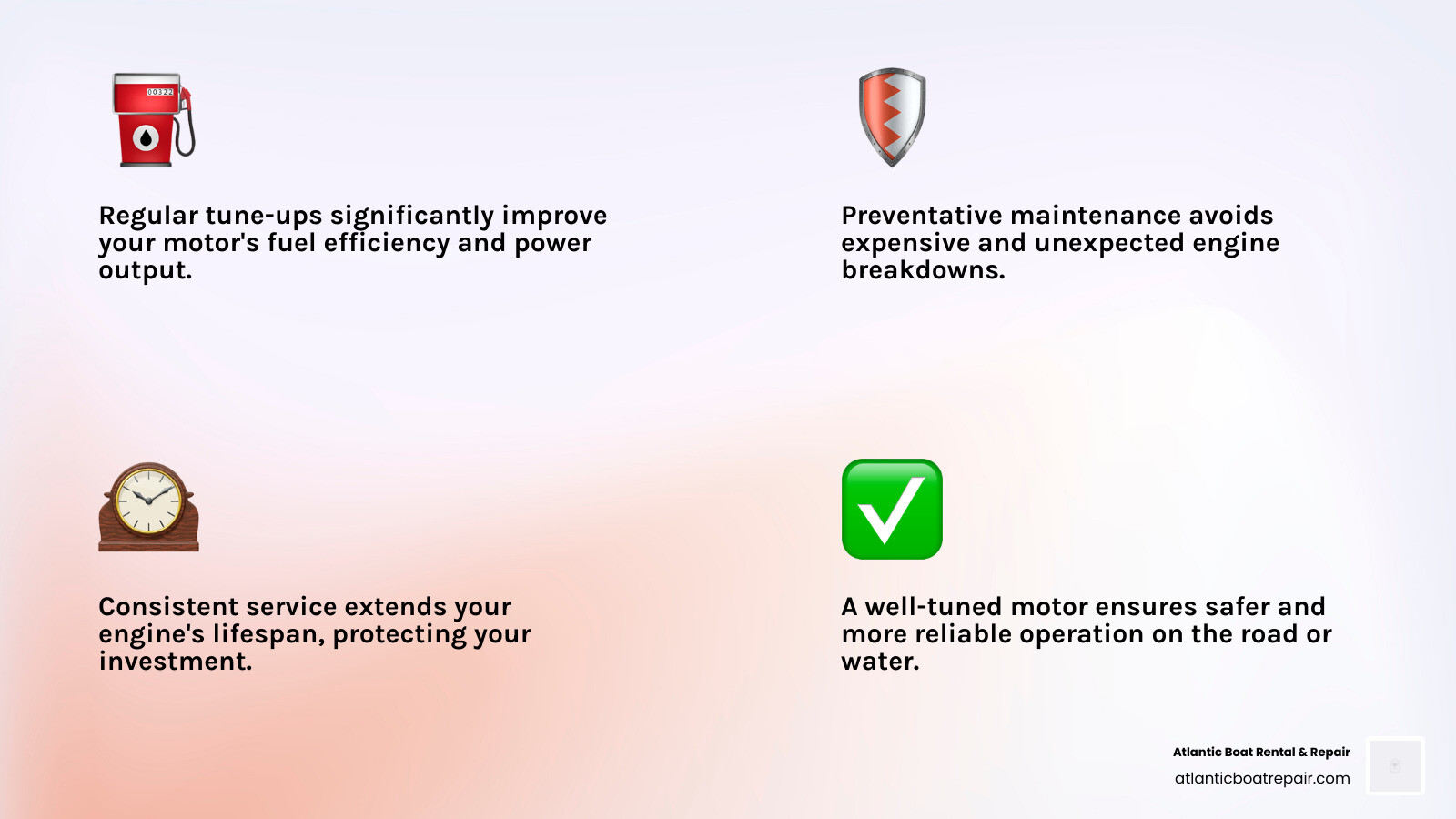
- Improved fuel efficiency and power
- Prevention of costly breakdowns
- Extended engine lifespan
- Safer, more reliable operation
The term "tune-up" has evolved. It originated when engines required frequent manual adjustments to carburetors and ignition timing. Modern motors, especially marine outboards, now rely on electronic systems and computer diagnostics, shifting the focus from mechanical adjustments to systematic inspection and component replacement.
For boat owners, a service tune up motor is even more critical. Marine environments present unique challenges like saltwater corrosion, moisture, and varying loads that accelerate wear on outboard engines. Regular tune-ups catch small issues before they strand you on the water or lead to expensive emergency repairs.
I'm Ron Cribbie, owner of Atlantic Boat Repair. I've spent decades performing service tune up motor procedures on everything from small outboards to complex marine diesel systems. My team understands that proper preventative maintenance is the difference between a reliable vessel and an expensive rebuild.
The Evolution of the Tune-Up: From Carburetors to Computers
The concept of a "tune-up" has changed significantly. In the past, it meant mechanics manually adjusting carburetors, setting breaker points, and timing ignition systems. As highlighted in Hillier's Fundamentals of Motor Vehicle Technology, these mechanical adjustments were crucial for older vehicles (pre-1980s). Their mechanical ignition systems required frequent fine-tuning and replacement of parts like distributor caps and rotors.
As technology advanced, so did motors. Modern vehicles and marine engines now have sophisticated electronic ignition, computer-based fuel injection, and on-board diagnostics (ECU). This shift from mechanical to electronic systems means the traditional tune-up is largely obsolete. Modern engines are designed for longevity and precision, reducing the need for manual tweaking. The focus has moved from adjusting to replacing wear-and-tear parts and using diagnostic tools.
What a Modern Service Tune Up Motor Entails
Today, a service tune up motor is about proactive preventative maintenance and component replacement. Our goal is to ensure reliable operation and a long service life, protecting your investment and reducing the chance of costly repairs.
Here’s what a modern service tune up motor typically involves:
- Preventative Maintenance Focus: The core idea is to catch potential problems before they escalate. This includes routine checks and replacements based on manufacturer recommendations.
- Systematic Inspection: Our technicians perform a thorough inspection of the ignition, fuel, air intake, and fluid systems. This can help us catch early wear, like a failing water pump, before it causes significant damage.
- Replacement of Wear-and-Tear Parts: Components that degrade over time are replaced. These often include spark plugs, air filters, and fuel filters. We ensure these are replaced according to recommended service intervals to maintain performance.
- Diagnostic Scans: We use specialized diagnostic tools to scan for fault codes in the Engine Control Unit (ECU). This allows us to identify issues often before any symptoms appear.
- Less Frequent but More Comprehensive: While older cars needed a tune-up every 25,000 to 50,000 km, modern vehicles can go 80,000 to 160,000 km, and marine motors have specific hour intervals between comprehensive services. When a tune-up is performed, it's a more in-depth service.
Tune-Up vs. Engine Tuning: A Critical Distinction
It's important to clarify the difference between a service tune up motor and engine tuning.
A service tune up motor is about maintenance. It involves inspecting, replacing, and adjusting components to restore the engine to its original factory-specified performance. It ensures all parts work as the manufacturer intended, preventing breakdowns and extending engine life.
Engine tuning, conversely, is about modification. It involves altering an engine's characteristics via ECU software changes or performance parts to achieve power, torque, or responsiveness beyond original specs. This pushes the engine past factory settings for performance, a different goal than maintenance.
At Atlantic Boat Repair, our focus is on comprehensive service tune up motor procedures, ensuring your marine engine operates reliably and efficiently. We aim to provide you with a dependable, long-lasting motor.
Key Signs Your Motor Needs a Tune-Up
Your motor usually gives clues when it needs attention. Paying attention to these signs can prevent a major breakdown and a large repair bill. Here are key indicators your motor might be overdue for a service tune up motor:

- Decreased Fuel Economy: A sudden drop in fuel efficiency is a classic sign your engine isn't burning fuel efficiently. This could be due to worn spark plugs, a clogged air filter, or fuel system issues.
- Stalling or Rough Idling: If your motor sputters, shakes, or stalls while idling, it's a strong signal. This can be caused by dirty fuel injectors, worn spark plugs, or a clogged air filter. In a marine setting, this is particularly unnerving.
- Difficulty Starting: If your motor cranks too long or won't start, it could be a weak battery, damaged ignition coils, or faulty spark plugs.
- Unusual Noises: New or unusual noises like knocking, rattling, or hissing require an inspection. Knocking or rattling, especially when accelerating, can indicate engine or fuel system issues.
- Loss of Power or Slower Acceleration: If your motor feels sluggish or struggles to accelerate, its performance is suffering. Worn spark plugs, clogged filters, or ignition system problems can all reduce power.
- Check Engine Light: This dashboard light signals something is wrong. While it doesn't specify the problem, it means a diagnostic check, often part of a tune-up, is needed.
- Vibrations: Excessive vibrations, especially new ones, can indicate an imbalance or a component that's not working smoothly.
- Increased Emissions or Smoke: For cars, this might mean failed emissions tests. For marine engines, excessive or colored smoke can signify burning oil, a rich fuel mixture, or other internal problems.
If you notice these signs while on the waters of Plymouth, Kingston, Duxbury, Bourne, or Sandwich, don't ignore them. A timely service tune up motor can prevent minor issues from becoming major headaches.
The Comprehensive Service Tune Up Motor Checklist
The goal of a service tune up motor is to ensure your engine runs efficiently, reliably, and safely. This involves inspecting and replacing key components according to manufacturer recommendations. We follow precise guidelines to give your motor the care it deserves.
Ignition System Inspection
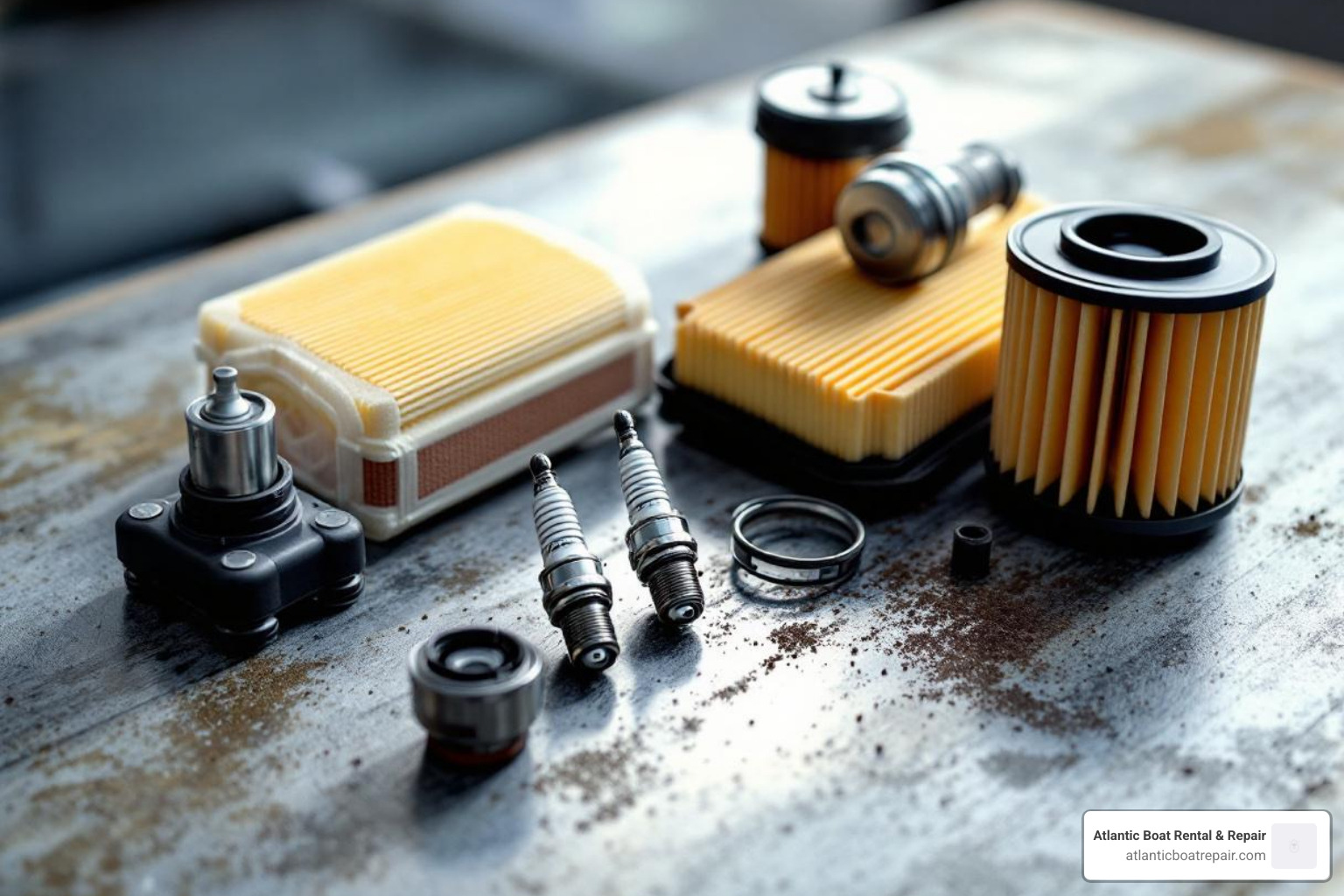
The ignition system is key to starting and running your motor. Without a strong, consistent spark, your engine won't perform optimally.
- Spark Plugs: These ignite the fuel-air mixture. Their tips wear down over time, causing misfires and reduced performance. We inspect and typically replace them. For cars, replacement is usually every 50,000 to 100,000 km.
- Spark Plug Wires: These carry current to the spark plugs. They degrade over time, causing a weaker spark. We check for cracks, fraying, and proper insulation.
- Ignition Coils: Modern engines often have individual coils per spark plug. We inspect for wear or failure, as worn coils can cause misfires and power loss.
- Distributor Cap and Rotor (Older Engines): On older engines, these distribute the spark to the correct cylinder. They wear down from heat and current and are often replaced during a tune-up.
Fuel System and Filters
A clean fuel system is vital for proper combustion and fuel economy.
- Fuel Filter Replacement: This filter stops contaminants from reaching fuel injectors. A dirty filter can cause low fuel pressure, hesitation, rough idling, and fuel pump failure. We replace it to ensure a clean fuel supply.
- Engine Air Filter Replacement: Your engine needs clean air for efficient combustion. A clogged filter restricts airflow, reducing performance and fuel economy. We replace it, typically every 15,000 to 25,000 km for cars.
- Cabin Air Filter: While not affecting engine performance, this filter cleans the air you breathe in the cabin. We recommend replacement every 20,000 to 30,000 km.
- PCV Valve (Positive Crankcase Ventilation): This valve regulates crankcase ventilation. A clogged valve can cause oil consumption, poor fueling, misfires, and gasket damage. We inspect and replace it if needed.
- Fuel Injector Cleaning: Clogged fuel injectors lead to inefficient fuel delivery. Cleaning them ensures they spray fuel correctly for optimal combustion.
For more information on how we handle these critical engine components, explore our engine services: More info about our engine services
Fluids, Belts, and Hoses
These are the lifeblood of your motor, ensuring it runs smoothly and stays cool.
- Motor Oil Change: Oil lubricates, cleans, and cools the engine. Contaminated oil causes excessive wear. We change the oil and filter, usually every 8,000 to 12,000 km for cars, for fresh lubrication.
- Coolant Flush: Coolant prevents overheating and freezing. Degraded coolant can cause poor heat transfer and corrosion. We inspect and recommend flushing it per manufacturer guidelines.
- Brake Fluid: For vehicles, brake fluid is crucial. It absorbs moisture over time, reducing effectiveness. We recommend changing it every two years.
- Transmission Fluid: This fluid lubricates, cools, and helps transmit power in automatic transmissions. We check its level and condition.
- Power Steering Fluid: For hydraulic systems, this fluid assists steering. Contaminated fluid can cause pump wear.
- Serpentine Belt Inspection: This belt drives accessories like the alternator and water pump. We inspect it for cracks, fraying, or glazing. A broken belt can leave you stranded.
- Timing Belt Replacement: The timing belt synchronizes the crankshaft and camshafts. Its failure can cause catastrophic engine damage. We strictly follow its replacement schedule, typically every 80,000 to 100,000 miles.
- Hose Inspection: We inspect all hoses for swelling, leaks, or cracks. Leaking hoses can lead to overheating and other failures.
Outboard Motor Specifics: A Marine Service Tune Up Motor
Here on the Massachusetts coast, marine engines are our specialty. A service tune up motor for an outboard has unique considerations due to the harsh marine environment.
- Saltwater vs. Freshwater Impact: Saltwater accelerates corrosion and wear far more than freshwater. Our inspections are rigorous for motors used in the Atlantic.
- Anode Inspection and Replacement: Anodes ("zincs") are sacrificial metals protecting critical components from galvanic corrosion in saltwater. We inspect and replace them as needed, following schedules like the Yamaha Outboard Service Schedule, which details checks at 500-hour intervals.
- Water Pump Impeller: This rubber part circulates cooling water. It's prone to wear and cracking in marine environments. A failing impeller can cause severe overheating. We inspect and replace it regularly.
- Gearcase Oil: This oil lubricates the lower unit's gears, crucial for smooth shifting. We check for water intrusion (milky oil indicates a seal issue) and replace it on schedule.
- Fuel-Water Separator: Critical for marine engines, this filter prevents water in fuel from causing damage. We inspect and drain or replace it to ensure clean, dry fuel.
- Greasing Points: We lubricate all specified points on the engine and steering to prevent corrosion and ensure smooth operation, essential for boats in our local salty air and water.
Tune-Up Intervals: When and How Often?
The frequency of a service tune up motor depends on the motor's type, age, manufacturer specs, and how it's used. A boat cruising calm Cape Cod Bay has different service needs than one in choppier offshore seas.
Recommended Service Schedules
Manufacturers provide clear guidelines, which we always adhere to. Here’s a general comparison:
| Engine Type | Recommended Tune-Up Interval (Kilometers/Hours) |
|---|---|
| Older Car Engines | 25,000 to 50,000 km |
| Modern Car Engines | 80,000 to 160,000 km |
| Outboard Marine Motors (e.g., Yamaha) | 20 hours/3 months, 100 hours/1 year, 300 hours/3 years, 500 hours/5 years |
Modern car engines have longer service intervals due to technology. Marine outboards use hour-based schedules, as running hours are a better measure of work on the water than miles.
How Conditions Affect Tune-Up Frequency
Even with manufacturer recommendations, certain conditions require more frequent service tune up motor checks:
- Stop-and-Go Traffic / Frequent Idling: This use strains components. For cars, it affects brakes and transmissions. For boats, prolonged idling can cause carbon buildup and inefficient cooling.
- Heavy Towing or Loads: Increased load means increased engine strain, accelerating wear on the engine and transmission.
- High-Speed Operation: Sustained high RPMs increase wear on the engine and ignition system.
- Dusty or Dirty Environments: Dusty conditions can quickly clog air filters and stress the engine's intake system.
- Salt Air and Water Corrosion: Highly relevant in Massachusetts, salt is corrosive and attacks metal, electrical, and rubber parts. This impacts component lifespan and requires more frequent inspections and anode replacements on marine engines.
- Extreme Temperatures: Hot or cold conditions stress engine fluids and components. Our New England climate's temperature swings mean we pay close attention to fluids and cooling systems.
Considering these factors, discuss your usage with our team. We can tailor a service tune up motor schedule for your needs, keeping your engine ready for the waters off Plymouth, Kingston, Duxbury, Bourne, and Sandwich.
The Long-Term Benefits of Regular Motor Maintenance
Investing in a regular service tune up motor is a commitment to your engine's longevity, efficiency, and your peace of mind. The benefits far outweigh the cost of neglect.
- Improved Performance and Power: A well-tuned engine runs smoothly, starts quickly, and accelerates powerfully. Replacing worn parts and cleaning systems restores your motor to optimal condition.
- Better Fuel Efficiency: A tune-up improves fuel economy. When components function correctly, your engine burns fuel more efficiently, saving you money on gas. For more tips, see these Maintenance tips from fueleconomy.gov.
- Increased Safety and Reliability: A breakdown is frustrating, especially on the water. Regular maintenance reduces the risk of unexpected failures, making your vessel safer and more reliable. This provides immense peace of mind.
- Prevents Costly Repairs: Proactive maintenance is cheaper than reactive repairs. A service tune up motor identifies minor issues like a worn belt or clogged filter before they become major, expensive problems.
- Higher Resale Value: A documented maintenance history makes a vehicle or boat more attractive to buyers, adding significant value. Learn more about service history here: What Is A Car’s Digital Service Record?.
- Extended Engine Lifespan: A well-maintained motor lasts longer. Keeping components in good order and addressing wear promptly extends your engine's life, protecting your investment.
Frequently Asked Questions about Motor Tune-Ups
How much does a motor tune-up cost?
The cost of a service tune up motor varies based on the motor's type, age, and the service extent. A basic car tune-up might range from $200 to $800 for spark plugs and filters. In-depth services for luxury or high-performance marine engines cost more due to specialized parts and labor. For example, a timing belt replacement is more involved and expensive than changing spark plugs.
To get specific pricing custom to your motor and its needs, we encourage you to reach out for a personalized estimate: Get a Quote.
Are tune-ups necessary for new electric or hybrid motors?
The "tune-up" concept changes for electric (EVs) and hybrid vehicles, but maintenance is still necessary.
- Electric Vehicles (EVs): EVs lack an internal combustion engine (ICE), so they don't need oil changes, spark plugs, or fuel filters. However, they still require regular maintenance for brakes, tires, coolant systems, and cabin air filters.
- Hybrid Motors: Hybrids combine an ICE with an electric motor. Their ICE still needs regular service tune up motor procedures like a conventional engine, including oil changes, spark plugs, and filter changes. The schedule is similar to modern gas cars, typically every 80,000 to 160,000 km.
Can I perform a motor tune-up myself?
A DIY service tune up motor is possible for basic tasks if you have the aptitude and tools. Simple jobs like checking fluids, replacing air filters, or changing spark plugs can be done at home.
However, for complex procedures, consult a professional. Tasks like timing belt replacement, diagnostic scans, or intricate marine engine adjustments require specialized tools and knowledge for safety and proper function. Mistakes can lead to costly damage. For marine engines, professional service is the safest and most reliable choice due to the precision required.
Conclusion
A regular service tune up motor is a vital investment in your engine's longevity, reliability, and performance. Whether for your commute or water adventures, proactive maintenance keeps it running smoothly. Neglecting service can lead to breakdowns, costly repairs, and safety hazards.
For outboard motors, precision is critical. The marine environment on the Massachusetts coast demands flawless performance. At Atlantic Boat Repair, we pride ourselves on superior precision, working to tolerances twice as strict as manufacturer specs. Our rigorous testing ensures every service tune up motor we perform delivers new-like performance and reliability.
Don't wait for a problem. Trust the experts who understand marine engines and are dedicated to keeping you on the waters of Plymouth, Kingston, Duxbury, Bourne, and Sandwich.
Explore our expert motor services and let us help you keep your engine in peak condition: Explore our expert motor services
Comments
Be the first to comment on this article!